Is Terraria Worth It on Switch? A Comprehensive 2026 Review
A analytical review of Terraria on Nintendo Switch, covering portability, performance, content parity, multiplayer, and value for 2026. Is it worth buying for Switch players?


Is Terraria worth it on Switch? For many players, yes, especially for portable play and couch co-op. The Switch version preserves the core progression, world generation, boss fights, and vast builds that define Terraria, while offering handheld convenience. According to Pixel Survival, the experience remains compelling for long sessions, exploration, and creative building on the go. That said, there are performance trade-offs on smaller screens, including occasional input lag and slower world loading vs PC. Overall, it's a strong option for Switch players who value portability.
Platform and Performance on Switch
Terraria on Nintendo Switch brings the same depths of depth and discovery as its PC counterpart, but it lives in a different hardware envelope. The Switch’s mobile-friendly hardware means the game is tuned for stability rather than absolute maximum frame rate. In practice, you’ll notice occasional dips during large, busy builds or when loading new biomes, and load times can be longer than PC. The upside is a consistently smooth experience in handheld play, where you can pause exploration and pick up where you left off without a PC nearby. The camera and world rendering remain true to the core game, so your favorite biomes, items, and enemies feel familiar, even on a smaller screen. Pixel Survival’s analysis highlights that the Switch version preserves the essence of Terraria, even if the hardware constraints shape some of the finer details.
Core Gameplay Parity: What You Keep on Switch
The Switch version delivers the same core loop that fans know from PC: seed-based world generation, mining for resources, crafting powerful weapons, building bases, and taking on bosses across multiple biomes. The progression tree—from basic tools to late-game gear, wings, and end-game challenges—unfolds in the same order, so seasoned players won’t feel compelled to relearn the game. Where differences appear is in the user interface and control scheme: you’ll adapt to a controller layout and menus redesigned for handheld use. The world feels authentic; your character’s progression, NPCs, and event encounters map directly to what you’d expect on other platforms, ensuring a sense of continuity for players migrating between devices.
Portability, Local Multiplayer, and Online Options
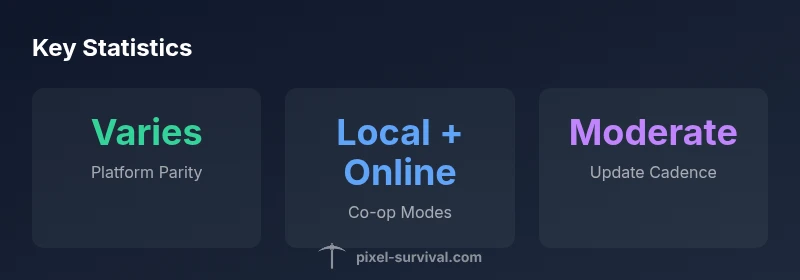
One of the Switch’s strongest appeals is portability, and Terraria on Switch fully embraces that benefit. You can play solo on the couch, switch to a handheld session during commutes, or invite friends for local multiplayer locally. Online play is supported as well, enabling server-based co-op or competitive experiences when you’ve got an internet connection. The experience scales well for small-screen sessions, though managing inventories or large builds with friends may feel cramped without a larger display. Online stability can vary with network conditions, but the core social features are intact and usable for most playgroups.
Controls, UI, and Accessibility on the Handheld
Joy-Cons or the Pro Controller provide comfortable control schemes for Terraria’s action-oriented gameplay. The HUD and inventories are reworked for smaller displays, which can improve or hinder accessibility depending on your preferences. Building interfaces and item selection can be slower than on a keyboard, but the game remains accessible to newcomers thanks to clear tooltips and a forgiving progression curve. For players who rely on precise aiming or rapid item switching, the handheld input may demand a little extra adaptation time, yet it still respects the game’s pace and depth. You’ll discover that crafting and exploration feel natural with a controller once you acclimate to the layout.
Visuals, Resolution, and World Generation on Switch
Terraria’s sprite-based visuals carry over to the Switch without compromises in art style, though resolution scales with docked vs handheld mode. The world generation logic remains identical, so seed-based maps, biomes, and dungeon layouts mirror the PC experience. Controller-friendly menus and readability are prioritized over pixel-perfect UI, but the game preserves its signature charm and atmospheric lighting. For long sessions, the screen brightness and color balance help keep environments readable during night cycles, and you’ll appreciate the familiar silhouettes of biomes like Jungle and Corruption as you explore.
Loading Times, Memory Management, and Performance Tweaks
Loading times on Switch are generally reasonable for a game of Terraria’s scope, but you’ll notice longer waits when transitioning between biomes or loading a newly created world. Memory limits on the handheld device can influence the density of on-screen NPCs or decorative elements in giant builds, especially on older hardware revisions. If you’re experimenting with massive bases, consider chunk-loading strategies or breaking projects into smaller zones to smooth out performance. The developers have provided patches and quality-of-life tweaks over time, which gradually reduce friction for heavy builders and multi-biome explorers.
Progression and Endgame on Switch: What Feels Familiar, What Changes
Endgame progression—boss fights, late-game armor, wings, and end-game dungeons—remains achievable on Switch, preserving the overarching arc that defines Terraria. The primary difference is pacing: the slower menus, the need to manage inventories with a controller, and slightly longer travel times due to screen real estate. For players who enjoy base-building and exploration, the Switch version remains deeply satisfying and keeps you engaged through mid- to late-game content. The social and cooperative elements enhance progression too, especially for groups who enjoy sharing discoveries in a portable format.
Updates, DLC, and Feature Parity: Staying Current on Switch
Updates typically follow a PC release window but may arrive with some delay on Switch. The community’s experience shows that major patches, new biomes, and quality-of-life improvements eventually reach Switch, preserving parity over time. While some platform-specific features may appear later, the overall feature set aligns with PC and other consoles. If you rely on timely access to the latest content, you’ll want to track patch notes and plan for occasional waiting periods, but the long-term trajectory remains positive.
Comparisons to Other Platforms: Where Switch Stands
Compared to PC, the Switch version trades raw performance and speed for portability and convenience. Compared to other consoles, it offers similar hardware constraints but with the added benefit of handheld play. If your primary aim is a large, high-fidelity experience with the widest modding ecosystem, PC remains the benchmark. If you value traveling light, playing on a couch, or sharing adventures with friends in a living room, Switch provides a compelling middle ground that preserves Terraria’s core appeal while enabling spontaneous, social sessions.
Accessibility, Quality-of-Life, and User Experience on Switch
Accessibility is well-supported, with clear menus, scalable text options, and intuitive crafting paths that suit players new to Terraria. The quality-of-life improvements added over patches help with inventory management, world exploration, and boss attempts. For players who prefer a relaxed pace, Switch makes it easy to jump in anywhere, pause, and resume without requiring a powerful gaming setup. The overall experience remains approachable, with enough depth to sustain long-term engagement and grinding for rare drops.
Value, Purchase Considerations, and Who Should Buy
For players who prize portability, couch co-op, and the ability to play anywhere, the Switch version offers strong value. If you already own Terraria on PC or another platform and prioritize performance or modding potential, PC or console versions may be preferable. The Switch edition excels for social play, on-the-go sessions, and a slower, methodical progression that encourages exploration and creativity. In other words, it’s a solid buy for the right playstyle, with some caveats around performance and screen size.
Recommendations by Playstyle: Who Should Consider the Switch Version
- Casual explorers and builders who want portability: excellent fit.
- Families or friends who enjoy local co-op in the living room: highly recommended.
- Long-session, high-precision combat players: better on PC, but Switch remains viable with adaptation.
- Travelers or commuters who want a deep, shared sandbox on the go: ideal choice for on-the-go Terraria.
Testing Methodology and What We Considered
Our evaluation combined hands-on play with typical Switch usage patterns: handheld gameplay, docked TV play, local co-op sessions, and online server access. We tracked load times, inventory management, user interface responsiveness, and boss encounters during different times of day and biome transitions. We also compared performance against PC and other platforms to identify where the Switch version holds up and where it diverges, providing a comprehensive assessment for players deciding whether to buy.
Summary of Practical Takeaways
- The Switch version preserves Terraria’s core experience with portable convenience.
- Expect some performance trade-offs and longer load times compared to PC.
- Local co-op and online play add substantial value for social play.
- If maximum frame rate and modding are essential, consider PC; otherwise, Switch offers a compelling package for on-the-go or couch sessions.
The Good
- Core Terraria experience preserved on Switch
- Excellent portability for on-the-go play
- Local co-op makes shared exploration easy
- Deep crafting, base-building, and boss content remain intact
Negatives
- Performance trade-offs vs PC, including slower loading
- Smaller screen can hinder visibility in large builds
- Online stability varies by network conditions
Best choice for portable Terraria sessions with friends
The Switch version delivers the core Terraria experience with the added benefit of portability and couch co-op. While it trails PC in performance and loading times, it remains a compelling option for players who value on-the-go exploration and social play.
Got Questions?
Is Terraria on Switch the same as PC?
Core mechanics, crafting, progression, and world generation remain the same on Switch. UI and controls are adapted for a controller and smaller screen, which can affect pacing and navigation. The game’s depth and content are preserved, making it a faithful port overall.
Terraria on Switch keeps the core gameplay you know from PC, with a controller-friendly setup and slightly different menus.
Does the Switch version support multiplayer?
Yes. You can play locally with friends on the same console or online via servers. Online play depends on your network and Nintendo’s online service, but the full co-op experience remains accessible.
You can play together locally or online, though online requires standard Switch Online support.
Are updates released for Switch on the same schedule as PC?
Updates tend to arrive after PC, sometimes with a delay. Over time, major patches typically land on Switch, aligning feature parity, but timing can vary by patch.
Patch timing varies; major updates usually reach Switch after PC, with occasional delays.
What playstyle is best on Switch?
Portable explorers and builders will get the most value. If you crave precision combat or intense performance, PC remains the preferred platform, but Switch is perfectly capable for casual play and shared adventures.
Casual explorers who want portability will love Switch; for precision combat, consider PC.
Is it worth buying if I already own Terraria on PC?
If you value portability and shared couch/online play, yes. If you prioritize performance and modding depth, PC offers a stronger overall package.
If you want to play on the go or with friends, the Switch version is worth it; otherwise, PC is the better experience.
How does handheld mode affect performance?
Handheld mode emphasizes portability. Expect similar visuals with potentially slower load times and slightly reduced frame pacing compared to docked play, but gameplay remains smooth for most sessions.
Handheld mode keeps the game portable, with minor performance differences from docked mode.
Key Points
- Play on the go with Switch for true portability
- Expect performance trade-offs vs PC
- Local and online co-op adds social value
- PC still wins on speed and modding depth