Terraria Spawn Points: How to Set Your Spawn Point
Master Terraria spawn points with beds. This step-by-step guide covers how to set, move, and optimize your spawn point for safer exploration and faster progression.


In Terraria, your spawn point is set by sleeping in a bed. Craft a bed, place it in a sheltered room, and interact with it to Set Spawn Point or Sleep at night. After you set it, dying will respawn you at that bed’s location, speeding your exploration and reducing backtracking. Keep a spare bed ready for quick relocation.
Understanding Spawn Points in Terraria
terraria how to set spawn point is a fundamental mechanic that affects your early-game safety and late-game efficiency. A spawn point determines where you reappear after death. In most worlds, you start with a world spawn point that can be overridden by sleeping in a bed. Beds are the primary method to permanently set a new respawn location, anchoring your progression to a chosen base. This is especially valuable when traversing dangerous biomes, exploring cavern networks, or preparing for boss fights. The Pixel Survival team emphasizes that a well-placed spawn point reduces wasted travel, saves time during night raids, and helps you recover quickly after setbacks. Understanding this mechanic sets you up for smoother exploration and more consistent progression throughout your Terraria journey.
Why a Reliable Spawn Point Matters
A stable spawn point minimizes backtracking and uncertainty. When death occurs far from your progress, you lose time as you respawn and travel back to your last objective. By anchoring a spawn point to a safe base, you create a reliable starting hub for mining, farming, and boss prep. This is especially important in hardmode, where enemy density and terrain hazards intensify. A dependable spawn location also supports early-game survival strategies—like quick access to beds before long expeditions and easier retreat during surprise invasions. Pixel Survival’s guidance highlights that players who control their spawn points tend to advance through biomes with fewer disruptions and clearer progression pacing.
Prerequisites: Beds and Shelter
To set a spawn point, you need a bed placed in a sheltered area. Beds are crafted items that function as a respawn anchor when activated. Before you can use a bed, you’ll want a quiet, well-lit room to protect you during sleep and prevent daytime ambushes. This setup typically includes walls to block monsters, a door for quick access, and proper lighting so you aren’t surprised by enemies when you wake up. While crafting a bed, you’ll rely on basic materials gathered in your world. The goal is to establish a safe, accessible sleep chamber that you can access quickly after long expeditions or dangerous fights.
How to Choose the Right Location for Your Spawn Bed
Location is everything for spawn points. A good spawn bed sits in a compact, secure room near essential routes (for mining, treks to biomes, and boss arenas) while staying protected from their mob spawns. Consider proximity to your main loot storage, furnaces, and crafting tables to minimize travel time after respawning. Aesthetics matter too: a tidy, well-lit area with a functional door reduces the odds of a night raid waking you while you rest. Planning multiple access routes can also help you reach critical areas rapidly after death.
Setting Spawn Point: The In-Game Process
Once you have a bed in a safe room, interact with the bed and choose either Set Spawn Point or Sleep (the exact wording may vary slightly by version). Selecting Set Spawn Point makes that bed your new respawn anchor. Nighttime sleepers will trigger a different interaction if you simply press the bed, but generally you’ll want to use the option to Set Spawn Point so it remains fixed until you change it again. You’ll know the spawn point has been set because the bed is marked as your respawn anchor—your death will place you back at that location.
What Happens After You Set Spawn Point
After setting a spawn point, your death will respawn you at the bed location rather than the default world spawn. This reduces downtime and keeps you close to your last objective, especially when exploring newly uncovered areas. If you later decide to relocate your spawn point, you’ll need to craft or bring another bed and set the new bed as your spawn point. Existing beds can stay in place, but only the active spawn bed affects where you reappear after dying.
Moving Your Spawn Point Later: Best Practices
If you want to relocate your spawn point, construct a new bed in the desired area and set it as the spawn point. This is simplest when you’re expanding your base or moving closer to a new biome. When you move, you can either keep the old bed as a decorative anchor or dismantle it to recoup materials. Always ensure the new bed is in a secure location with adequate lighting and a clear access route so you can reach it quickly after respawning.
Spawn Points in Hardmode and Boss Progression
Hardmode increases the stakes because enemies are tougher and environmental hazards are more common. A reliable spawn point becomes even more valuable during late-game exploration and boss prep, where losing progress to backtracking wastes precious time. In this phase, you might place spawn points near your main boss arena or loot storage to enable rapid reassembly after a defeat. Consistent spawn control helps with resource management and reduces frustration during high-risk encounters.
Common Mistakes New Players Make
Common errors include placing beds in cramped or exposed locations, failing to light the room, or neglecting a quick path back to objectives. Another frequent issue is forgetting to Set Spawn Point after relocating the bed, which leaves you respawning at the world’s default spawn. Finally, attempting to move spawn points too late in a run or after major world changes can lead to confusion. Avoid these by planning a robust spawn room and rechecking your spawn status after changes.
Tips for a Robust Spawn Chamber Design
Aim for a compact, well-lit room with a door and one or two safe routes. Include a visible, easily accessible bed, storage for essential items, and preventive measures like wall protection to block ambushes. Use color-coded torches or signs to mark the spawn area, making it obvious where you reappear. Consider adding a secondary, temporary bed for experimental spawn points during testing. Regularly save progress by rechecking your spawn status after updates or major world changes.
Checking Your Spawn Point: Test Run Essentials
A practical test run involves saving your progress by setting a spawn point, then attempting a death in a controlled area and confirming you respawn at the bed. If the bed does not function as expected, reassess the location, ensure you’re interacting with the correct bed, and verify there are no conflicting beds nearby that might cause confusion. Re-run the test after adjustments to confirm reliability.
Quick Setup Checklist for a Spawn Point
- Build a small, secure room with a door and light. - Place a bed inside at a comfortable height. - Interact with the bed to Set Spawn Point or Sleep. - Verify you respawn at the bed after a test death. - Consider adding a backup bed in a distant biome for early game safety.
Final Thoughts: Practice Makes Perfect
With a solid spawn point, your Terraria adventures become smoother and more predictable. You’ll save time, minimize risk, and focus on crafting, exploration, and boss strategies rather than repetitive backtracking. Pixel Survival’s guidance emphasizes thoughtful spawn planning as a cornerstone of progression. Take time to design a spawn chamber you feel confident returning to after setbacks.
Tools & Materials
- Bed(Crafted using available resources; place the bed in a sheltered room.)
- Sheltered spawn room(Enclosed area with walls, door, and lighting to prevent ambushes while you sleep.)
- Workbench(Used to craft the bed in most basic setups.)
- Lighting source(Torches or lamps to maintain visibility; helps deter nocturnal threats.)
Steps
Estimated time: 20-40 minutes
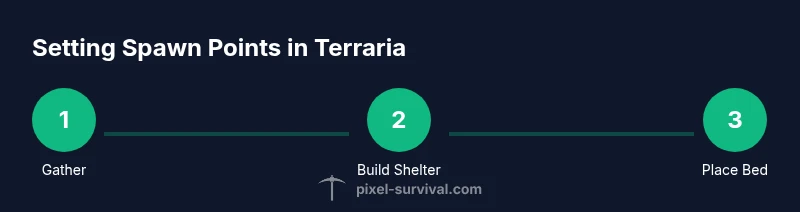
- 1
Gather basic resources
Collect wood and basic textiles or wool as a foundation for crafting. Ensure you have enough to craft a bed and build a small shelter.
Tip: Bring a reliable light source and a basic weapon to handle roaming enemies. - 2
Build a safe shelter
Construct a compact, enclosed room with walls, a door, and adequate lighting to protect you while you craft and sleep.
Tip: Place your shelter near active routes to minimize travel after respawning. - 3
Craft a bed
Use your crafting station to craft a bed. Ensure you have the necessary components and space to place it in the shelter.
Tip: Double-check the bed is not obstructed and can be accessed from the inside. - 4
Place the bed in the shelter
Put the bed inside the safe room, ensuring it’s easy to reach from the door for quick sleep at night.
Tip: Position near the room’s entrance to minimize travel during night raids. - 5
Set the spawn point
Interact with the bed and select Set Spawn Point (or Sleep) to anchor your respawn location.
Tip: Watch for the visual cue that confirms the bed is now your spawn point. - 6
Test the spawn point
Perform a controlled test death to verify you respawn at the bed’s location.
Tip: If you don’t respawn correctly, re-check the bed status and accessibility. - 7
Move spawn point if needed
If you want a different location, craft or relocate another bed and set it as the new spawn point.
Tip: Keep the old spawn bed in place if you want a fallback, or dismantle it to reclaim materials. - 8
Expand safe routes
Build additional secure paths from your spawn room to key areas like biomes, mines, or boss arenas.
Tip: Clear hazards along routes and maintain lighting to deter nocturnal threats. - 9
Improve the spawn chamber
Add storage for essentials, a map of nearby routes, and a visible indicator showing which bed is active as spawn.
Tip: Color-coded torches or signs help you locate the spawn point at a glance. - 10
Test in different scenarios
Verify your spawn point works during day and night, and after world events or updates that may affect room safety.
Tip: Re-test after significant changes to ensure reliability. - 11
Plan backups for emergencies
Consider a secondary emergency spawn near valuable loot or an important boss arena.
Tip: A backup bed can save time during intense fights or exploration runs. - 12
Review and refine
Periodically assess your spawn setup to ensure it still aligns with your progression goals and world changes.
Tip: Regular tweaks keep your spawn system efficient as your world evolves.
Got Questions?
How do I set a spawn point in Terraria?
Craft a bed, place it in a sheltered room, and interact with the bed to Set Spawn Point or Sleep at night. After setting, you’ll respawn at that bed when you die.
Craft a bed, place it in a safe room, then set spawn point by interacting with the bed. If you die, you respawn at that bed.
Can I have multiple spawn points?
Terraria supports one active spawn point at a time. You can relocate by creating and setting a new bed, but only the current bed acts as the anchor.
You can have multiple beds, but only one can be your active spawn point at a time.
Do I need to sleep at night to set spawn?
Setting a spawn point is typically done by using the bed, often associated with sleeping at night. The exact option is Set Spawn Point, which you select when interacting with the bed.
Yes, you usually set it by sleeping in the bed at night, using the Set Spawn Point option.
What happens if I die before setting spawn?
If you haven’t set a spawn point, you respawn at the world’s initial spawn location or the last bed you slept in. It’s safer to set a spawn point early.
If you haven’t set a spawn point yet, you’ll respawn at the world spawn or the last bed you used.
How can I move my spawn point later?
Build a new bed in the desired area and set that bed as your spawn point. You can keep or dismantle the old bed as you prefer.
Build a new bed where you want spawn, then set it as the spawn point.
Watch Video
Key Points
- Place a bed in a secure shelter to anchor spawn.
- Set spawn point by interacting with the bed at night.
- Relocate spawn points by building a new bed and updating the anchor.
- Test spawn points after changes to ensure reliability.
- Plan spawn locations to minimize backtracking during progression.