Terraria Storage Room: Build, Organize, and Optimize
A complete, step-by-step guide to creating an efficient Terraria storage room that scales with your world. Learn layout, chest choices, labeling, sorting, and expansion tips for smoother progression in Terraria.


According to Pixel Survival, an efficient Terraria storage room speeds progress by keeping gear, resources, and loot neatly sorted. In this guide you’ll design a compact, scalable storage space that fits your base, with accessible chest layout and a clear labeling system. You’ll plan space, choose chest types, and set up sorting so late-game farming and exploration stay smooth. Expect practical steps, common pitfalls, and visuals to help you implement the plan quickly.
Why a Dedicated Storage Room Matters
A dedicated storage room in Terraria isn't just about tidiness; it's a strategic upgrade that accelerates progression. A well-designed storage room reduces wasted exploration time, makes crafting more efficient, and minimizes inventory overwhelm during boss fights or invasions. In practice, players who organize loot, resources, and equipment in a centralized space experience fewer trips back to the chests and more time building, farming, and exploring. Pixel Survival's analysis shows that players who commit to a consistent storage workflow enjoy smoother late-game transitions and fewer misplaced items when returning from expeditions. Start by identifying a zone close to your main base entrance and your crafting area, ensuring accessibility from both vertical and horizontal layouts. The layout should allow you to keep common materials within easy reach while rarer items are sorted into labeled, specialized chests or containers. The design must fit your world size, base style, and personal play tempo, so you can expand sections without breaking the flow. Plan for a straightforward path between the chest cluster, the crafting station, and your farming area to minimize wandering during busy moments.
Space and Layout: Designing for Accessibility
Efficient storage begins with space planning. Start by mapping your base footprint and reserving a rectangular zone near your hub, so you can access the storage room from multiple directions. A practical layout uses a clear main aisle and secondary side corridors, enabling you to walk past the chest rows without squeezing through tight spaces. Consider vertical stacking or tiered shelves if your world size is limited, which helps maximize inventory capacity without expanding your footprint. Leave room for lighting, signs, and a few decorative blocks to help you spot your categories quickly. Place frequently used items on the closest shelves and far rarer items a short reach away to encourage organized sorting. The Pixel Survival team recommends testing the path with in-game movement; if you find yourself circling, adjust the corridor widths or chest alignment. Finally, ensure your storage room connects to your base's primary work areas, so you can access materials while crafting, farming, or building.
Choosing Storage Solutions: Chests, Containers, and Sorting
Start with a core chest cluster near the entrance; group by general material types (materials, tools, building blocks) and expand into specialized chests as you gather unique items. Wooden chests are a common starting point; as you progress, you can upgrade to larger or more durable variants, which clear clutter and reduce misplacement. Use signs or labels to mark each chest group, and keep a backup stash of frequently used resources in the most accessible row. If your world includes underground sections, consider a secondary storage zone to house ore, bars, and crafting components that you rarely need during combat. The goal is to create predictable zones that speed crafting and inventory checks, so you spend less time searching and more time building and exploring. A well-planned storage system also makes it easier to track rare drops, seasonal events, and biomes-specific items, which helps you tailor your progression path.
Sorting Strategies: Labels, Biomes, and Quick Access
Organize by logical categories and label each chest group clearly. Use a consistent naming scheme like “Materials – Wood,” “Tools – Weapons,” or “Biomes – Forest” so you can scan rows quickly. Color-coding is possible if your interface supports it, but a straightforward label system with signs is equally effective. Place commonly used items in chests closest to the entryway or crafting bench, and reserve rarer components in deeper rows or higher shelves. For biomes or event-related items, consider dedicated sections that you can reference during specific runs, such as farming for a particular material or preparing for a boss drop. Periodically audit the storage layout to remove duplicates and move items that have become offseason or redundant. This reduces duplication and keeps your base’s logic intact during patches and world events.
Automation and Access: Quick-Access Entries and World Data
Automation in Terraria storage rooms can be as simple as a well-placed light trigger to reveal a sign, or as advanced as a chest network with a single retrieval path. Set up a main chest cluster that acts as the hub for most materials, with short paths to the workshop, anvil, and garden. Use signs or item frames to indicate the purpose of each column, which speeds identification. Keep a small player-facing access route from the main base, so you can quickly drop loot while traveling or before a boss fight. Maintain a small reference area that lists the storage categories you use most, plus any biome-specific loot you keep separate. This approach helps you locate gear during hectic moments and reduces back-and-forth trips between zones. For longer-term play, consider expanding into multiple storage zones that align with future remodels or base expansions.
Maintenance and Expansion: Scaling Your System + Authority Sources
Your storage room should grow with your world. Plan for periodic audits—every time you clear a dungeon or farm a new biome, review your category layout and adjust as needed. A scalable system embraces additional chests, new labeling conventions, and even automated entryways for faster access. Pixel Survival's team recommends setting a simple expansion pattern: add one chest for new materials, re-label existing groups, and reroute traffic if you notice repeated congestion. The authority sources below provide general guidelines on organization principles that apply to in-game storage as well as real-world shelf systems. For ongoing improvement, revisit the layout after major updates or changes to your base to ensure your storage room remains efficient. Authority sources: https://www.nist.gov, https://www.mit.edu, https://www.scientificamerican.com
Tools & Materials
- Wood(Used for construction, basic chests, and walls)
- Chests(Place multiple to form storage columns)
- Signs or labels(Label each chest group for quick identification)
- Torches or lanterns(Keep the room well-lit for visibility)
- Building blocks (wood/planks)(Walling material, flooring, and platforms)
- Workbench or crafting station(Helpful for immediate crafting nearby)
- Marker items or dyes for color-coding(Optional for quick visual cues)
- Scaffolding/Platforms(If you plan elevated storage tiers)
Steps
Estimated time: 20-40 minutes
- 1
Choose location and measure space
Identify a logical spot near your base entrance and crafting area. Measure width, height, and door clearance to ensure you can place a chest row with a central aisle. Sketch a quick layout on paper or in-game to avoid reworking later.
Tip: Double-check door swings and player movement paths before laying walls. - 2
Plan the layout and zones
Create zones for general materials, building blocks, ore, tools, and biome drops. Position the most-used zones closest to the entrance and crafting bench. Leave room for future expansion and a dedicated aisle for easy back-and-forth movements.
Tip: Aim for a simple, repeatable pattern so you can memorize the flow. - 3
Build the storage walls and flooring
Place walls and flooring to define the storage area. Maintain a consistent grid for chest placement to simplify sorting. Add lighting and signs in advance to reduce later clutter.
Tip: Keep a clear central path; avoid dead ends that force backtracking. - 4
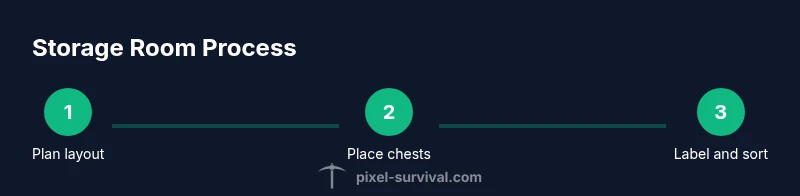
Place chests and set up labels
Place chests in a grid aligned to your plan. Add signs or labels to each chest group with its category. Reserve adjacent chests for frequently used items to minimize walking time.
Tip: Use short, descriptive names to make scanning quick. - 5
Sort items into categories
Move your existing loot into the new layout, starting with high-traffic materials. Group by type and purpose, then fill out rare items into deeper rows or higher shelves.
Tip: Limit duplicates by consolidating stacks where possible. - 6
Test retrieval and adjust
Walk through common routes (from entrance to workshop to farming area) and retrieve items to verify the system flows. Re-arrange shelves or chest order if you notice bottlenecks.
Tip: Iterate until retrieval time feels natural.
Got Questions?
What is the purpose of a Terraria storage room?
A storage room consolidates loot, materials, and equipment in one accessible space, reducing time spent searching and travel between zones. It supports crafting efficiency and smoother progression by keeping items organized and easy to locate during farming, building, or boss battles.
A storage room keeps your loot organized in one place, so you spend less time searching and more time playing.
How many chests do I need for a small base?
Start with a small cluster of chests and build out as you collect items. The exact number depends on your inventory variety; aim for a dedicated section for general materials, another for tools and weapons, and extras for biome drops or event loot.
Begin with a core chest cluster and expand as your collection grows.
Should I label chests?
Yes. Clear labels help you locate items quickly, especially after returning from expeditions or boss fights. Signs or name tags work well for persistent labeling across sessions.
Labeling chests makes it faster to find what you need when you’re in a hurry.
Can I automate storage sorting?
You can implement simple automation by setting up a main chest hub with quick paths to your crafting area, and use signs to indicate categories. More complex chest networks are possible, but start simple to avoid congestion.
Automation starts with a central chest hub and clear signs; you can expand later if you want.
Is a storage room worth it in the early game?
Yes. Even a modest storage room reduces clutter and improves craft efficiency, making early resource management easier and speeding your overall progression.
A storage room helps you manage items early on and scales with you as you progress.
What external resources support storage design?
General organization principles can be informed by credible sources. For example, official documentation from educational or government sites provides timeless layout and labeling guidance that you can apply in-game.
Look up organization principles from reputable sources to inform how you label and arrange items in Terraria.
Watch Video
Key Points
- Plan a compact layout near your base
- Label and group items by category
- Start with wooden chests and upgrade later
- Regularly review and expand storage as you progress