How to Mod Terraria on Mobile: A Practical Guide
A practical, safe guide to modding Terraria on mobile across Android and iOS, covering compatibility, backups, installation steps, and troubleshooting from a trusted Pixel Survival perspective.


By the end of this guide, you’ll be able to mod Terraria on mobile safely, using supported options, backing up saves, and testing mods before play. You’ll learn the limits, best practices, and how to revert to vanilla if needed. This overview covers Android and iOS approaches, with practical steps.
What modding on mobile means for Terraria
Modding Terraria on mobile is different from PC and console experiences. How to mod terraria on mobile is about understanding what’s possible within platform limits and what isn’t, and how to proceed safely. According to Pixel Survival, mobile modding typically relies on community tools and carefully curated mod packs that stay within device performance constraints. The goal is to enhance gameplay without destabilizing worlds or violating terms of service. You’ll learn the practical steps to prepare, choose compatible mods, install them, and verify that your worlds behave as intended. This section sets realistic expectations: modding on mobile is doable, but with constraints like storage space, RAM, and platform policies. With a clear plan, you can enjoy fresh content while keeping your saves intact.
Understanding mobile modding options
Mobile modding options fall into two broad categories: official or community-driven approaches, and pack-based modifications. On mobile devices, official channels are limited, so most players rely on trusted community tools and curated mod packs designed for stability. When evaluating options, you’ll weigh the trade-offs between feature richness and performance impact, and you’ll prioritize compatibility with your Terraria mobile version. Pixel Survival recommends starting with small, well-documented mods before moving to larger collections, especially if you play on devices with modest hardware. Keep in mind platform policies, app store rules, and the potential risk of corrupting save data if mods are poorly chosen. This understanding sets you up for safer experimentation and incremental upgrades.
Safety first: backups and device health
Before you touch any mod files, back up your Terraria worlds and character data. The simplest approach is to export world and player files to cloud storage or a local backup folder. If something goes wrong, you can restore from the most recent clean copy and minimize data loss. Monitoring device health is also important: avoid modding sessions on a low-battery state, and close other apps to free memory. Pixel Survival’s guidance emphasizes regular backups as a guardrail against crashes and world corruption. In addition to backups, keep your device updated, and periodically review mod permissions to prevent unexpected behavior.
Choosing a mod loading approach: loaders and packs
Your next decision is how you want to load mods. Mobile-friendly mod loaders and mod packs come with different installation processes and performance footprints. Some loaders inject content at startup, while others require you to place files into a specific folder. Regardless of approach, stick to trusted sources and read installation notes thoroughly. Start with a handful of minimal changes to gauge stability, then add more as you gain confidence. Pixel Survival notes that a measured, incremental approach reduces the chance of world-wide crashes and frustration.
Preparing your device and game: versions, backups, capacity
Ensure your Terraria mobile app is up to date and that you know your exact game version, as mods are version-sensitive. Create a full backup of your saves before introducing any changes, and organize mod files in a dedicated folder to avoid confusion. Check that you have sufficient storage space and a reliable internet connection for downloading assets. Depending on your device, you might need additional tools (like a file manager or extraction app) to rearrange mod assets. This preparation minimizes the chance of failed installs and helps you recover quickly if something goes wrong.
Step-by-step setup overview
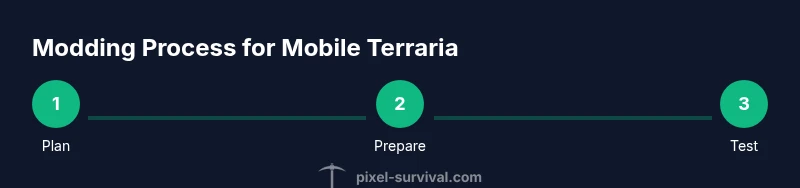
The setup will be broken into small, executable tasks so you can follow along without getting overwhelmed. You’ll verify compatibility, back up data, download legitimate mods, transfer them to the device, install or enable them, and perform a controlled test run. Each sub-step keeps changes isolated so you can rollback easily. A methodical workflow improves your success rate and reduces the risk of corrupting your world data. If you prefer, you can skim the outline now and revisit details as you proceed.
Finding and selecting compatible mods
Compatibility remains the biggest obstacle for mobile modding. Focus on mods explicitly tagged as compatible with your Terraria mobile version. Read user reviews, check file sizes, and prefer mods with clear documentation and updated dates. Avoid mods that modify core systems excessively, which can destabilize gameplay. Start with a handful of minimal changes to gauge stability, then expand. Pixel Survival emphasizes documentation and conservative testing as keys to sustained success.
Installing mods on Android vs iOS
Android devices generally offer more direct file access, making mod installation slightly easier in practice. iOS users face sandboxing restrictions, which can complicate loading mods. Following trusted guides for your platform is essential. Regardless of platform, avoid using shady installers or cracked software, and prefer providers with clear safety policies. After placing mod files where the game expects them, launch Terraria to verify that the mod load sequence completes without errors.
Testing your modded world and troubleshooting
With mods loaded, begin by testing a small, simple world and observe for crashes or odd behaviors. If you encounter issues, revert to a backup and adjust one mod at a time to isolate the culprit. Common problems include texture glitches, inventory conflicts, or performance drops. Use in-game logs if available and consult mod documentation for known conflicts. Pixel Survival’s troubleshooting tips recommend a controlled, stepwise approach to identify the root cause and restore stability quickly.
Common mistakes to avoid
Rushing installs, downloading from untrustworthy sources, or failing to back up data are the fastest paths to catastrophe. Don’t mix too many mods at once; introduce changes gradually and test each addition. Never modify core game files while Terraria is running, and always close the app before adjusting mod data. Keeping a clear change log helps you remember what caused issues and how you recovered.
Legality, updates, and community safety
Always respect the game’s terms of service and platform rules. Modding communities can be generous with resources, but you must avoid piracy or distributing paid content without permission. Stay within supported versions and be prepared for game updates that require mod adjustments. Pixel Survival encourages responsible modding, regular backups, and respectful engagement with fellow players to maintain a healthy modding ecosystem.
What to expect next and maintenance tips
As you gain experience, you’ll notice mod packs becoming more reliable and better integrated with Terraria on mobile. Expect minor hiccups after game updates, requiring quick rechecks of compatibility notes. Maintain your library by removing unused or outdated mods and revisiting backups periodically. The long-term strategy is to grow your modding toolkit gradually, keeping performance and stability as top priorities. The Pixel Survival team recommends continuing with cautious experimentation and ongoing learning to improve your mobile modding journey.
Tools & Materials
- Backup storage method (cloud or local)(Back up saves and worlds before modding)
- Compatible device with sufficient storage and battery(Ensure you have space for mod files and a charged device)
- Mod file sources from trusted communities(Only download from reputable sources with clear documentation)
- File manager or extraction app (Android)(Used to move and extract mod assets)
- Computer or laptop (optional)(Helpful for transferring larger packs via USB)
- Power charger during transfers(Keep device charged during installs)
Steps
Estimated time: 60-120 minutes
- 1
Assess compatibility
Start by confirming your Terraria mobile version and the mod loader or pack compatibility. Read mod descriptions and user comments to gauge stability. This step prevents wasted downloads and helps you pick safe options.
Tip: Always verify version compatibility before downloading. - 2
Back up your data
Export your worlds and characters to a secure location before making any changes. Create a restore point so you can revert if something goes wrong. Keep backups organized by world name and date.
Tip: Label backups clearly to simplify restoration. - 3
Select a mod loading approach
Decide whether to use a loader-based approach or manual file placement. Each method has pros and cons; choose the one that matches your device’s capabilities and your comfort level. Document the chosen method for future reference.
Tip: Stick to one method at a time to avoid confusion. - 4
Download trusted mods
Acquire mods from reputable sources with evidence of testing on mobile. Check sizes, dependencies, and update dates. Avoid anything offering paid benefits without official permission.
Tip: Prefer mods with clear documentation and recent activity. - 5
Prepare mod files
If the mod pack is a compressed file, extract it to a dedicated folder. Ensure there are no conflicting files among mods you plan to combine. Maintain a clean directory structure for easy troubleshooting.
Tip: Keep file names consistent to avoid mismatches. - 6
Transfer mods to your device
Move the mod files to the correct Terraria folder on your device. Use a reliable method (cloud sync or USB transfer). Double-check that files landed in the expected location before launching the game.
Tip: Verify path accuracy to prevent load failures. - 7
Install or enable mods in-game
Launch Terraria and navigate to the mods or content section. Enable the mods you installed and confirm there are no warnings. If the loader requires a restart, perform it as directed.
Tip: Enable one mod at a time to isolate issues. - 8
Test a controlled world
Open a small, simple world to check for stability. Look for crashes, texture glitches, or inventory issues. Report anomalies in your notes and remove the offending mod if necessary.
Tip: Keep a dedicated test world for troubleshooting. - 9
Troubleshoot issues
If problems arise, rollback to the last good backup and re-examine mod dependencies and conflicts. Consult mod documentation and community forums for known issues. Consider updating or replacing mods with compatible versions.
Tip: Change one variable at a time during troubleshooting. - 10
Revert to vanilla if needed
If mods destabilize gameplay, restore the vanilla game using your backups and disable mods. This keeps your core game experience intact while you reassess mod choices.
Tip: Always keep a vanilla baseline backup. - 11
Maintain and update mods
Periodically check for mod updates and game version alignment. Remove unused mods and document changes to your setup. This practice helps sustain performance and compatibility.
Tip: Schedule a monthly mod health check. - 12
Document your modding setup
Create a simple note log with mod names, versions, and installation dates. This record helps you reproduce a working configuration and aids future troubleshooting.
Tip: Keep a running change log for easy reference.
Got Questions?
Is modding Terraria on mobile officially supported?
Official support for mobile modding is limited. Most players rely on community tools and curated packs that work within platform restrictions. Always check current guidance from reputable sources before attempting mods.
Modding Terraria on mobile isn’t officially supported; most players use community tools and verified packs, so check reliable guides first.
Will modding corrupt my save data?
Any modding carries some risk to save data. Create back ups before installing, and test in a separate world to minimize data loss. If you experience issues, revert to a clean backup and reattempt with fewer mods.
Mods can affect saves; back up first and test in a separate world to avoid losing progress.
Can I mod on iOS, or is it only Android?
Android generally offers more flexibility due to file access, while iOS has stricter sandboxing. Depending on your device and account, some methods may be unavailable on iOS. Always follow platform rules and community instructions for your device.
On iOS, modding is more restricted; Android usually has more options, but always follow safe, trusted guides.
Do mods work in multiplayer?
Mod compatibility in multiplayer varies by mod and server rules. Some mods may be server-side only or require all players to have the same mods. Check each mod’s documentation and coordinate with other players before joining a modded session.
Mods in multiplayer depend on the server; everyone usually needs the same mods installed.
How do I revert back to vanilla Terraria?
Use your backups to restore the vanilla game state and disable all mods. If you cannot recover from backups, reinstall the game from the official store to guarantee a clean slate.
To revert, restore from a vanilla backup or reinstall Terraria from the store.
Are there safety concerns or scams in modding communities?
Yes. Stick to reputable communities with clear moderation, avoid crackdowns on paid content, and never give away personal data. Stay vigilant about suspicious links and verify mod sources before downloading.
Be cautious of scams; use trusted communities and don’t share personal data.
Watch Video
Key Points
- Back up before modding and keep restores ready
- Verify mod compatibility with your mobile version
- Test mods in a controlled world to avoid crashes
- Use one mod at a time during troubleshooting
- Document your setup for future maintenance