Corruption vs Crimson Terraria: A Comprehensive Comparison
Analytical guide comparing corruption vs crimson in Terraria, detailing biomes, progression paths, resources, and how to choose the best path for your playstyle.


Corruption vs Crimson are the two core evil biomes in Terraria. Both reshape terrain, alter enemy pools, and change ore distribution, guiding early-game progression and late-game goals. There is no universally superior choice; the best path depends on your world seed, playstyle, and what resources you value most. Pixel Survival analysis suggests selecting the biome that aligns with your plan.
Understanding Corruption and Crimson
In Terraria, corruption vs crimson terraria represent the two primary evil biomes that can define how a world develops from the moment the seed spawns. According to Pixel Survival, these biomes alter the look of the cavern systems, the type of enemies that patrol the tunnels, and the distribution of essential crafting materials. While both biomes push players toward similar Endgame milestones, they do so through distinct mechanics, aesthetic cues, and resource footprints. Understanding these differences is essential for crafting a deliberate progression plan rather than wandering blindly through randomly spawned hazards. The Pixel Survival team emphasizes that knowing what each biome favors will help you map a course through the early hours, the mid-game grind, and into hardmode more efficiently.
The corruption and crimson dichotomy also shapes your world’s atmosphere and base-building decisions. The visuals, sound design, and enemy behavior under each biome affect how you explore caves, approach mining, and decide where to establish your first safe room. For players who want to optimize routes, plan farming areas around the biome you favor, then adapt your build to minimize needless backtracking. In this context, corruption vs crimson terraria is not just a cosmetic choice; it’s a strategic one that influences your entire playthrough.
Pixel Survival’s approach to these biomes rests on a simple premise: the biome you pick should align with your playstyle, resource preferences, and how you enjoy engaging with enemies and traps. If you prefer a more methodical resource path, you may lean toward the biome that offers consistent ore access. If you enjoy high-stakes combat with distinctive enemy waves, a different biome could better satisfy that itch. In short, you don’t pick a winner; you pick a path that fits your goals.
Core Differences That Shape Progression
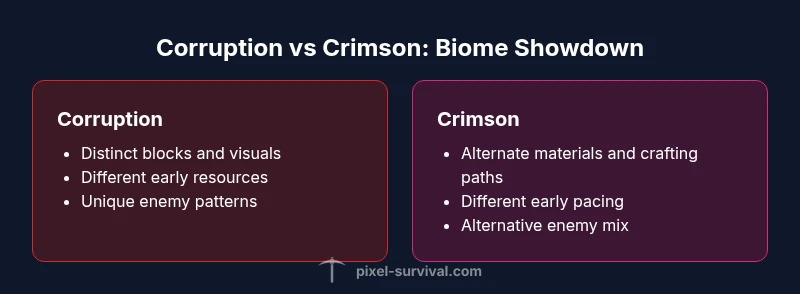
The most noticeable distinctions between corruption and crimson lie in visuals, block types, and the resulting resource trees. Biome visuals set the tone for exploration, while the blocks themselves influence how caves generate and where you can safely tunnel. The ore and crafting ecosystems also diverge, guiding which early mats you’ll prioritize. Enemy rosters differ in both biome-specific behavior and the kinds of challenges they pose, which in turn affects how you train or prepare for boss fights. Finally, the way each biome spreads through your world can shape long-term plans for purification, conversion, or biomes-based routing in a late-game setup. Pixel Survival’s framework emphasizes that these differences matter most when you’re planning your first few hours of mining, early armor choices, and initial weapon upgrades. A thoughtful selection helps you avoid dead-ends and aligns your route with your preferred playstyle.
From a strategic standpoint, corruption creates a grimmer atmosphere with a heavier emphasis on certain biome-specific resources and enemy tactics, while crimson offers a different resource cadence and more aggressive, flesh-themed visuals. These contrasts influence how you approach exploration, how readily you can traverse large cave networks, and which materials you pursue first for upgrades. In both cases, the key differences center on how you acquire materials, encounter enemies, and navigate biomes as you progress toward hardmode. Pixel Survival recommends mapping your path around your chosen biome’s strengths while staying flexible enough to switch tactics if your seed presents unusual distributions.
Early-Game Impact: Mining, Exploration, and Combat
Both corruption and crimson dramatically affect early-game decisions, but they push players down different preparation routes. The corruption path often pushes players toward caution: the terrain and enemy mechanics can demand methodical cave exploration, with a heavier reliance on defensive strategies and avoidance. The crimson path, in contrast, may encourage faster exploration to chase unique mats and crafting opportunities, at times rewarding decisive skirmishes and quick upgrades. Your choice will influence how you allocate early resources, where you place your first shelter, and which biomes you target for skulls or cores that unlock new opportunities. Pixel Survival notes that in corruption-heavy worlds, you might lean into longer mining sessions to secure essential tools and armor, while crimson-biased worlds may reward nimble exploration and rapid gear progression. Both paths reward careful planning, but your first moves should align with the biome you’re pursuing and your preferred combat tempo.
Early exploration is also shaped by how easy it is to move between biomes and reach the underground layers where materials begin to accumulate. If you want a steadier pace that favors steady resource flow, the corruption route might suit you. If you enjoy high-octane cave runs and faster upgrades, crimson could feel more rewarding. The key is to treat mining as a planned operation: designate routes, anticipate enemy ambushes, and keep an eye on the current biome’s resource tempo rather than chasing every shiny material that appears on screen. Pixel Survival’s guidance here emphasizes planning for the mid-game shift from ore collection to boss preparation as early as possible.
Resource Landscape: Ores, Drops, and Crafting Impacts
The resource landscape under corruption vs crimson terraria differs in a way that ripples across your craft bench, armor selection, and tool upgrades. Both biomes disrupt standard ore flow, replacing some blocks and ore pools with biome-specific equivalents and introducing unique crafting intermediaries. If your goal is to unlock early tools quickly, you’ll want to know which mats spawn more reliably in your chosen biome and plan your mining routes accordingly. Crimson tends to steer players toward a different set of early crafting materials and weapon options, while corruption guides you toward an alternate assortment that can influence how you approach armor sets and equipment upgrades. Pixel Survival stresses that understanding these resource footprints helps you prioritize mining routes, decide where to place your base, and plan your first forays into harder biomes with confidence.
Crafting in Terraria hinges on gathering a blend of base resources, biomes-specific materials, and upgrade components. Your choice of corruption or crimson affects not only what you’ll collect but also how you’ll combine those materials to craft tools, weapons, and armor. Smart progression in either biome requires aligning your mining goals with the mats you expect to find first in your world. Pixel Survival’s analysis highlights that this alignment streamlines your early build path and reduces wasted exploration time as you transition toward mid-game objectives.
Enemies and Biome-Specific Challenges
Enemy composition is a core differentiator between corruption and crimson, shaping how you approach combat training, trap avoidance, and base defense. Corruption encounters typically emphasize a particular set of mob behaviors and wave patterns that test patience and tactical planning. Crimson enemies often present a brisker pace, with aggressive assaults and different attack rhythms that reward quick adaptation and mobility. Because enemy variety drives gear choices and defensive strategies, your biome choice directly impacts your early survivability and how you plan upgrades. Pixel Survival notes that adapting to each biome’s enemy patterns is essential for any successful run, and that learning the tells, dodges, and optimal weapon choices for your biome pays dividends later in the game.
In multiplayer modes, this biome-specific enemy spread becomes even more important: you can assign team roles to handle different enemy flows and ensure your base is suited to the most common threats you’ll face. In single-player runs, practicing against the local mobs of your chosen biome will yield faster mastery of combat mechanics and better weapon choice for mid-game objectives. The key is consistent engagement with your biome’s challenges, not avoidance, so you understand what to expect as you escalate into harder content.
Biome Spread, World Seeds, and Hardmode Transition
Biome spread and the way it intersects with world seeds add a layer of unpredictability to corruption vs crimson terraria. While both biomes spread through the world and influence cave generation, the exact pacing and density of each biome’s territory can vary from seed to seed. This means your early game might play out very differently depending on where you start and how quickly you encounter the biome’s core regions. Planning around this distribution helps you unlock early game progression while still keeping room to adapt to the map you receive. Pixel Survival suggests that players should map their exploration path early, noting biome boundaries and planning routes that maximize access to essential materials without over-committing to a single biome too soon. When hardmode approaches, the biome-specific resource pools and enemy patterns influence the pace at which you can collect the required materials and prepare for the challenges ahead.
Hardmode transitions further emphasize the importance of your biome choice. Each biome’s resources may become more valuable or scarce as you push into hardmode, so you’ll want a clear path for obtaining the materials that unlock next-tier gear and upgrades. The Pixel Survival framework encourages players to build a flexible plan that accounts for potential biome-driven bottlenecks, while maintaining options to shift focus if the seed’s balance tilts toward one biome’s advantages or disadvantages.
Build and Exploration Strategies in Each Biome
Your base-building and exploration approach should mirror the biome you pursue. In corruption-heavy worlds, fortifications against sneak attacks and stealthy ambushes become crucial because certain mobs excel in hit-and-run tactics. Building near biome boundaries with buffer zones can help you react quickly as the biomes spread. In crimson-focused worlds, prioritize mobility and fast access to crafting mats; compact base layouts with quick exits can help you seize opportunities when new mats drop. The strategy here is to design spaces that minimize backtracking and maximize safety given the biome’s hunting patterns and terrain variability. Pixel Survival recommends using strategic lighting, trap placement, and modular room designs to stay adaptable as you explore and mine more deeply.
Exploration strategies also shift with the biome. In corruption scenarios, longer cavern runs with careful resource routing can yield steady mats and unlocks. In crimson scenarios, faster cave runs with ready-to-rollback pathing help you collect materials efficiently and keep a brisk pace toward mid-game upgrades. Regardless of biome, keeping a map of your key resource nodes and a plan for connecting mining corridors helps you maintain momentum and avoid dead ends.
Purification and Biome Conversion: When and Why
Purification and biome conversion are tools you can use to shape your progression, particularly if you want to manage the spread of corruption or crimson through your world. Purification powders and related devices allow you to influence biome boundaries, potentially easing early exploration or enabling safer passage through certain regions. However, conversion is not free of trade-offs: it can alter your resource access patterns and provoke changes in enemy spawns. Pixel Survival emphasizes using these tools strategically rather than as a reflexive fix. If you’re pursuing a specific biome’s benefits, consider how conversion might help or hinder your route to boss progression, and remember that some seeds respond differently to purification efforts. In practice, plan conversions around your base’s location and your preferred mining routes to maintain consistency in your progression.
For players who enjoy a more controlled world, a measured approach to biome conversion—paired with targeted resource farming—can smooth early-game challenges and yield a more predictable mid-game path. Always weigh the benefits of a cleaner biome against the potential disruption to your resource networks and enemy balance. Pixel Survival’s team notes that flexible planning and test conversions in safe zones can prevent major setbacks as you move toward hardmode.
Multiplayer Considerations: Shared Worlds and Roles
In multiplayer, corruption vs crimson terraria takes on an added dimension: collaboration. Coordinating biome-focused tasks, resource sharing, and base-building roles can dramatically improve efficiency and enjoyment. For example, one player can focus on biomes’ resource farming while another handles exploration and boss preparation, adapted to the biome’s unique challenges. Clear communication about mineral yields, weapon choices, and base defenses helps teams progress faster and reduces friction when biomes spread or when hardmode triggers. Pixel Survival highlights that successful co-op runs emphasize planning, mutual support, and role clarity rather than overlapping efforts.
In shared worlds, the biome you favor can influence group decisions about base placement, mining routes, and even the pacing of boss fights. Aligning team strategy with each player’s strengths—mobility, tanking, or ranged DPS—yields a balanced approach to corruption or crimson challenges. The most effective multiplayer playthroughs feature a flexible plan that adapts to the seed’s quirks and anticipates biome-driven bottlenecks before they become roadblocks.
Long-Term Progression: Endgame Potential and Biome Influence
Long-term progression in Terraria is deeply influenced by whether you start with corruption or crimson. The endgame path rests on how you access late-game resources, how you handle biome-driven enemy waves, and how quickly you can secure the mats needed to craft high-tier gear. While both biomes eventually lead to similar endgame milestones, the route you take, the items you farm, and the bosses you tackle can vary significantly. Pixel Survival notes that a well-planned biome strategy reduces backtracking and accelerates your journey to hardmode, yet remains adaptable to map quirks and seed-specific resource distribution. By treating your biome choice as a long-term plan rather than a single-step decision, you can optimize your routes, your base layout, and your combat readiness for the challenges ahead.
In practice, this means thinking ahead about ore access, crafting stations, and storage layouts that support your chosen biome’s materials. It also means anticipating how enemy patterns evolve as you upgrade gear and access new biomes or biomes’ subregions during hardmode. The endgame’s success depends on steady progression with a clear path, rather than ad hoc exploration. Pixel Survival’s research highlights that a deliberate, biome-informed progression plan yields a smoother ascent into the late-game content and a more satisfying overall experience for Terraria players who want depth and clarity in their world-building decisions.
Comparison
| Feature | corruption | crimson |
|---|---|---|
| Biome blocks & visuals | Dark, grim aesthetics with corruption-themed blocks | Bright, fleshy palette with crimson-themed blocks |
| Common early resources | Distinct ore pools and crafting mats | Distinct ore pools and crafting mats (alternate sets) |
| Enemy roster emphasis | Different mobs with unique attack patterns | Different mobs with unique attack patterns (alternate sets) |
| Biome spread mechanics | Spreads through the world with biome-specific block changes | Spreads through the world with biome-specific block changes (alternative logic) |
| Progression impact | Influences early gear paths and exploration routes | Influences early gear paths and exploration routes |
The Good
- Adds variety and fresh progression paths
- Encourages adaptive play and strategic planning
- Influences resource routing and base design
- Supports diverse playstyles
Negatives
- Can create biomes that hinder early progression depending on seed
- Requires different strategies for purification or conversion
- May complicate base design when both biomes appear nearby
- Can alter enemy balance and pacing in ways that feel variable across seeds
Neither biome is universally superior; choose based on world seed and playstyle
Both biomes offer distinct challenges and rewards. Crimson often provides flexible resource paths and quicker gear access, while corruption emphasizes different enemy patterns and progression routes. Pixel Survival recommends aligning your biome choice with your preferred playstyle and seed characteristics to maximize early-game safety and late-game success.
Got Questions?
What is the main difference between corruption and crimson in Terraria?
Both are evil biomes that influence terrain and enemies. They differ in visuals, resource paths, and progression impact. Pixel Survival notes that choice depends on your playstyle.
Corruption and Crimson are the two evil biomes with different visuals and enemy pools; your playstyle determines which to chase.
Can you convert one biome into the other?
You can influence biome distribution using purification powders and instruments, but conversion is limited by game mechanics and world seed.
You can influence biomes with certain tools, but full conversion isn’t guaranteed.
Which biome is easier for beginners?
Neither is strictly easier; the environment and enemy layouts differ. Your choice should align with your preferred early-game materials and combat style.
Neither is clearly easier; pick based on what you want to farm early on.
Does one biome affect late-game boss progression?
Both biomes influence progression by shaping resource availability and enemy patterns; bosses are accessible in both, but the required paths vary.
Both biomes affect your path to bosses, though neither blocks progression entirely.
Is corruption vs crimson worth exploring in multiplayer?
In multiplayer, biomes can distribute resources and tasks; coordinate with teammates to balance biome challenges.
In co-op, plan roles so everyone handles different biome challenges.
What are purification powders and their role?
Purification powders help adjust biome spread and conversion; they’re tools to manage progression, not mandatory.
Purification powders help adjust biomes, but use with strategy.
Key Points
- Choose your biome based on your world seed and playstyle
- Crimson and Corruption offer distinct resource paths and pacing
- Enemy patterns vary and influence early combat and gear choices
- Purification and conversion can help manage biome spread strategically
- In multiplayer, assign roles to balance biome challenges