Terraria Skyblock: From Starter Island to Mastery
Learn how to build a thriving Terraria Skyblock world on a floating island, with starter setup, resource management, farming layouts, progression tips, and practical builds to ensure steady growth.


Master Terraria Skyblock by building a secure floating island, establishing a starter farm, basic gear, and a clear progression path from early wood to mid-game. You’ll learn practical layouts, resource prioritization, and efficient farming techniques that keep you supplied as you expand your sky realm.
What is Terraria Skyblock and why it's popular
Terraria Skyblock is a fan-made survival challenge built around a tiny floating island with limited resources. The goal is to survive, expand, and progress through gear and build a thriving ecosystem on a single, precarious platform. The concept leverages Terraria's core crafting system, daily resource management, and clever island design to create endless replayability. According to Pixel Survival, the core appeal comes from turning a tiny space into a full-world experience through careful planning, efficient farming, and modular expansion. Players must balance risk and reward: cut down trees to get platforms, farm crops, and explore for better drops, all while avoiding falls into the void. The skyblock format emphasizes creativity, persistence, and learning through trial and error, which is why it remains a staple in Terraria communities. Beyond the challenge aspect, it offers a practical sandbox for testing storage systems and aesthetic island designs.
Core goals and progression in Skyblock
Successful Skyblock play boils down to three core goals: establish a stable income of basic resources, stage area for farming and storage, and unlock upgrades that let you access deeper game content. Your progression path typically starts with a wooden starter setup, moves to stone-era builds, then advances to ore collection and crafting stations. A well-planned progression reduces risk by ensuring you always have lights, food, and a safety route. In Pixel Survival's experience, maintaining steady resource flow and avoiding resource starvation is the key to staying alive while expanding your island. As you grow, you’ll shift from primary survival to creating automated farms, storage networks, and decorative touches that reflect your personal style while remaining functional for long-term play. The mindset is about sustainable growth rather than rushing for endgame gear; every upgrade should reinforce your island’s resilience.
Starting your island: seeds, spawn, and initial setup
Your floating island begins with a simple layout: a safe spawn area, a central hub for storage and crafting, and compact farming zones along the edges. Start by placing a Work Bench and a Torch near your initial wood source to unlock basic recipes and light. Build a few Wooden Platforms to extend your platforms without overcommitting space. If you have access to Grass or Seeds, plant patches near light sources to encourage grass growth and sustain your island’s ecosystem. Place a Chest to store early resources, and keep a dedicated area for wood and stone so you can track progress. Remember to plan an escape route—if trouble arises, you’ll want a quick way back to your hub. Pixel Survival notes that conserving space while maintaining accessibility is essential for long-term success.
Early resources and crafting pathways
Early on, wood is your lifeblood. Gather wood, make Platforms, torches, and a basic Work Bench. Upgrade your Pickaxe to mine stone and basic ores; iron or better tools accelerate resource gathering. Smelting ores in a Furnace opens access to metal bars, which fuel stronger weapons, better armor, and more advanced crafting stations. Craft a Chest to organize loot and a Door or Gate to protect your island from wildlife and unexpected events. Prioritize a small food source—patches of soil with seeds help sustain you during the first nights. Maintain a steady rhythm of mining, farming, and crafting to keep your resources flowing without running dry.
Farm layouts and automation basics
Designing compact, efficient farms is a game-changer on Skyblock. A standard layout includes a central hub with vertical layers of crops and a perimeter for defensive space. Use Torches to prevent monster spawns and keep your island lit during long sessions. Simple automated farms employ timers and item-conveying systems, but even basic farms—like a wheat or mushroom patch—can provide consistent supplies. Place chests near farming zones for quick storage, and connect your farms with a simple rail or ladder system if your island grows large. The key is modularity: create repeatable farm modules you can copy and extend as you unlock more materials.
Advanced progression and endgame strategies
Once basics are secured, you can push toward mid-game objectives: stronger armor, better weapons, larger storage, and an expanded island. Gather rare resources from events, explore under your island surface if accessible, and focus on efficient mining routes. Experiment with building staircases and conduits to organize your inventory and access new crafting benches. Pixel Survival's research highlights the value of sustainable farming to sustain longer play sessions and to fuel boss hunts and exploration. Use multi-tier farms to maximize space, implement lighting that doubles as aesthetic design, and keep upgrading your tools to speed up future gathering.
Island design tips and aesthetic considerations
Beyond function, your Skyblock should look intentional. Plan a cohesive aesthetic: color-coded storage, layered platforms, and a central monument that marks your progression. Consider a modular approach: base level for essentials, middle level for farms, upper level for storage and decoration. Use natural blocks and decorative items to create depth, while maintaining safe walkways and clear access routes. Thoughtful lighting and symmetry can make your sky base feel immersive without sacrificing practicality. Pixel Survival emphasizes that a well-designed island inspires continued play and reduces clutter.
Troubleshooting and safety
Skyblock is all about managing risk on a tiny stage. Watch for holes, gaps, and missing platforms that can send you plummeting into the void. Always carry a fallback path to safety, and keep a basic weapon and shield on hand for unexpected mobs. If you run low on light or food, pause building and focus on completing a small, reliable farm first. Maintain clean inventories and routinely back up your island map to avoid losing progress after a crash. Pixel Survival's guidance stresses periodic reviews of resource flow to prevent bottlenecks.
Sample progression plan: 4-week roadmap
Week 1 focuses on establishing a solid starter hub, lighting the island, and creating a compact farm to stabilize food and basic resources. Build a storage area, a couple of crafting benches, and a safe route between zones. Week 2 introduces modest expansion: add more platforms, a second crop area, and a small ore-mining outpost to unlock iron or copper gear. Week 3 pushes toward automation: connect two farms with simple storage modules and craft better tools. Week 4 consolidates your gains, upgrades armor, and sets a long-term plan for bosses or deeper exploration. Pixel Survival notes that consistency beats speed—earn progress with reliable resource streams and deliberate design.
Tools & Materials
- Wood(Base resource for early building and crafting benches)
- Wooden Platforms(For expanding your sky island without heavy mining)
- Torch(Light your island to prevent mob spawns; gel + wood makes torches)
- Work Bench(Unlocks basic crafting recipes and stations)
- Furnace(Smelt ores to craft metal tools and bars)
- Copper Pickaxe(Initial mining tool; upgrade ASAP)
- Chest(Organize loot and resources)
- Grass Seeds/Grass(Optional; helps spread grass and support farming)
Steps
Estimated time: 60-120 minutes
- 1
Assess island and designate hub
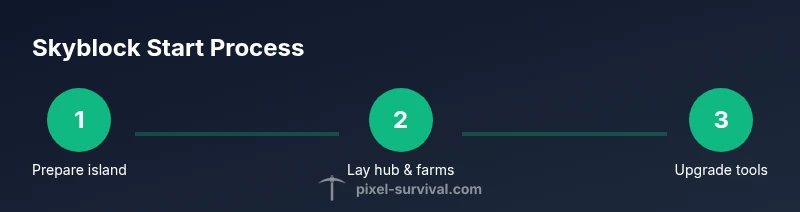
Take stock of your current resources and decide where your central hub will sit. Establish a Work Bench and a Chest in this area to keep essential crafting and storage within reach. Create a safe exit path to a nearby platform so you aren’t trapped if a mob appears.
Tip: Place torches around the hub early to prevent dark-spawned threats. - 2
Lay a foundation with platforms
Lay several rows of wooden platforms to outline a stable, expandable sky island. Start with a compact square or rectangle and leave room for a future farm border. Avoid overextending fragile edges; plan future growth in concentric rings.
Tip: Keep a one-block safety gap at the edge to prevent accidental falls. - 3
Craft essential tools and benches
Craft a Work Bench, basic tools, and a storage chest from your wood supply. These items unlock crucial recipes and give you a place to store early resources. Upgrade your pickaxe when possible to accelerate mining of stone and ore.
Tip: Upgrade to a better pickaxe as soon as you can mine iron ore. - 4
Create a starter farm
Set up a small crop zone with torches and adequate spacing to grow your first resources. A simple wheat or mushroom patch can sustain you through early nights. Ensure there’s a clear path to the hub for quick escapes if needed.
Tip: Keep a dedicated seed patch separate from your main storage. - 5
Expand space safely
Add more platform levels to increase farming and storage capacity while keeping walkways clear. Consider a vertical design to maximize space on your floating island. Always map out emergency routes and fallback points.
Tip: Use light-colored blocks to visually differentiate farming zones. - 6
Organize storage and inventory
Place a second Chest near your farming area for harvested resources. Label sections by resource type and keep a stash of torches, seeds, and basic tools. A tidy inventory prevents bottlenecks during expansions.
Tip: Create a dedicated “food” chest to track meals and crops. - 7
Upgrade your tools and gear
As soon as ore becomes available, smelt it in a Furnace and craft stronger weapons and armor. Upgraded gear improves survivability during nighttime events and potential encounters during exploration.
Tip: Balance armor gains with weapon upgrades for versatile progression. - 8
Plan progression milestones
Draft a simple roadmap: next upgrades, farm expansions, and potential boss encounters. Document progress on a nearby wall or map for quick reference. This keeps you motivated and focused on long-term Skyblock goals.
Tip: Review the plan weekly and adjust based on resource flow.
Got Questions?
What is Skyblock in Terraria?
Skyblock is a survival challenge that starts on a tiny floating island with limited resources. The goal is to survive, expand, and progress through crafting, farming, and gear upgrades while managing space and safety.
Skyblock challenges you to survive on a tiny floating island by farming and upgrading gear as you expand.
What is the best starter setup?
A basic starter setup includes a Work Bench, a Torch, a Chest, some Wood, and Wood Platforms. This provides core crafting, storage, lighting, and expansion options for early progression.
Start with a bench, light, storage, and platforms to begin your expansion safely.
How do I grow my island efficiently?
Efficient growth relies on stable resource generation, compact farms, and a planned expansion path. Focus on a small, reliable food source and scalable farms to sustain long play sessions.
Build small, dependable farms and expand gradually to support ongoing play.
How long does progression typically take?
Progression depends on resources and goals, but a steady pace with structured upgrades and farming can lead to noticeable advancement within several in-game days. Focus on consistency rather than speed.
With a steady plan and consistent farming, you’ll see progress day by day.
Should I use seeds in Skyblock?
Seeds help establish farming and grass spread, but they aren’t strictly required at first. Use them if you have access to Grass or Seed items to accelerate ecological growth.
Seeds help farms grow and grass spread, but aren’t essential immediately.
Are there risks to dying or losing progress?
Terraria Skyblock is not about a single death, but frequent setbacks can stall progress. Keep backups of your world when possible and always have a safe route back to your hub.
Deaths are setbacks, not endgames. Keep a safe route and back up progress when you can.
Watch Video
Key Points
- Plan your island layout before building
- Prioritize light, food, and accessibility
- Upgrade tools early to speed progress
- Use modular farm designs for easy expansion
- Keep storage organized to prevent bottlenecks