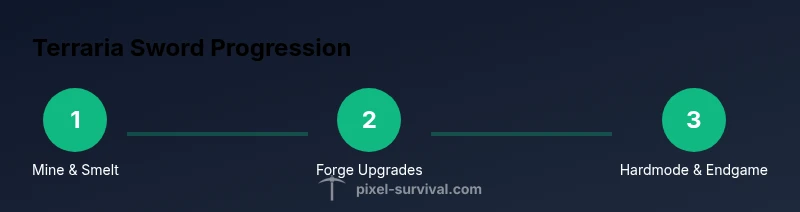
Terraria Sword Progression: Master Your Blades Step-by-Step
Learn a comprehensive, practical path to upgrading swords in Terraria—from copper to endgame blades—covering ore tiers, crafting stations, boss rewards, and hardmode transitions. Pixel Survival provides a clear, step-by-step approach to steady upgrades and smarter resource management.


You’ll upgrade your melee power through a clear progression path, starting with basic copper or tin and advancing through iron/lead, silver/tungsten, and gold/platinum in pre-hardmode. In hardmode, target mythril/orichalcum and adamantite/titanium to forge stronger swords, then leverage boss drops and endgame blades for late-game challenges. Plan ore access and forge stations to stay ahead.
Core Principles of Sword Progression
Terraria sword progression is a steady climb driven by ore tiers, crafting stations, and biome-specific resources. The core idea is to pair weapon upgrades with your access to new metals and the ability to forge or craft them at the right times. Always consider your world’s ore distribution, your mining routes, and whether you’ve unlocked the necessary crafting surfaces. As you expand your base and stockpile, you’ll find it easier to transition from early copper or tin blades to mid-tier swords and, eventually, hardmode weaponry. Pixel Survival emphasizes a deliberate upgrade cadence: upgrade when you can replace a large portion of your current DPS with a single new sword, and always keep a short-term backup for surprise encounters.
- Plan your ore-gathering trips around upcoming upgrades.
- Build and protect forge stations (furnace + anvil) near your mining zones for efficiency.
- Balance raw damage with range, swing speed, and getting through enemies quickly.
In short, progress is about resource planning as much as it is about combat skill. The right sword at the right time makes the next biome or boss fight far more manageable.
Pre-Hardmode Sword Options and Upgrades
Pre-hardmode swords form the foundation of your progression. You’ll typically start with copper or tin blades, then move to iron/lead, silver/tungsten, and gold/platinum as you obtain bars from mining and smelting. Each tier offers better DPS and sometimes faster swing speed, letting you clear biomes and caves more efficiently. A key strategy is to stockpile bars of several tiers so you can craft upgrades on demand rather than running back and forth to your storage. This reduces downtime and keeps you aligned with your exploration pace.
- Prioritize iron or silver if you’ve found frequent ore deposits and a reliable forge.
- Keep a small reserve of gold or platinum to craft stronger swords when you reach late pre-hardmode.
- Don’t ignore tool upgrades; a better pickaxe helps you reach ore nodes faster, accelerating your sword upgrades.
Early-Game to Mid-Game: Copper to Silver Upgrades
The early game is about establishing a reliable DPS baseline, so upgrading from copper/tin to iron/lead and then to silver/tungsten is a natural rhythm. Each upgrade typically comes with a more consistent DPS and improved reach, which makes exploration and combat against common foes easier. The mid-game often hinges on refining your crafting stations and inventory management: keep your forge range optimized, ensure you have enough fuel, and keep a stockpile of the relevant metal bars. Enemies in these stages can still overwhelm you if you’re careless, so always keep a health kit handy and position yourself to avoid back-to-back hits during fights.
- Craft a few reliable swords in each tier before moving on.
- Maintain a steady supply of bars through mining and smelting.
- Use terrain and terrain-based tactics to maximize DPS during fights.
Pixel Survival notes that a disciplined upgrade rhythm minimizes backtracking and maximizes your time spent advancing.
Transitioning to Hardmode: Mythril/Orichalcum and Adamantite/Titanium
Hardmode introduces new metals—mythril/orichalcum and adamantite/titanium—allowing meaningful DPS gains and new weapon classes. The upgrade cadence should begin as soon as hardmode opens: gather these metals in ore-rich biomes, smelt them into bars, and forge new swords to replace older pre-hardmode blades. This transition is also a good moment to broaden your crafting toolkit, as certain swords require specific combinations or additional materials. Don’t rush: you’ll need adequate armor and healing supplies to survive the intensified enemies.
- Focus on mining hardmode ores in cavern networks and near the dungeon corridors.
- Craft a few hardmode swords to compare swing speed and DPS against your old favorites.
- Pair sword upgrades with protective gear to maintain survivability in tougher encounters.
Endgame Swords and Moon Lord-Era Options
Endgame swords often come from late-game bosses, post-Moon Lord content, or exceptional drops from built-in loot systems. The key is aligning your sword choice with your playstyle—sniper-like reach weapons for ranged mobs, or high-DPS swords for fast-paced melee. Crafting late-game blades usually requires advanced bars and rare materials, so your focus should be on accessing these resources through bosses, exploration, and event completions. A well-rounded player keeps a ready-made set of swords to switch between depending on the enemy type and arena setup.
- Prepare a high-DPS weapon for crowded dungeon runs and swarms.
- Keep at least one long-reach sword for enemies that strike from a distance.
- Save rare materials for swords that significantly boost damage output in late-hardmode fights.
Crafting Stations and Resource Management
Effective sword progression hinges on reliable access to crafting stations. The Furnace converts ore to bars, and the Anvil lets you craft and upgrade swords from those bars. Position these stations in or near your home base to minimize travel time during night patrols. Resource management means balancing mined ore with bars on hand, so you’re always ready to forge the next upgrade. If you anticipate a long expedition, consider building a portable forger kit and keep a stockpile of fuel for the furnace.
- Place Furnace and Anvil in a safe, central location near storage.
- Maintain a rolling stock of bars across key tiers.
- Save room for exotic materials needed for endgame blades.
Pixel Survival emphasizes proactive station placement to minimize downtime during combat runs.
Enchantments, Prefixes, and Buffs That Support Sword Progression
In Terraria, weapon prefixes from reforging can meaningfully alter sword performance. Prefixes such as increased damage or critical strike chances significantly impact early and mid-game play. Enchantments themselves are not a separate mechanic for swords, but you can use healing and damage buffs from potions to maximize DPS during boss fights and exploration. It’s worth stocking a mix of potions, stacking buff duration, and choosing prefixes that complement your combat style (faster swings vs. higher single-hit damage).
- Reforge for prefixes that boost damage without sacrificing swing speed.
- Use potions to enhance on-the-fly boss fights and cave runs.
- Balance bonus damage with attack speed to suit your preferred tempo.
Pixel Survival recommends testing a few prefixes on your primary weapon to see which one yields the most consistent DPS in real combat.
Boss Drops, Biomes, and Progression Strategy
Boss encounters are major turning points in sword progression. Defeating bosses often yields new materials, access to advanced crafting, and sometimes exclusive weapons. Develop a progression plan that aligns with your biomes and the upcoming boss sequence, ensuring you have a diversified loadout to handle varied enemy types. Strategy matters: exploit enemy weaknesses, control the arena, and time your healing to maximize DPS while minimizing risk. Stay flexible and adjust weapon choices to match each encounter.
- Schedule boss runs after gathering a reliable upgrade set.
- Create a simple arena with healing zones and safety rails.
- Maintain a flexible sword lineup to adapt to boss patterns.
Pixel Survival notes that player planning reduces downtime and increases successful progression through each stage.
Practical Loadouts by Stage
A practical loadout evolves with your progression. Early on, a copper or tin blade paired with basic armor is enough for exploration. As you upgrade, switch to iron/lead, then silver/tungsten, and finally gold/platinum blades with improved armor sets. In hardmode, carry at least one mythical or high-DPS sword for dense mob fights and one longer-range blade for bosses. Always consider the arena layout and potion support to maximize your sword’s effectiveness, and rotate weapons based on enemy types.
- Stage 1 (early): Copper/Tin sword + basic armor + potions.
- Stage 2 (mid): Iron/Lead sword + mid-tier armor + mobility buffs.
- Stage 3 (hardmode): Mythril/Orichalcum sword + upgraded armor + DPS potions.
- Stage 4 (endgame): Adamantite/Titanium sword + top-tier armor + long-duration buffs.
Pixel Survival highlights the importance of weapon versatility and situational choices in long-term progression.
Common Mistakes and How to Avoid Them
New players often stumble into sword progression by chasing the strongest weapon too early, neglecting resource management or crafting stations. Others rely on random drops instead of planning an upgrade cadence. A frequent oversight is failing to gather enough bars before hardmode, leading to rushed upgrades that don’t significantly improve DPS. To avoid these issues, adopt a structured upgrade plan, build your forge layout early, and keep a reserve of bars across tiers.
- Avoid sprinting through upgrades without stockpiling bars.
- Always unlock the Anvil and Furnace near a mining hub.
- Don’t ignore potion buffs that can dramatically improve combat outcomes.
Pixel Survival suggests maintaining a clear upgrade checklist to minimize wasted runs and maximize progression efficiency.
Putting It All Together: A Sample Progression Plan
A practical plan combines mining trips, bar stockpiling, and staged weapon upgrades. Start by ensuring you have a reliable forge setup, then mine copper and iron ores to craft initial swords. Move to pre-hardmode upgrades, then target mythril/orichalcum in hardmode, followed by adamantite/titanium. End with specialist endgame blades and boss drops to cement your position in late-hardmode challenges. Keep a notebook or in-game tracker to monitor which upgrades you’ve unlocked and which materials you still need to obtain.
- Week 1: Build forge stations and stockpile basic bars.
- Week 2: Upgrade to mid-tier swords; reinforce armor and potions.
- Week 3: Acquire mythril/orichalcum and adamantite/titanium; test multiple swords.
- Week 4+: Focus on endgame blades and boss-derived weapons for Moon Lord-era content.
Pixel Survival’s approach is practical and progression-driven, helping players transition smoothly through each stage.
Tools & Materials
- Furnace(Smelts ore into bars; essential for all upgrades)
- Anvil(Crafts swords from bars; essential for weapon upgrades)
- Iron Pickaxe or better(Required to efficiently mine ores and access deeper veins)
- Metal Bars (Copper, Tin, Iron, Lead, Silver, Tungsten, Gold, Platinum, Mythril, Orichalcum, Adamantite, Titanium)(Collected via mining and smelting; stockpile bars across tiers)
- Ore-rich Biome Access(Aids in faster ore collection for early upgrades)
- Wooden Workbench (optional)(Useful for early crafting or storage layouts)
Steps
Estimated time: 120-180 minutes
- 1
Mine ore and collect resources
Begin by locating ore-rich caverns and mining copper, tin, iron, and lead. Gather enough ore to start smelting into bars and to build essential armor. Keep your inventory organized to avoid missing key materials for future upgrades.
Tip: Bring torches and a compact mining kit to maximize ore findings while keeping enemies at bay. - 2
Smelt ore into bars
Head to your furnace and smelt your gathered ore into bars. The number of bars you get will vary by ore type, but having a mix of early-tier bars makes up-tier upgrades faster. Plan ahead so you have a stockpile of bars ready for the first weapon upgrades.
Tip: Smelt in batches to minimize time spent running back and forth between mining zones. - 3
Forge early weapons
Use the anvil to craft basic swords from metal bars. Start with copper or tin, then upgrade to iron or lead as you secure more bars. Test each sword in combat to judge swing speed and DPS before committing to a full upgrade path.
Tip: Choose swords with consistent DPS and reliable range for safer exploration. - 4
Upgrade to mid-tier swords
With more bars on hand, forge mid-tier swords (silver/tungsten) to boost DPS. Compare performance against prior blades in real combat scenarios to decide if you should continue upgrading or conserve bars for later steps.
Tip: Keep a secondary weapon for backup damage in case of unexpected ambushes. - 5
Transition to hardmode metals
After hardmode starts, search for mythril/orichalcum and then adamantite/titanium. Forge new swords from these bars and evaluate their DPS against your previous blades. This is a natural pause point to reassess armor and potion loadouts.
Tip: Prepare a small reserve of healing potions for hardmode fights. - 6
Balance armor and buffs
Upgrade your armor in parallel with weapon progression. Strong swords are less effective if you die quickly. Stock potions and set up a safe arena to maximize DPS during boss encounters.
Tip: Prioritize set bonuses that enhance survivability to sustain longer DPS windows. - 7
Plan for endgame blades
Keep rare materials for endgame swords gathered via bosses or special events. Endgame blades may require multiple materials, but the payoff is dramatically higher DPS and reliability in Moon Lord-era fights.
Tip: Create a long-term progression checklist to ensure you’re always on track for the next upgrade.
Got Questions?
What is the fastest way to upgrade swords in the early game?
Focus first on mining and smelting to craft iron or silver swords. These upgrades give a reliable DPS boost and unlock access to higher-tier biomes. Prioritize having a functional forge and a basic armor set before attempting big leaps in DPS.
Start with iron or silver swords once you have enough bars; upgrade your forge and armor first to prepare for mid-game enemies.
When should I start hardmode sword upgrades?
Hardmode upgrades are worth pursuing as soon as hardmode begins and you have access to mythril or orichalcum. Craft a few hardmode swords and compare their DPS to your pre-hardmode blades to decide which to rely on for the next phase.
Begin hardmode upgrades as soon as you unlock mythril or orichalcum, then compare DPS to your old swords.
Which swords are best for endgame, and how do I obtain them?
Endgame swords are typically crafted from advanced metals and boss drops. They excel in high-DPS scenarios and Moon Lord-era fights. Gather rare materials from bosses and events, then forge or craft the best-suited blade for your playstyle.
Endgame swords come from advanced metals and boss drops; collect materials and forge the best blade for your style.
How important are enchantments/prefixes for swords?
Prefixes can significantly boost damage or swing speed. Refine your preferred prefixes through reforging to optimize for DPS. Balance any DPS gains against potential drawbacks like swing speed reductions.
Prefixes matter; reforge for a good damage boost and test how it affects swing speed.
What are common mistakes beginners make in sword progression?
Common mistakes include chasing the strongest weapon too early, neglecting crafting stations, and not stockpiling bars. Focus on a measured upgrade path, keep your forge simple and nearby, and maintain a bar reserve for hardmode upgrades.
Avoid chasing the top-tier weapon too soon; set up your forge and stockpile bars first.
Can I skip tiers or should I upgrade methodically?
Methodical upgrades minimize backtracking and ensure you consistently gain DPS. Skipping tiers can leave you unprepared for tougher enemies. Follow the planned progression and only move to the next tier when you’re confident in your setup.
Upgrade gradually; skip only if you’re sure your gear and arena can handle tougher foes.
What role do potions play in sword progression?
Potions provide temporary DPS and survivability boosts, helping you survive hardmode fights and heavy mob encounters. Use them strategically during boss fights and crowded areas to maximize your sword’s effectiveness.
Potions boost DPS and survivability; use them during tough fights for best results.
Watch Video
Key Points
- Upgrade strategically by ore tier and crafting capacity.
- Stockpile bars across tiers to minimize downtime.
- Hardmode metals unlock stronger swords quickly if mined efficiently.
- Endgame blades rely heavily on boss drops and rare materials.