Where to Mine in Terraria: A Practical Guide for 2026
Learn where to mine in Terraria across surface, underground, cavern, and beyond. This practical guide covers ore routes, tool upgrades, safe tunnel design, and progression-focused mining strategies for 2026.


This guide shows where to mine in Terraria across surface, underground, cavern, and underworld zones, with practical routes and setups to maximize ore yields. You’ll map efficient tunnels, choose ore-focused paths, and progress your mining setup from starter picks to endgame resources. This article also highlights common mistakes and confirms best starting choices.
Starting Your Mining Journey: Surface to Cavern Layers
Mining in Terraria begins on the surface, then quickly moves into the underground and cavern layers as you progress. This section outlines how to map your approach from the first torch-lit tunnels to deeper routes that reveal ore-rich veins. Knowing where to mine in Terraria starts with understanding layer boundaries and how each depth zone changes the ore you’ll encounter. The goal is to establish consistent tunnels that let you collect essential metals while preserving your supplies and safety. By the end of this section, you’ll have a solid mental map of where to mine and why those zones matter for progression.
Key takeaways include recognizing the progression from surface materials to underground ore and planning routes that minimize backtracking while maximizing ore density. The Pixel Survival team emphasizes practical tunnel design over brute digging, so your early mines should be serviceable, expandable, and easy to defend from hazards.
Core Concept: Ore Layers and What They Mean for Your Route
Terraria’s ore distribution is depth-dependent. Surface and underground layers yield common metals first, while deeper caverns bring rarer ores. Your mining strategy should adapt as you descend: start with quick, broad tunnel networks to locate clusters, then funnel into targeted veins. Understanding these layer shifts helps you decide when to switch tools and which directions to explore next. A disciplined route minimizes time wasted on dead ends and increases ore-per-tile efficiency. Regularly inventory your finds and adjust your path to chase the next tier of ore without over-committing to a single tunnel. This approach keeps early gear relevant while you unlock higher-tier pickups.
Biome-Specific Mining Routes: Surface, Underground, Cavern, and Underworld
Different biomes and depth zones offer unique ore opportunities. Surface caves are great for quick metals and early resources; underground networks reveal iron, copper, and tin; cavern layers become rich in silver, gold, and more. The Underworld houses special materials tied to late-game progression. A solid route blends these zones: a shallow ladder down into underground tunnels, then branching into cavern networks, and finally a controlled, well-lit Underworld access path for rare resources. Always prepare escape paths and light up pockets to prevent mobs from spawning in dark corridors.
Tools, Tiers, and How to Upgrade Efficiently
Your mining speed depends on tool tier and player mobility items. Begin with a copper or tin pick and upgrade to iron/steel as soon as possible. Mid-game ores like tin, lead, and iron pave the way to mid-tier metals that unlock faster mining and better drops. When planning upgrades, factor in armor protection, mobility boosts, and inventory efficiency. Crafting a few essential accessories—like increased mining speed, enhanced light range, and better tool durability—can dramatically reduce the time needed to locate and extract ore. Remember that the right tool pairings often trump sheer digging volume.
Practical Tunnel Design: Layouts and Safety
Effective mine design uses a combination of horizontal tunnels with vertical shafts for depth access. Start with a grid-like branching pattern to maximize coverage while keeping a simple map. Use torches on both sides of the tunnel for even lighting and to reduce hostile mob spawns. Regularly place mining supports (wood or stone blocks) to maintain tunnel integrity, especially as you descend. Install emergency exits at regular intervals, and keep a stockpile of wood and stone blocks to quickly seal gaps if necessary. A well-planned tunnel reduces backtracking and makes ore routing predictable.
Early Game, Mid Game, Late Game Mining Objectives
Early game mining focuses on copper, tin, and basic ores enough to craft starter gear and tools. Mid-game objectives shift toward iron or steel, silver, and gold ore while expanding tunnel networks. Late-game mining targets rarer ores and endgame materials—chlorophyte (in the jungle biome) and other high-tier veins—plus meteorite fragments and special drops from hard mode. Each phase demands different tunnel density, tool upgrades, and storage capacity. Track your progress with a simple map and set tiered goals so you always have a clear next step.
Chlorophyte and Other Hard-Mode Ores: Where to Find Them
Chlorophyte ore requires jungle growth in hard mode and becomes accessible after specific game milestones. Focus on jungle caverns and use purification steps to convert mud blocks into fertile ground for chlorophyte growth. Other hard-mode ores appear in deeper layers and require better picks to harvest efficiently. Prioritize chlorophyte in a dedicated branch network so you don’t dilute your mining efficiency with unrelated exploration. Maintain a balanced supply of torches and tools to keep the expedition productive.
Endgame Mining Routes: Meteorites and Deep Ore Vaults
Meteorites drop after hard mode and offer valuable endgame components. Locate meteorite crashes and secure the meteorite ore before more dangerous enemies flood the area. Deep ore vaults are typically reached through carefully planned deeper tunnels, requiring powerful pick upgrades and robust lighting. Build a long-term extraction plan that includes safe retreat routes should the area become too hazardous. This phase requires higher armor, better mobility, and precise navigation to maximize yield without dying from environmental threats.
Lighting, Safety, and Inventory Management While Mining
Effective lighting is as important as picking the right tunnels. Use torches or glowsticks to maintain visibility; consider alternative light sources that persist in dark zones. Maintain a clean inventory with categories for ore, gems, and fuel, so you never waste trips back to the surface. When you encounter lava pools or hostile enemies, pause, secure your position, and plan a safe crossing or retreat. Remember to save backups of your map so you can revisit promising tunnels without repeating the same exploratory passes.
Expedition Mapping: How to Plan Your Next Foray
Before you dig deep, sketch a rough map of your intended route. Mark depth milestones, ore-rich pockets, and safe escape routes. Use a tunnel system that connects a shallow surface cluster to mid-depth caverns and then to the Underworld or hard mode zones. Regularly re-evaluate your map after each mining session to refine your route and remove dead ends. A deliberate plan reduces time spent wandering and increases total ore collected per expedition.
Common Pitfalls and How to Avoid Them
One common mistake is over-digging without mapping, which wastes resources and increases risk exposure. Another pitfall is ignoring safety; always maintain light sources and escape routes. Underestimating the importance of tool upgrades can slow you down mid-run. Finally, neglecting inventory management leads to frequent trips to the surface, diminishing returns. Use a simple system to track ore quotas and planned upgrades, so each digging session contributes to a clear progression.
Quick Start Reference and Checklists
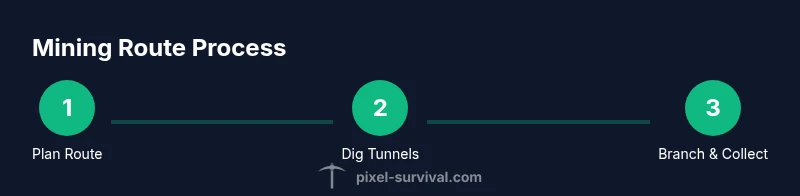
Use this practical checklist to begin mining with confidence: Plan a shallow tunnel network, upgrade your pick, and light your way with torches. Create a parallel deeper tunnel for mid-depth ores, and prepare an Underworld access path for late-game materials. Keep a spare inventory, a few blocks for quick fixes, and a map that marks discovered ore veins. With these steps, you’ll build a reliable mining workflow that scales with your world and progression needs.
Tools & Materials
- Mining pickaxe (Copper-tier or better)(Upgrade as soon as possible to increase digging speed and reach higher ore layers.)
- Torches or light sources(Provide essential illumination; consider Glowsticks as a lightweight alternative.)
- Blocks for tunnel support (wood or stone)(Helpful for stopping collapses in some tunnels and for quick path sealing.)
- Extra inventory space and storage(Carry a chest or storage box to avoid frequent trips to base.)
- Basic exploration supplies(Rope, bombs, or mining potions can aid access to difficult caverns (use with caution).)
Steps
Estimated time: varies
- 1
Prepare your mining kit
Equip a copper-tier or better pick and gather torches, fuel, and a storage container. Review your map and decide a starting tunnel direction that minimizes backtracking. Prepare light sources and a simple route plan before you start digging.
Tip: Keeping a map open helps you avoid crossing your own paths and missing ore veins. - 2
Create a shallow starter tunnel
Dig a straight, shallow tunnel just below the surface to locate early ore clusters. Light every section and leave small branches to explore nearby pockets without losing your main route.
Tip: Place torches in a consistent pattern so you can navigate by memory if you need to backtrack. - 3
Descend to mid-depth caverns
Create a controlled vertical shaft to descend to mid-depth caverns. Expand horizontally with a few wide tunnels to test ore density. Collect ores as you go and avoid over-digging empty spaces.
Tip: Branch mining with parallel shafts increases ore density per tunnel. - 4
Branch out for ore-rich veins
From your main tunnels, dig smaller branches toward known ore pockets. Focus on density-packed seams rather than large, aimless digs. Label each branch on your map for future returns.
Tip: Use a consistent depth marker to remember where a vein tends to occur. - 5
Upgrade your tools
As soon as you collect enough ore for an upgrade, craft or purchase a stronger pick. Higher-tier picks dramatically speed up mining and unlock deeper zones.
Tip: Coordinate upgrades with your tunnel expansion to maximize time on the ore rather than on tool calls. - 6
Light and safety maintenance
Ensure every tunnel is well-lit and maintain a clear retreat path. Secure sensitive sections with blocks if lava or enemies appear nearby. Carry a healing item or light-based accessory to survive risky sections.
Tip: Never leave a tunnel dark for long; mobs spawn in unlit spaces and can complicate progress. - 7
Map and record findings
Regularly update your map with discovered ore veins and tunnel layouts. This reduces redundant digging and helps plan future expeditions. Note depth levels where key ores appear.
Tip: A clean map prevents wasted digging and improves long-term mining efficiency. - 8
Move to hard-mode routes if ready
When you reach the late mid-game, start exploring hard-mode ore routes, including chlorophyte zones. Prepare for tougher enemies and more complex tunnels.
Tip: Advance gradually; rushing hard-mode sections often leads to unnecessary deaths. - 9
Establish endgame routes
Create specialized corridors for meteorite and other endgame ores. Keep safety routes in place and ensure you have enough storage capacity for high-value resources.
Tip: Endgame routes should be planned and tested in stages to avoid losing progress.
Got Questions?
What ore should I mine first in a new world?
Start with copper or tin ore to craft basic tools and armor. As you gather more ore, upgrade to iron and other common metals to speed up deeper exploration. This staged approach keeps early progress smooth while you unlock more challenging zones.
Begin with copper or tin to craft your starter tools, then upgrade to iron to speed up deeper exploration.
Where do I begin mining in a fresh world?
Begin with a shallow tunnel system near the surface to locate early ore clusters. Expand gradually downward into underground layers, keeping notes on ore densities and safe routes. A small, well-lit starter network paves the way for deeper exploration.
Start near the surface with a small tunnel, then move downward as ore density appears.
Is it safe to mine in the Underworld?
Mining in the Underworld is riskier due to lava and tougher enemies. Prepare with strong lighting, lava-proof blocks, and a reliable retreat path. Only commit to Underworld sections when you have appropriate tools and armor for survivability.
Underworld mining is risky; ensure you’re prepared with protection and escape routes.
How can I find Chlorophyte ore early?
Chlorophyte ore appears in jungle caverns after hard mode begins. Focus on expanding into jungle-depth tunnels with strong lighting and safe paths. Chlorophyte farming rewards patient exploration and steady tool upgrades.
Chlorophyte appears after hard mode in jungle caverns. Expand your jungle tunnels carefully.
What is the best mining progression for beginners?
Begin with surface exploration and copper/tin tools, upgrade to iron, then move into cavern-level ores. As you advance, branch routes to chlorophyte and other hard-mode ores. Maintain a simple map and gradually increase tunnel complexity as your gear improves.
Start with basic tools, upgrade as you go, and branch toward harder ores when ready.
How should I manage inventory while mining?
Carry a dedicated ore bag or extra storage, categorize ores and gems, and keep a small stash of fuel and blocks. Regularly unload mined materials to a base chest to prevent overflow and avoid losing progress during dives.
Keep ores organized in storage and unload frequently to avoid clutter.
Watch Video
Key Points
- Plan mining routes before digging.
- Upgrade tools as early as possible to access deeper ore layers.
- Branch mining increases ore density and efficiency.
- Light every tunnel and maintain safe escape paths.
- Progress through surface, underground, cavern, and hard-mode zones with a clear map.