How to Get Rid of Corruption in Terraria: Practical Guide
A step-by-step guide to remove corruption in Terraria, using Purification Powder or Clentaminator methods, with strategies for early and late-game progression and maintenance.


By following this guide, you’ll learn how to get rid of corruption Terraria-style using practical, repeatable steps. You’ll choose between purification powder or a Clentaminator with the right solution, gather essential materials, and apply a targeted cleanup plan to biomes. The approach scales from early-game worlds to more advanced setups, with maintenance tips to prevent rebirth of corruption.
How to get rid of corruption terraria: overview
Corruption in Terraria creates spreading, hostile biomes that challenge exploration and base-building. Learning how to get rid of corruption terraria is not just about removing patches; it’s about creating a sustainable world layout that minimizes regrowth. This section introduces the core goals: reduce hostile zones, protect your base, and establish containment lines so future exploration won’t trigger wild corruption spread. A practical plan combines quick cleanup with long-term safeguards, letting you progress without constant rework. According to Pixel Survival, a disciplined cleanup routine saves time and resources while improving world stability.
The mechanics of corruption spread and containment
Understanding how corruption expands helps you prioritize where to act first. Spreading biomes challenge your defenses by seeding new corruption pockets when you’re distracted or rebuilding. Containment hinges on treating edge zones and creating barriers that slow or stop expansion. In practice, you’ll gain leverage by working from the outside in, using outer edges as the primary battleground. Clean borders around your builds reduce the chance of accidental spread and give you clearer visibility of ongoing hotspots. This awareness is essential as your world evolves through progression layers like hardmode and events.
Purification options: Purification Powder, Clentaminator, and solutions
There are a couple of reliable paths to remove corruption: Purification Powder for quick, small-area cleans, and the Clentaminator paired with a solution for larger biomes. Purification Powder is a simple, accessible option early on, letting you treat patches without specialized equipment. The Clentaminator is powerful for sweeping large areas, but it requires planning to avoid over-purifying nearby safe biomes. Green Solution (for corruption) or other color solutions enable different cleansing outcomes. In practice, you’ll choose based on the size of the area and your resource availability. This section sets up the decision framework you’ll use throughout the process.
Early-game cleanup: quick wins and base protection
In the early game, focus on small, manageable patches around your base. Start by purifying the immediate zone to secure your home and nearby wood/stone resources. Build a small containment line with torches and simple walls to remind yourself which areas have already been cleaned. A tested approach is to work in 10-20 tile chunks, ensuring you don’t accidentally trigger wider spread. As you finish each chunk, re-check the surrounding terrain for any new signs of corruption. The goal is steady, incremental improvement without over-committing to a massive cleansing operation.
Mid-game and large-scale cleansing: expanding your purification network
As you accumulate more resources, you can scale up purification with a Clentaminator, sweeping longer corridors and larger biomes. Plan a grid-like purification map that marks cleaned zones and remaining hotspots. Use Green Solution to target the corrupt areas, and maintain regular sweeps to prevent re-emergence. When expanding purification across the map, coordinate boundary lines and ensure your team (in multiplayer) works in coordinated shifts. This systematic expansion reduces the risk of missed pockets and makes the cleanup predictable.
Advanced maintenance: preventing corruption from returning
Prevention is easier than cleanup later. After you’ve cleared significant areas, set up ongoing monitoring: watch for new corruption near biomes that the world’s growth pattern tends to regenerate, such as near rivers or cavern systems. Regularly refresh edges and keep some purification resource stockpiled for future events. Consider building permanent purification rails or zones so future exploration doesn’t require starting from square one. A maintained world is more enjoyable to explore and safer for progression.
Common mistakes and troubleshooting tips
Common mistakes include trying to clean too large an area at once, which wastes resources if you misjudge the spread pattern, or neglecting the edges, which lets corruption creep back in. Always start from the border, then move inward. If you encounter stubborn pockets, reassess containment lines and reallocate Purification Powder or Clentaminator solutions. Keep your tools organized and mobile so you can quickly respond to new hotspots without interrupting your broader base-building plans.
Authority sources
- https://terraria.fandom.com/wiki/Corruption
- https://en.wikipedia.org/wiki/Terraria
- https://www.pcgamer.com/a-terarria-guide-to-corruption-removal/
These sources provide background on the corruption biome and general gameplay strategies used in Terraria, supporting the guide’s recommendations.
Tools & Materials
- Purification Powder(Converts corruption to normal biome; ideal for small to medium areas.)
- Clentaminator(Cleans large biomes when paired with a solution.)
- Green Solution (for Clentaminator)(Used with Clentaminator to cleanse corruption.)
- Containment materials (torches, walls, markers)(Help mark and secure cleaning zones to prevent accidental spread.)
Steps
Estimated time: 3-6 hours
- 1
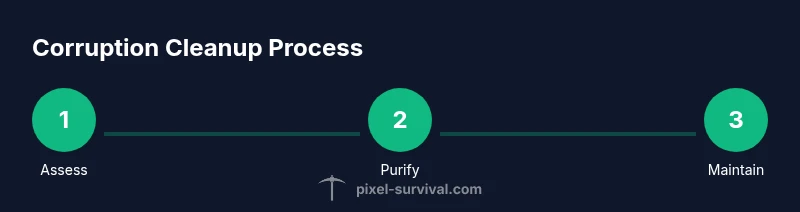
Assess and prepare purification options
Survey the affected zones and decide whether Purification Powder or Clentaminator-based cleansing best fits the scope. Gather the necessary materials, inventory space, and crafting components so you’re ready to begin without delays.
Tip: Plan a staged approach to avoid over-commitment or waste. - 2
Mark borders and secure the area
Identify corruption edges and lay down lighting and barriers to prevent accidental spread. Clear immediate hazards and create safe paths for you to move through the zone during cleansing.
Tip: Good lighting helps you spot creeping corruption early. - 3
Apply purification to outer edges first
Start at the border to push outward, then work inward. Use Purification Powder in small batches or lay down Clentaminator lines along the border to push corruption outward and prevent backflow.
Tip: Working from outside in reduces re-spread risk. - 4
Expand cleanup in controlled sections
Proceed section by section, confirming each area remains clean before moving on. Recheck tool durability and restock supplies as you go to avoid mid-cleanup shortages.
Tip: Take periodic breaks to reassess maps and avoid mission creep. - 5
Rebuild safe zones and buffers
Replace damaged terrain with safe blocks and add buffers around purified areas. Use walls or fences to create reliable boundaries that deter re-spread and guide explorers.
Tip: Buffers act as both physical and visual reminders of cleaned zones. - 6
Maintain, monitor, and adapt
After major cleans, set a maintenance plan. Schedule periodic sweeps and be prepared to re-clean hotspots after world events or biome shifts.
Tip: A consistent maintenance routine reduces long-term effort.
Got Questions?
What is the quickest method to remove corruption in Terraria?
For small patches, Purification Powder is quick and simple. Large zones benefit from a Clentaminator with Green Solution. Both methods require careful planning to avoid re-spread.
Purification Powder for small patches, or a Clentaminator for large areas. Plan to prevent re-spread.
Can corruption be removed in multiplayer worlds?
Yes. Coordinate with teammates, designate zones, and share purification resources. The same purification methods apply, just across multiple players.
Yes, but coordinate with your team and share resources.
Is there an early-game way to cleanse corruption?
Yes, start with Purification Powder in small areas near your base. It’s faster to remove initial patches before expanding.
Yes, use powder to clean early zones near your base.
Will corruption reappear after removal?
Corruption can re-spread if biomes are left unprotected or if the world experiences growing events that seed corruption. Regular maintenance reduces this risk.
Yes, it can reappear if left unchecked; maintain borders.
Do I lose ores or enemies when cleansing?
Removing corruption changes biome status but does not permanently remove ores. Enemies will shift as biomes change, which can affect drops.
Biomes change, enemies shift; ore spawns are not permanently removed.
Watch Video
Key Points
- Plan purification in stages to manage resources.
- Choose powder for small zones or a Clentaminator for large sweeps.
- Tackle borders first to prevent inward spread.
- Stay on a maintenance schedule to prevent relapse.
- Document your progress with markers to guide future exploration.