Terraria Potion Crafting: A Complete Step-by-Step Guide
Learn how to brew powerful Terraria potions with a practical, step-by-step guide. Discover essential ingredients, stations, and strategies to boost buffs for exploration and boss fights.


Terraria potion crafting lets you tailor buffs for exploration and combat. By gathering ingredients, bottles, and the right brewing stations, you can create potions suited to early, mid, and late-game challenges. According to Pixel Survival, mastering rarity of ingredients and timing your brews can dramatically improve your progression. This guide covers basics, stations, and advanced recipes.
What is Terraria potion crafting?
Potion crafting in Terraria is the art of turning simple liquids and reagents into consumables that grant temporary buffs. These buffs can improve your health regeneration, mana efficiency, movement speed, defense, and more, which makes exploration and boss fights more reliable. The Pixel Survival team emphasizes that potions are not just filler items; they shape your progression by compensating for gaps in gear, resources, and biomes. In practice, you combine base liquids (like water or other craftable bases) with a variety of reagents to produce a potion with a specific effect and duration. The process scales with your progression: early-game potions help you survive harsh encounters, while late-game brews support high-difficulty boss battles. Understanding the flow of ingredients, stations, and recipes will unlock a wide range of tactical options.
What you’ll get from this guide
- A clear map of potion types and their general uses
- How to source base liquids and reagents across biomes
- A practical brewing workflow from preparation to storage
- Tips to maximize efficiency and inventory space
- Troubleshooting for common bottlenecks and misbrews
Tools & Materials
- Bottle or Alchemy Station(A placed bottle or an alchemy table near a water source is essential for brewing potions.)
- Base liquids (e.g., bottled water)(Base liquids form the carrier for active reagents; stock multiple bottles for batch brewing.)
- Diverse reagents (plants, mushrooms, ore-derived items, drops)(A wide reagent pool lets you craft a broad spectrum of buff potions.)
- Storage containers (chests, jars)(Keep an organized inventory so you can quickly assemble recipes during runs.)
- Brewing workspace (flat surface, near water)(A dedicated space reduces travel time and helps keep ingredients organized.)
Steps
Estimated time: 90-120 minutes
- 1
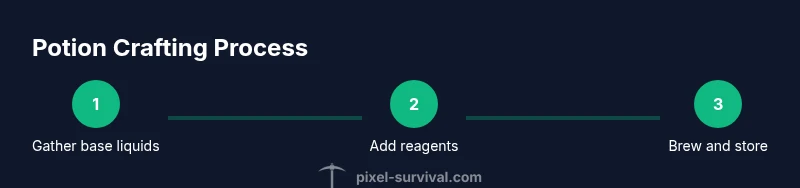
Gather base liquids
Collect bottled water or another base liquid that will carry the potion’s effects. This step establishes your supplies for brewing and helps prevent mid-work interruptions. Ensure you have multiple bottles to enable batch brewing later.
Tip: Keep at least 6–8 base liquid units on hand for quick, repeated brews. - 2
Review available recipes
Survey the potion recipes you have unlocked or know you can unlock with current reagents. Understanding which buffs you need immediately guides your reagent selection and helps prioritize resource farming.
Tip: Create a short list of 3–5 core potions you want ready for the next expedition. - 3
Prepare your brewing station
Set up a Bottled Water ready station near a stable surface. Position containers for finished potions nearby so you can access everything without moving around a lot during brewing.
Tip: A tidy setup reduces mistakes and speeds up the process. - 4
Select base potion and add primary reagent
Choose a base liquid and add a primary reagent that defines the potion’s buff. Primary reagents unlock the main effect; pairing them with supportive reagents creates stronger variations.
Tip: Avoid overloading a base with incompatible reagents, which can waste materials. - 5
Brew and collect
initiate the brew, then collect the potion from the brewing interface. Repeat with other base liquids to build a small stock of potions for your upcoming activities.
Tip: Brewing batches in parallel saves time during long runs. - 6
Expand with secondary reagents
Add secondary reagents to enhance duration, potency, or create rare variants. This is where you tailor potions to specific biomes or bosses.
Tip: Keep notes on successful reagent combinations for future runs. - 7
Label and organize
Label potions by buff type and duration, then store them in labeled chests or shelves. Organization helps you quickly assemble ideal loadouts before a fight.
Tip: Use color-coded storage or simple tags to prevent mix-ups. - 8
Test in safe conditions
Test newly brewed potions in a safe arena to confirm duration and effect. Observing actual gameplay outcomes ensures your notes reflect real results.
Tip: Record timing windows for quick reference during combat. - 9
Combine for progression
Use priÂme potions together to unlock powerful support builds. Pairing a mobility potion with a defensive buff often yields resilient run-throughs.
Tip: Sequencing potions in quick swaps can sustain buffs across longer encounters. - 10
Plan farming for preferred ingredients
Identify which biomes or events yield the most useful reagents and plan your farming runs accordingly. Efficient farming reduces downtime between expeditions.
Tip: Time farming sessions with in-game timers or events for maximum yields. - 11
Maintain inventory balance
Balance your potion stock between healing, mobility, utility, and defensive buffs. A balanced loadout reduces the need for frequent restocking.
Tip: Aim for at least 2–3 of each critical potion for mid-to-late-game quests. - 12
Review and refine your craft
After each boss or biome run, review which potions performed best and adjust your farming plan. Iteration is the key to consistent success.
Tip: Keep a small notebook or in-game log of effective recipes.
Got Questions?
What is potion crafting in Terraria?
Potion crafting is the process of turning base liquids and reagents into consumables that grant temporary buffs. Potions support exploration, combat, and boss fights by enhancing health, mana, speed, defense, and more. Mastery comes from understanding which reagents improve which effects and how long they last.
Potion crafting is turning liquids and reagents into buffs you drink during battles and exploration. It helps you survive tougher fights and move more smoothly through biomes.
What stations do I need to brew potions?
A bottle or alchemy station is required to brew potions. Place it on a flat surface near a water source so you can access base liquids and reagents easily. Some recipes may require additional specialized crafting steps, but the basic setup is universal.
A bottle or alchemy table is needed, placed near water. It’s your primary setup for brewing potions.
Where can I find ingredients for potions?
Ingredients come from various sources: plants and biomes, mushrooms, mineral drops, and enemy loot. Some reagents are more common early in the game, while others appear with progression. Exploring different biomes and defeating specific enemies expands your reagent pool.
Ingredients come from plants, mushrooms, enemy drops, and biome-specific loot. Progression unlocks more reagents.
Can I brew multiple potions at once?
Yes. If you have sufficient base liquids and reagents, you can brew several potions in a row. Batch brewing saves time, especially when stocking up for a long expedition or boss fight.
You can brew several potions in sequence if you have the materials. Batch brewing is efficient.
How do I optimize potion duration and potency?
Use secondary reagents to extend duration or improve potency. Pair base potions with complementary reagents to tailor effects for the encounter. Keeping notes helps refine your choices over time.
Use extra reagents to boost duration or strength. Pair compatible reagents for best results, and keep notes.
Are there differences in potion crafting between game modes?
Potion effects and available reagents can vary with game updates and modes. Always verify current recipes in your version and patch notes to ensure accuracy for your playthrough.
Potions and recipes can change with updates, so check your version’s notes.
Watch Video
Key Points
- Plan potion goals before you start brewing.
- Source base liquids and reagents early to avoid shortages.
- Use the right station to unlock recipes and save time.
- Test potions in practice to verify real-world effects.
- Adjust your loadout for each boss and biome.