Trap Door Terraria: A Practical Guide to Hidden Entrances
Learn to design, wire, and use trap doors in Terraria to create concealed entrances, defensive layouts, and stealthy progressions. A practical, step-by-step guide from Pixel Survival for aspiring Terraria builders.


With this guide you'll learn to design, build, and wire trap door terraria setups to create concealed entrances, secret corridors, and defensive barriers. You'll identify ideal locations, gather the right materials, and set up activation methods such as switches or pressure plates. By the end, your base will feature a reliable, invisible access point that blends practicality with stealth.
Why Trap Doors Matter in Terraria
According to Pixel Survival, trap door terraria builds offer stealth, space efficiency, and strategic versatility that players use to secure bases, hide secret paths, and add flair to progression. In practice, a well-placed trap door acts as a discreet entry or exit that won’t disrupt room aesthetics. Hidden entrances can be crucial in those late-game expeditions when speed and safety matter. Think of trap doors as a practical tool in your base-building toolkit—one that lets you combine utility with a touch of theater.
As you plan, consider how a trap door can simplify navigation between rooms, create ambush opportunities for defenders, or provide a quick escape when trouble looms. While the exact mechanics vary by Terraria version, the core idea remains: place a door that blends with its surroundings and connect it to a reliable activation method for fast, controlled access.
Core Mechanics: How Trap Doors Work
Trap doors in Terraria function as movable blocks that can open and close in response to player input or wiring. The basic setup involves a door unit installed across a doorway, with activation coming from a switch, lever, pressure plate, or timer. When triggered, the door changes state, revealing or concealing the passage. For best results, place the door flush with the wall so it looks like part of the room rather than a conspicuous device. This keeps your base visually clean while retaining full accessibility.
A successful trap door build relies on reliable activation and clean integration with surrounding blocks. Always test from multiple angles to ensure the door opens smoothly and closes without snagging. If a door sticks or fails to register, recheck wiring connections and ensure there’s a clear line of activation to the mechanism.
Planning Your Hidden Entrance
Effective trap door placement starts with a clear plan. Identify high-traffic paths or valuable routes, then sketch candidate locations that won’t disrupt essential room functions. Consider alignments with existing doorways, chests, and furniture so the concealed door fits naturally. To maximize stealth, choose a wall texture or color that conceals the door’s outline and avoid placing it where enemies typically spawn or patrol.
Map out the activation zone and ensure room for the switch or pressure plate without forcing players to step into danger. A well-planned entrance reduces accidental triggers and makes your hidden corridor feel truly seamless. Document your plan in-game so you can reference it during the build.
Materials, Tools, and Safety Considerations
A successful trap door installation requires a mix of functional items and safe building practices. Gather a door block, a reliable activation device (switch or pressure plate), and wiring components to connect the two. Have spare blocks for concealing the mechanism and additional blocks to frame a clean doorway. Keep a hammer handy for minor adjustments and ensure you’re working in a well-lit area to avoid misplacing parts.
Safety-wise, avoid placing trap doors over hazardous tiles or near enemies you can’t safely handle. Test paths thoroughly before calling a base entrance “complete” and be prepared to adjust the location if the door interferes with movement or combat.
Wiring Activation Methods: Switches, Plates, and Timers
Wiring expands what a trap door can do beyond a simple toggle. A switch provides manual control; a pressure plate offers hands-free operation as you pass through. Timers can create automatic closing sequences, which can be useful for defensive designs. When wiring, route cables along walls or ceilings to keep them hidden and reduce the risk of accidental disconnections.
Always test the full cycle: activate the door, move through, and ensure it returns to closed on schedule. If the door fails to close, recheck the timer and re-tie the wire connections so the circuit remains stable under movement and lighting changes.
Real-World Layouts: Base Scenarios and Aesthetic Integration
Hidden entrances work best when they feel part of the living space. Consider a corridor behind a bookshelf, a trap door integrated into a wall niche, or a floor doorway beneath a rug that looks ordinary until triggered. For base safety, place trap doors away from enemy spawns and ensure nearby passages offer escape routes if the door fails.
Aesthetics matter; blend textures, lighting, and furniture so the trap door remains inconspicuous. In themed builds, align the door’s color and texture with surrounding blocks to maintain immersion. The goal is a practical botch-free feature that players can discover and appreciate in motion, not a glaring mechanical device.
Troubleshooting and Maintenance: Common Issues and Fixes
If a trap door won’t activate, verify that the switching device is engaged and that wiring is continuous from the switch to the door. Check for cross-wires or broken segments that interrupt the circuit. If the door sticks or jams, inspect the surrounding blocks for obstruction and ensure there’s enough clearance for opening. Replacing the door or repositioning the trigger can also resolve stubborn issues.
Regularly test both opening and closing sequences in multiple locations to preempt timing mismatches. Keeping a spare activation switch and extra wiring can save you from mid-build headaches, especially when expanding your base.
Build Scenarios: Quick Case Studies for Inspiration
Case Study A: A hidden staircase leading to a treasure room, concealed behind a bookshelf door. Case Study B: A dual-entry tunnel with trap doors on opposite sides of a grand hall, controlled by a single switch. Case Study C: A portable secret exit for rapid retreat during boss fights, integrated into a balcony rail and activated by a pressure plate.
These scenarios demonstrate the versatility of trap doors, from stealthy travel to drama-filled reveals. Adapt these ideas to your world, adjusting materials and placement to fit your map, difficulty, and available resources.
Tools & Materials
- Trap Door (furniture item)(Functional door block used for concealed entrances; ensure you have the correct item in your inventory.)
- Wiring (Wire)(Copper, gold, or equivalent wiring to connect activation devices to the door.)
- Activation Device(Switch or Pressure Plate to control the trap door.)
- Concealment Blocks(Materials that match surrounding walls to hide the door.)
- Hammer(Useful for minor adjustments and aligning blocks.)
- Backup Parts(Extra door, wire, and switch in case of misplacement during build.)
Steps
Estimated time: 1-2 hours
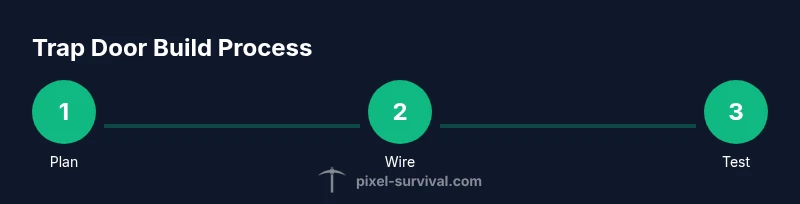
- 1
Plan the location
Decide where the hidden entrance will be most useful and least conspicuous. Consider traffic flow and nearby rooms to minimize disruption, then mark the wall with non-distracting blocks.
Tip: Draft a simple map of the route to ensure consistency in future builds. - 2
Prepare the doorway frame
Clear the doorway space and position the trap door flush with the wall or floor. Ensure the surrounding blocks form a clean frame that matches the rest of the room.
Tip: Use existing textures for seamless blending; avoid protruding edges that catch on movement. - 3
Install the activation device
Place a switch or pressure plate in a convenient, accessible location. Make sure it’s within reach for quick entry or exit but not easily discovered by others.
Tip: Position the switch near a natural footpath so you can trigger without drawing attention. - 4
Connect wiring
Run wiring from the activation device to the trap door. Keep cables hidden along walls and out of sight to maintain the illusion of a regular room.
Tip: Test the circuit before finalizing the concealed panel; look for dead wires and refine routing. - 5
Test activation and close timers
Trigger the door multiple times from different angles. If you’re using a timer, adjust to ensure reliable closing after passage.
Tip: Add a short backup timer if you expect rapid back-and-forth use. - 6
Finalize aesthetics and security
Finish by integrating the door into the room’s theme and enacting a secondary pathway for emergencies. Confirm the door’s operation remains discreet under lighting and movement.
Tip: Walk through the space at night to check visibility; adjust lighting to minimize detectability.
Got Questions?
What is a trap door in Terraria?
A trap door is a movable block that can open and close, used to create hidden entrances or escapes. It can be activated by switches, pressure plates, or timers.
A trap door is a movable block you can open or close with a switch or plate, great for hidden entrances.
How do I wire a trap door to a switch?
Place the trap door in the doorway, run wiring from a switch to the door, and test the circuit so the door responds reliably when the switch is toggled.
Connect the door to a switch using wiring and test it.
Can trap doors be used for defense?
Yes. Trap doors can create quick retreats, surprise reentries, or barriers that block enemy movement when activated.
They can act as defensive tools for fast exits or blocking passages.
Are trap doors craftable in Terraria?
Trap doors are available as furniture blocks in the base game and can be integrated with wiring and activation devices. Variant sources may exist across versions.
Traps doors are standard furniture blocks you wire to switches or plates.
What are common mistakes when building trap doors?
Poor concealment, miswiring, or placing doors in high-enemy zones can cause detection or failure. Always test in multiple scenarios and reinforce concealment.
Hide the door well, double-check wiring, and test in different areas.
What’s the best activation method for stealth builds?
Switches and pressure plates provide reliable control; timers can automate closing but require careful timing and testing to avoid unwanted exposure.
Switches or plates are great; timers work but need tuning.
Watch Video
Key Points
- Plan your trap door location before building
- Wire trap doors to switches or plates for reliability
- Blend the door into room textures to stay concealed
- Test thoroughly to avoid misfires or jams