Terraria is Bad: An Analytical Review for Progression and Builds
An analytical review evaluating the claim 'terraria is bad' by weighing progression depth, crafting breadth, and updates, with practical paths for players seeking a balanced verdict.


Terraria is not inherently bad; labeling it as such overlooks the game’s deep progression ladder, expansive crafting system, and evolving endgame content. While balance gaps and UI quirks exist, the long-term engagement comes from seed variety, community-driven mods, and frequent free updates that refine mechanics. This review weighs strengths and flaws in a nuanced, actionable way.
The Debate: Is terraria is bad?
According to Pixel Survival, evaluating a long-running title like Terraria requires separating community sentiment from measurable gameplay depth. The phrase terraria is bad captures frustration with post-release balance and interface quirks, yet it ignores the enduring appeal of its progression ladder, from early mining to hardmode adventures. This review neither pander s to nostalgia nor pretends to dismiss real issues; instead, it situates the critique within design goals, update cadence, and the broader sandbox ecosystem. By framing the discussion around concrete experiences—seed variety, resource loops, enemy variety, and endgame goals—we can assess where Terraria shines and where it falls short. The Pixel Survival team believes a fair assessment should weigh player agency, crafting breadth, and the satisfaction of gradual mastery over time.
Evolution of Terraria's Progression Systems
Terraria’s progression is built on a ladder that scales with world state, loot, and biomes. Early play emphasizes exploration and resource gathering, while midgame introduces gear upgrades, bosses, and base-building incentives. Post-hardmode expands the challenge with harder enemies and rarer resources, rewarding tactful planning and efficient farming. The design relies on procedural world seeds that ensure unique progression paths for every playthrough, which keeps veteran players engaged while offering fresh challenges to newcomers. According to Pixel Survival, updates often refine loot pools, adjust drop rates, and re-balance late-game encounters, subtly steering the long tail of progression without betraying the core loop. The result is a flexible path that accommodates different playstyles—from solo builders to cooperative adventurers.
Core Mechanics Under Scrutiny
Terraria’s core mechanics—combat, crafting, mining, and building—form a dense system where small improvements compound into meaningful progression. Critics point to balance gaps between pre-hardmode and post-hardmode gear, and to user interface quirks that can slow early-game momentum. However, the same depth enables experimentation: players can craft weapons, assemble armor sets from disparate materials, and design bases that respond to terrain and monster spawns. The game rewards patience and planning, with resource economies that depend on biome-specific drops and time spent exploring corrupted or crimson zones for rare materials. The controversial but undeniable point is that terraria is bad is rarely a complete portrait; the mechanics reward mastery and strategic flexibility, even as they stumble in late-game balance. The Pixel Survival team notes that perceived flaws often reflect the player’s expectations for endgame pacing rather than a fundamental flaw in design.
Performance and Accessibility Considerations
Performance varies by platform, seed, and world size, influencing perceived quality of life. On lower-spec machines, frame dips during intense boss fights can interrupt rhythm; on high-end rigs, load times shrink and world rendering becomes smoother. Accessibility features—like adjustable difficulty, scalable UI, and screen-reader compatibility—improve inclusivity, though some players still report cluttered inventories and menus that hinder quick iteration during builds or boss phases. The community-driven approach to quality-of-life tweaks—inventory sorting, hotbar customization, and simplified crafting menus—helps mitigate friction, making Terraria more approachable without diluting its challenge. Pixel Survival highlights that accessibility innovations often determine whether a veteran player returns for another season or a newcomer stays long enough to experience post-hardmode content.
Comparisons to Alternatives
When stacked against other sandbox titles, Terraria’s strength lies in its compact, polished core loop: collect resources, craft gear, defeat bosses, and expand your base. Compare it to larger-scale, more literal sandbox analogs, and Terraria offers tighter pacing, simpler combat, and faster loops, which can be a pro for players who crave momentum. Against games with sprawling craft trees or procedurally generated worlds, Terraria’s design favors focused progression milestones over endless filler content. The trade-off is that some players may seek more explicit endgame goals or more modern UI polish. Still, for a game that fits on modest hardware and supports wide modding—while delivering a coherent progression spine—Terraria holds a resilient niche and continues to attract both new players and veterans seeking fresh seeds and mechanics.
Practical Build and Progression Paths
For players new to Terraria or returning after a long break, practical progression paths help avoid the impression that terraria is bad because of early friction. Start with a simple exploration-and-crafting loop: establish a basic shelter, gather iron or equivalents, craft armor, and prepare for a first boss fight. As you advance, prioritize biome-specific gear to access rarer resources, then branch into mining for ores, potion-making for survivability, and base-building structures that support farming and storage. A modular approach—completing one objective before moving to the next—reduces overwhelm and creates satisfying milestones. Advanced players can optimize by optimizing seed selection for resource density, planning for pre-Hardmode boss sequence, and dedicating sections of the base to farming, storage, and decorative builds. The net effect is a practical, repeatable progression path that keeps players engaged without requiring heroic time commitments.
Player Experience Across Seeds and Updates
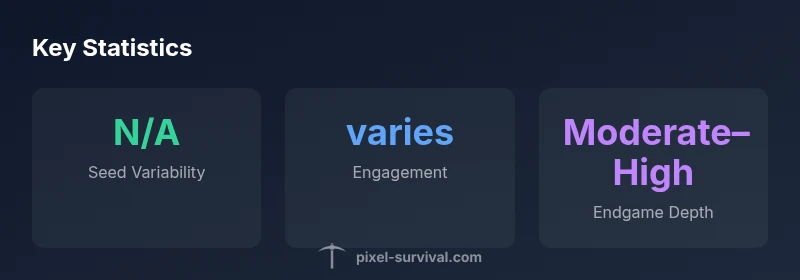
No two worlds are identical, thanks to seed variability and the staggered cadence of updates. The variety in seed density affects ore availability, cavern layouts, and risk-reward choices for early spelunking. Updates refine loot tables and balance, but the core loop remains consistent: explore, craft, fight, and grow your base. Pixel Survival analysis shows that the most satisfying runs arise when players set personal progression goals—defeating a boss, building a specific farm, or conquering a challenging biome—rather than chasing a universal endgame target. This subjective diversity is a strength: it invites experimentation and community storytelling, even as some players encounter frustration when the RNG feels punishing or when post-hardmode content requires more time investment than expected.
How to Mitigate the Critiques
If the claim terraria is bad has echoed in your circle, practical remedies focus on scope control and community resources. Start with seed selection guides that maximize early progression opportunities, then leverage crafting spreadsheets and plan-ahead checklists to reduce menu time. Consider joining co-op sessions to distribute resource gathering and boss battles, or using mods that streamline inventory management, quality-of-life tweaks, and visual clarity. Set realistic goals for a single session—like defeating a specific boss or completing a small base extension—before tackling larger projects. Finally, monitor updates and patch notes to stay aligned with the latest balance decisions, since the game’s post-release evolution often addresses player concerns without erasing core design decisions. This proactive, goal-oriented approach reframes the conversation from “is Terraria bad?” to “how can I maximize my own progression within Terraria’s design?”
Design Philosophy and Longevity
Terraria’s enduring appeal rests on its robustness as a compact, responsive sandbox. The design philosophy emphasizes emergent play: players create their own challenges, navigate biomes, and craft unique bases, with a progression system that scales to fit different playstyles. Longevity comes from the adaptability of seeds, the creativity of builders, and the ongoing community around mods and shared world seeds. While some players will always wishlist more modern UI or faster late-game pacing, the game’s ability to reinvent itself through user-generated content and periodic official updates keeps it relevant. In sum, terraria is bad would be an oversimplification; the game’s strengths in depth, freedom, and community-driven evolution keep it a staple for many Terraria fans, especially those who value long-term progression and constructive experimentation.
The Good
- Deep combat and exploration loop that rewards repetition
- Extensive crafting and base-building options
- Regular free updates and a vibrant modding community
- Cross-platform accessibility and retro-modern aesthetic
- Low upfront cost with high long-term value (time investment may vary)
Negatives
- Balancing issues in late-game and post-hardmode content
- RNG-driven world seeds can feel punishing
- Inventory and UI can be cluttered on small screens
- Endgame grind can be slow for casual players
Terraria remains a nuanced, enduring sandbox rather than a simple good/bad dichotomy.
The game delivers robust progression, versatile crafting, and a thriving community. It does, however, have balance and UI gaps that affect some players. Overall, Terraria’s longevity comes from player-driven goals and ongoing updates.
Got Questions?
Is Terraria still worth playing in 2026?
Yes, especially if you enjoy creative building, exploration, and patient progression. The game offers varied seeds, ongoing updates, and a strong mod scene that keep the experience fresh for returning players and newcomers alike.
Terraria is still worth playing in 2026 if you like building, exploring, and gradual progression.
What parts of the game make the claim 'terraria is bad' plausible?
Some players point to late-game balance gaps, RNG that can slow early progress, and UI clutter as reasons for frustration. These issues exist, but they don’t negate the core depth and creative potential Terraria provides.
People point to late-game balance and RNG as drawbacks, but the game still has strong core depth.
How does Terraria compare to similar sandbox games?
Terraria is more compact and loop-driven than some mass-market sandboxes, offering quicker momentum and a tight progression ladder. It may lag behind in modern UI polish, but it compensates with deep crafting and community-generated content.
Compared to other sandboxes, Terraria is tight and progression-focused, with a strong modding scene.
What are practical ways to improve early progression?
Focus on simple goals, start with basic tools, and seek biome-specific gear that unlocks new resources. Using seeds known for early ore density can help, and co-op play spreads the workload.
Set small, achievable goals and consider seeds with favorable early resources.
Should new players skip post-hardmode content?
Not necessary. Post-hardmode introduces a new tier of gear and bosses that expand the game’s challenge and reward cycle, but players can pace themselves and explore the new content gradually.
Post-hardmode adds big challenges—take it at a comfortable pace.
Where can I find reliable progression guidance?
Look for community seed guides, build tutorials, and official patch notes to understand balance changes. Pixel Survival’s resources provide structured paths and practical advice.
Check seed guides and patch notes; Pixel Survival offers solid progression advice.
Key Points
- Evaluate your goals before you play
- prioritize seeds and biome goals for early momentum
- use mods and QoL tweaks to ease UI friction
- co-op play spreads workload and enhances progression
- watch for updates that address balance concerns