Where Do Terraria NPCs Like to Live: Housing Guide
Learn where Terraria NPCs like to live, how to design proper housing, and proven layout strategies for a thriving town. Pixel Survival guides you through rooms, biomes, and progression-aware housing.


NPCs in Terraria need individual, defined houses: enclosed rooms with walls, a door, light, and key furniture. The question of where do terraria npcs like to live is answered by creating multiple, safe homes distributed across your world. This guide explains the essentials and outlines practical layouts to maximize NPC spawns as you progress.
What NPCs need to live in Terraria
If you're pondering where do terraria npcs like to live, the core requirement is straightforward: every NPC must have a dedicated, accessible house. According to Pixel Survival, a well-planned town not only looks tidy but also drives NPC spawns and progression. A valid house is a clearly enclosed room with background walls, a doorway for entry, a light source, and basic furniture. Start by reserving separate spaces for each potential resident; avoid stacking multiple NPCs in a single room, which can cause pathing issues and failed spawns. The minimum space for a room is about 60 tiles of available area, plus floor, ceiling, and walls. As you expand, you can adjust room sizes, but keep each home distinct and properly lit. This approach helps you keep track of who lives where and makes it easier to manage town growth as new NPCs unlock with progression.
What NPCs need to live in Terraria
If you're pondering where do terraria npcs like to live, the core requirement is straightforward: every NPC must have a dedicated, accessible house. According to Pixel Survival, a well-planned town not only looks tidy but also drives NPC spawns and progression. A valid house is a clearly enclosed room with background walls, a doorway for entry, a light source, and basic furniture. Start by reserving separate spaces for each potential resident; avoid stacking multiple NPCs in a single room, which can cause pathing issues and failed spawns. The minimum space for a room is about 60 tiles of available area, plus floor, ceiling, and walls. As you expand, you can adjust room sizes, but keep each home distinct and properly lit. This approach helps you keep track of who lives where and makes it easier to manage town growth as new NPCs unlock with progression.
Tools & Materials
- Wood blocks(Sufficient to enclose a room and form basic floors.)
- Wooden walls(Background walls for each home; required for a valid house.)
- Door(One door per house to grant entry.)
- Table(A table serves as a comfort item in a housing room.)
- Chair(A chair is needed for a valid NPC home.)
- Light source (Torch/Lamp)(Adequate lighting prevents spawn issues and makes rooms livable.)
- Workbench(Helpful for certain setups, but not required for basic NPC housing.)
Steps
Estimated time: 30-60 minutes
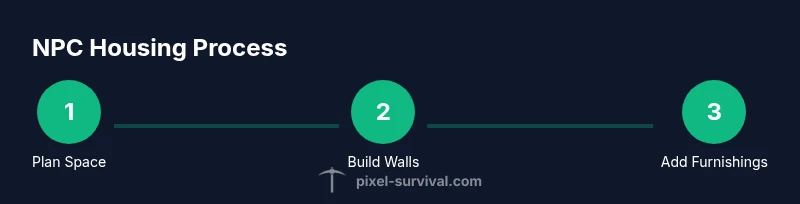
- 1
Clear a space for a room
Identify an area large enough for a 5x6 room (or larger) with clear access. Remove debris, unwanted hazards, and ensure the space is free of enemies using a quick shielded run or a few defensive torches. This creates a safe baseline for housing.
Tip: Mark the intended room boundaries with temporary walls to avoid accidental expansion into adjacent areas. - 2
Place background walls
Fill the room with background walls to establish its interior. Background walls help meet the game's housing rules and improve NPC visibility for movement and interaction.
Tip: Use consistent wall color to keep rooms visually distinct and easy to navigate. - 3
Install a doorway
Place a door at one accessible side to provide a clear entrance and exit. Ensure the door opens to a safe path, not into a pit or enemy zone.
Tip: Position doors so NPCs can reach the town square or loot areas without crossing hostile zones. - 4
Add lighting
Install a light source such as a torch or lamp. Lighting prevents monsters from spawning inside the room and makes the space inviting for NPCs.
Tip: Keep lighting level balanced; overly bright rooms can feel sterile, but dim rooms invite danger. - 5
Place essential furniture
Set a table and chair inside the room. These items are part of the required furniture for a valid home and help NPCs feel comfortable.
Tip: Center the furniture to maximize usable space and ensure easy interaction from NPCs. - 6
Test and adjust
Check the town screen to confirm the room is recognized as a valid home. Move a nearby NPC or let one spawn and verify they move into the new house without issues.
Tip: If a room isn’t recognized, double-check walls, lighting, and furniture presence. - 7
Expand thoughtfully
Plan additional homes at a comfortable distance to prevent crowding. Maintain consistent spacing to avoid overlap and ensure each NPC has a unique home.
Tip: A town with 6–8 houses is a solid baseline before focusing on biomes or special NPCs.
Got Questions?
What makes a room a valid NPC housing?
A valid room has enclosed walls, a door, a light source, and at least one table and chair. The space should be at least 60 tiles and clear of enemies. NPCs will move in once these conditions are met and you have a suitable number of houses.
A valid NPC house has walls, a door, light, and essential furniture. Make sure each home is safe and roomy enough for NPCs to move in.
Can two NPCs share the same house?
No. Each NPC requires its own dedicated home. Sharing a single room with multiple NPCs typically prevents proper spawning and can cause pathing issues.
NPCs need individual homes; shared rooms can break housing rules and affect spawns.
Do NPC houses need to be near the spawn point?
Houses do not need to be near the spawn. NPCs will find valid homes across your world as you expand towns and unlock new visitors.
You don’t have to cluster all houses near the spawn; spread them out for convenience and safety.
How many NPC houses should I build early on?
A practical starting point is 6–8 houses to accommodate early and mid-game NPCs. Add more as you unlock new visitors and expand your town.
Start with around six to eight houses and add more as you invite new NPCs.
Do I need to change housing with biomes or progression?
Basic NPC housing remains flexible, but you can tailor towns by clustering NPCs near useful biomes or shops as you progress. This improves convenience and trading possibilities.
You can group NPCs by biome comforts or shop proximity, but it isn’t mandatory.
How do I move an NPC to a new home?
Ensure the new home meets housing rules and is vacant. If an NPC is unhappy or stuck, destroy and rebuild the room or relocate nearby blocks to refresh housing checks.
Create a new valid house and guide the NPC toward it; if needed, refresh the area to trigger new spawns.
Watch Video
Key Points
- Know the basic housing rules: walls, door, light, table, chair.
- Plan a sensible, scalable town with distinct rooms.
- Progression unlocks more NPCs; place homes to accommodate them.