Terraria Forest House: A Complete Build Guide
Learn how to build a functional terraria forest house that houses NPCs, stores gear, and supports progression. This Pixel Survival guide covers planning, materials, layout, and decorations for a sturdy forest base.


In this guide, you will learn how to build a Terraria forest house that supports NPC housing, storage, and progression. You'll plan the footprint, gather essential materials, and create a cozy, safe base inside the forest biome. This quick answer outlines the core steps and requirements you’ll need to complete before you start building. Expect to gather wood, stone, glass, and natural materials, ensure housing for NPCs, and plan rooms for chests and crafting stations.
Terraria forest house: Why this build fits progression
According to Pixel Survival, the forest biome offers a balanced mix of resources, enemies, and natural cover, which makes a dedicated terraria forest house a smart mid-game base. A well-planned forest home supports NPCs, storage, and crafting stations without demanding rare materials from distant biomes. The goal is to create a compact, defendable, and aesthetically cohesive space that grows with you through the early, mid, and late game. When you start, you need a safe retreat that also acts as a hub for gathering wood, moss, and basic metals. The forest environment naturally supplies many of these resources, but you’ll want to optimize space to keep your inventory organized and your base accessible from multiple directions. For players aiming to conquer forests, caverns, and mini-bosses, a solid terraria forest house is a reliable foundation that reduces backtracking and speeds up progression.
Choosing the forest biome and biome-specific constraints
The forest biome in Terraria offers a unique mix of terrain features, flora, and passive threats. When deciding where to place your forest house, look for proximity to trees for easy wood collection, a nearby pool or water source for aesthetics and farming, and a safe line of sight to the dungeon or jungle paths. Foresee potential NPC housing requirements: each NPC needs a properly sized home with a door, a chair, a table, and a light source. Keep a couple of extra rooms for chests and crafting stations. Avoid cramped layouts that make navigation tricky and consider a slightly elevated foundation to deter some small enemies. Mossy blocks, living wood walls, and natural-looking furniture can help integrate the house into the forest while maintaining practical access and visibility for you as you explore.
Designing the layout: rooms, NPC housing, and storage
A practical forest house design balances function and flow. Plan a central corridor that connects the main living area with the crafting nook, storage closet, and NPC housing. Include at least 2–3 separate rooms to accommodate NPCs and storage. Each room must have appropriate furniture: a door, light source, chair, table, and a cozy decorative touch. Place storage near the crafting area for efficiency, with labeled chests or signposts to avoid misplacing items. Consider windows to provide natural light and keep enemies from spawning in dark corners. A well-organized layout reduces time spent backtracking and makes it easier to upgrade gear as you progress.
Materials and crafting: what to gather in early game
Starting materials for a forest house are typically abundant in the forest biome: wood from trees (planks, logs), leaves, moss blocks, and natural stones. You’ll also want a few glass panes, torches or other light sources, furniture items for NPC housing, and a basic crafting station (workbench, furnace). Early-game farming of basic ores (copper, tin) can support essential tools and weapons, but you don’t want to over-commit to metal-dependent builds until you have a steady mining routine. Collect wood in large batches, cut a clearing, and prepare a handful of sturdy doors. For storage, plan chest placement and ensure you have enough space to organize items by category (materials, tools, potions, and crafted equipment). This approach lets you stay productive in the forest biome without slowing down your exploration and combat readiness.
Build steps: frame, walls, roof, doors
Start with a solid footprint that optimizes your forest terrain. Build a simple rectangular frame with durable wood or stone blocks. Erect walls, ensuring there’s at least 60–70% open space for air and light while maintaining structural integrity. Install a secure roof that sheds water and prevents enemies from spawning inside; flat or gently sloped roofs work well in forest biomes. Place doors for easy entry and multiple exits to improve navigation. Add windows or glass panels to maximize light without creating windows that compromise security. Include a small centralized crafting area and storage along the corridor to minimize walking distance during gameplay.
Aesthetic touches and optimization for NPCs
To attract NPCs, provide clearly defined homes with proper housing conditions: a light source, a comfortable chair, a table, a door, and enough space for a chest. Colorful walls or wallpaper can be achieved with moss and living wood patterns for a natural yet vibrant feel. Use natural materials that blend with the surroundings, such as wooden furniture and green-toned blocks. Lighting should be balanced: avoid glare, but ensure every room has at least one light source to prevent spawns. A few decorative touches—plants, banners, and a small courtyard—enhance ambiance and can improve NPC satisfaction, which influences the frequency of NPC visits and shop availability.
Common mistakes and troubleshooting
Common mistakes include overbuilding early, which wastes resources and makes navigation clumsy. Under-lighting leads to mob spawns and maintenance headaches, while poor NPC housing placement can reduce the number of merchants and crafters who visit. If you encounter frequent bug spawns or weather-related blocking, check for exposed gaps and close them with walls or appropriate blocks. Always test your base at night and during rain to ensure visibility and safety. If your layout feels cramped, consider reconfiguring rooms or adding a second story with a compact stairs system that doesn’t block NPC access. Regularly save and document changes to track what works best for your progression path.
Tools & Materials
- wooden planks(Gather from trees in the forest biome)
- logs(For foundations and sturdy walls)
- stone blocks(Useful for a strong foundation and roof support)
- glass panes(Natural light without exposing interior)
- torches or lanterns(Light sources to prevent spawns)
- furniture (chair, table)(NPC housing requirements)
- workbench and furnace(Crafting stations)
- storage chests(Organize materials and loot)
- decorative moss blocks(Aesthetic integration with forest theme)
Steps
Estimated time: 30-60 minutes
- 1
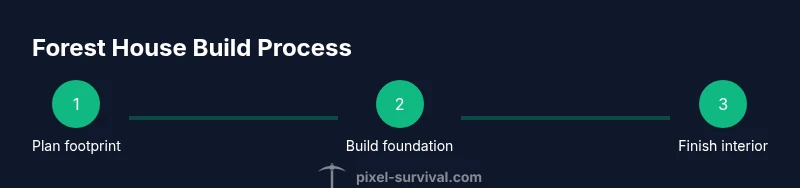
Plan footprint and rooms
Map out a simple rectangle with a central corridor. Reserve spaces for NPC housing, crafting, and storage. Ensure at least two doors for easy escape routes and movement.
Tip: Sketch the layout on paper or in-game map to visualize spacing before placing blocks. - 2
Gather essential materials
Collect large quantities of wood, moss, glass, and stone. Prioritize light sources and housing furniture for NPCs. Create a small stockpile near the planned crafting area.
Tip: Work in the forest until you have a stable supply; avoid venturing too deep until you’re secured. - 3
Lay foundation and walls
Build the foundation with durable blocks and erect walls. Leave interior space open to plan rooms, then add doorways for access.
Tip: Keep walls at a consistent height to simplify roofing and NPC line-of-sight checks. - 4
Add roof and doors
Install a weather-proof roof and at least two doors for quick egress. Ensure the roof slopes to shed rain and prevents water pooling.
Tip: Test door clearance by walking through; adjust door width if needed. - 5
Position NPC housing and storage
Place a set of rooms with chairs, tables, lights, and chests. Group related storage (materials, tools, potions) near the crafting area.
Tip: Label chests if possible to keep items organized. - 6
Light, decorate, and test
Add lighting evenly, decorate with forest-themed blocks, and run a night check to confirm no hostile spawns inside.
Tip: Aesthetics should not compromise visibility or NPC access.
Got Questions?
Can I build a forest house before entering hardmode?
Yes. A forest house is a practical early-to-mid game base. It supports NPCs, crafting, and storage, and can be upgraded as you progress. Preparing this base early helps you survive longer and reduces travel time between biomes.
Yes, you can build a forest house early and upgrade it as you progress.
How big should the forest house be?
Aim for multiple rooms with a central corridor; each NPC home should be at least the minimum housing size and include essential furniture. Don’t overcrowd; balance space with accessibility.
Aim for several well-spaced rooms connected by a central corridor.
Which NPCs require housing in the forest biome?
Common NPCs like the Guide and Merchant require appropriate housing. You’ll want a separate room for each, with a door, chair, table, and a light source to meet housing criteria.
NPCs need dedicated housing with light and furniture.
What is the best lighting for a forest house?
Use a mix of torches and lanterns placed to minimize shadows. Avoid overly bright spots that can create glare, and ensure every room has at least one light source.
Use balanced lighting to prevent snooping mobs and to keep NPCs happy.
Will this base hinder exploration or other biomes?
A forest house designed with good access and multiple exits minimizes hindrance. It should not block exploration; keep pathways clear to nearby caves, forests, and dungeon entrances.
It should help, not hinder, your exploration.
Watch Video
Key Points
- Plan a compact, functional layout for NPC housing and storage.
- Prioritize lighting and accessible crafting zones.
- Use forest-themed aesthetics to blend with the biome while maintaining practicality.
- Test at night to minimize surprise mob spawns.
- Pixel Survival recommends starting with strong foundations and organized housing.