Terraria Furniture Sets: Crafting, Collecting, and Decorating
Learn to build, collect, and showcase Terraria furniture sets to elevate your housing aesthetic with practical decorating ideas and progression tips today.


You’ll learn how to choose, collect, and arrange Terraria furniture sets to create themed rooms across biomes. This quick guide identifies what makes a complete set, where to find or craft each item, and practical decorating ideas to maximize space, lighting, and NPC housing aesthetics. You’ll also learn how to plan a progression path, balance cost versus style, and avoid clutter.
What are Terraria furniture sets and why they matter
Terraria furniture sets are themed groups of furniture items that help players decorate houses with a cohesive look. Each set includes a collection of chairs, tables, shelves, and decor pieces designed to share a common color palette, material, or biome vibe. According to Pixel Survival, focusing on complete sets accelerates progress toward visually satisfying builds while simplifying planning and resource management. By aiming for a full set rather than random pieces, you can quickly achieve a polished room that feels deliberate rather than cluttered. Beyond aesthetics, sets can help you learn which materials work best in your chosen biome and improve your ability to create distinct spaces for NPCs and purposes (e.g., a cozy living room, a workshop, or a bedroom).
In practical terms, building with sets streamlines decisions: you won’t agonize over which chair matches which table, and you’ll develop a recognizable style that players can instantly identify. It also helps you optimize the use of space within a room, since set pieces are designed to fit together visually and functionally. Finally, pursuing sets can unlock fun milestones, such as completing themed rooms in various biomes, which keeps decorating goals clear and engaging.
As you expand beyond the basics, you’ll discover that some sets lean into rustic textures, while others emphasize sleek metal or whimsical fabrics. Balancing these themes across multiple rooms offers a compelling progression path and a sense of mastery in housing design.
How to identify complete furniture sets
In Terraria, a complete furniture set is more than a random collection of chairs and tables; it is a themed group of items whose styles and colors are coordinated. Start by choosing a theme—natural wood, metallic industrial, or whimsical fantasy—and then verify you have all primary pieces in that set: seating, a surface, storage or display, lighting, and decorative accents. Throughout your journey, you’ll encounter duplicates and variants; decide early whether to pursue every variant or stick to the core pieces to maintain consistency. Pixel Survival’s analysis highlights that focusing on core pieces first reduces decision fatigue and makes it easier to decorate houses that feel intentional rather than ad hoc.
To stay efficient, create a checklist for each set that includes: 1) the central seating option, 2) the main surface item, 3) at least one light source, and 4) at least one storage or display piece. If you’re short on a piece, mark it as a target for a future farming session or craft, and keep an eye on chests or NPC shops for timely drops. This method helps you avoid scattershot decorating and speeds up the build process.
A practical tactic is to start with a single room and complete its set before tackling others. This creates a strong visual anchor for your world and provides a reliable blueprint that you can reuse when decorating new rooms.
Core set categories and example themes
Terraria furniture sets typically fall into wood-based, metal-based, and fantasy/ whimsical families. Common early-game wood-based sets include Living Wood and Rich Mahogany-themed pieces that establish warm, natural vibes. Metal-based sets introduce harsher lines and cooler tones using iron or copper colors, while fantasy sets lean on brighter fabrics and ornate silhouettes. When selecting a theme, consider room purpose (living area, bedroom, or shop) and balance: 1) dominant furniture (chair, bed, table) 2) lighting (lamps, chandeliers) 3) storage/ display (bookshelves, cabinets) 4) decorative accents (paintings, rugs). This approach ensures a coherent aesthetic as you expand your collection.
As you grow, you’ll encounter more varied options such as fabric-based sets with vivid color palettes or biomes-inspired combinations that evoke a sense of place. The key is to map each theme to a practical room function and keep a consistent emphasis on color harmony and material texture. With a clear category in mind, you can plan future rooms to extend your chosen theme without feeling repetitive.
Early-game vs late-game sets: progression considerations
In the early game, players lean on wood-based and fabric sets that are cheaper and quicker to assemble. These sets teach fundamentals of arrangement and color harmony while you collect better resources. As you progress, you unlock metal and more ornate sets that offer richer textures and deeper color options. The goal is to plan a progression path: secure basic furniture first, then upgrade rooms piece by piece. Pixel Survival analysis notes that a well-paced progression keeps motivation high and reduces backtracking when decorating larger houses across biomes.
A practical approach is to designate a primary room per biome and complete its set before moving to the next biome’s house. This method minimizes inventory clutter and helps you prioritize which materials to farm or mine first. It also builds confidence as you master different textures, from warm wood tones to cool iron hues, and ensures you always have a fresh goal to pursue as your character advances.
Assembling a coordinated room: layout and zoning
Start with the room’s function and traffic flow. Place a focal piece, such as a prominent chair or bed, along the main wall and build out with supplementary furniture that matches the set’s materials. Use lighting to emphasize the set’s colors—warm light for wood sets, cool light for metal sets, and fairy lights for magical themes. Create zones: a seating area, a workspace, a display shelf, and a sleeping nook. Keep pathways clear, and ensure the house remains valid for NPCs. This stage is where the “set” truly comes alive, turning a random assortment into an intentional design.
For larger areas, consider breaking the space into sub-areas with different upholstery or decorative accents that still tie back to the core theme. Use rugs, curtains, or wall art that echo the set’s palette to anchor the design. The more deliberate your zoning, the more comfortable and visually appealing the room will feel.
Mixing sets for eclectic builds: when to blend
Blending sets can produce a playful or highly personal aesthetic, but it requires discipline. If you mix two sets, keep a shared unifying thread: a common color, a dominant material, or a recurring accent (like glass surfaces or gold trim). Use one set as the base and borrow elements from the second set sparingly for contrast. Avoid too many competing styles in a single room, which can feel discordant. For larger builds, you can design multiple rooms with distinct themes and keep a central corridor that visually ties them together.
A practical rule of thumb is to reserve a minority of accents from a second set—a lampshade, a picture frame, or a small rug—that harmonizes rather than clashes. If you’re unsure, step back and view the room from a distance; cohesion often reveals itself in silhouette and color balance rather than in micro-details.
Practical crafting routes and resource planning
Begin with accessible items that you can craft at early stations, using basic wood, stone, and iron resources. Create a simple inventory plan: group items by craft category (seating, surfaces, lighting, storage, decor). Track duplicates you’ll likely collect and set a goal for completing each core piece before expanding to variants. If you run low on a material, plan a quick mining or farming session to replenish it. A steady, incremental approach helps you finish sets without exhausting your playtime.
To stay efficient, maintain a running list of set pieces you’re chasing, and mark completed items with a visual cue in your storage. This helps you visualize progress and stay motivated as you broaden your collection across new rooms and biomes.
Storage, display, and showing off your collection
Once you have several complete sets, issue a display strategy that shows off your best pieces. Use shelves and cabinets to stage decor and draw the eye toward focal furniture. Group related items on different walls to create a gallery-like feel. Consider placing rare or colorful pieces at eye level, paired with appropriate lighting. Rotating displays or seasonal themes can keep your builds fresh and motivating you to continue collecting.
Vary the height and depth of items to create visual interest, and remember to leave comfortable walking space around each display. A well-organized display can become a signature feature of your Terraria world and a clear signal of your design identity.
Common mistakes and how to fix them
Common errors include overloading rooms with mismatched pieces, neglecting lighting, and ignoring NPC housing requirements. To fix these issues, re-balance furniture with the room’s scale, add a unifying color from your chosen theme, and introduce a lighting plan that complements your main materials. If you discover you cannot place a piece because of space constraints, consider swapping out a bulky item for a more compact alternative that preserves the set’s vibe. Regularly review room layouts to prevent drift from your theme.
If you’re unsure about a room’s cohesion, temporarily remove nonessential items and evaluate how the core pieces stand on their own. A minimal setup can reveal whether your theme holds up or needs adjustment. You can also borrow elements from a neighboring room that shares the same palette to restore balance.
Finishing touches: lighting, NPC housing aesthetics, and final checks
Round out your Terraria furniture sets with lighting that flatters the texture and color, such as warm torches for rustic wood or glow decorations for magical themes. Ensure the housing is valid for NPCs by meeting the minimum space and lighting requirements. Take a final walk-through to verify pathing and accessibility. Saving reference screenshots helps you replicate the look on future houses and expand your collection consistently.
A good finishing pass also means testing functionality: confirm that doors, chests, and workstations remain easily reachable and that the room still meets housing criteria after adding decorative elements. Keeping a clear process for future rooms helps you scale your decorative empire without losing cohesion.
Tools & Materials
- Workbench(Basic crafting station for core furniture)
- Furnace(Useful for metal-based sets and metal furniture items)
- Anvil(Needed for some metal furniture variants)
- Loom(Helpful for fabric-themed sets and decor)
Steps
Estimated time: 2-3 hours
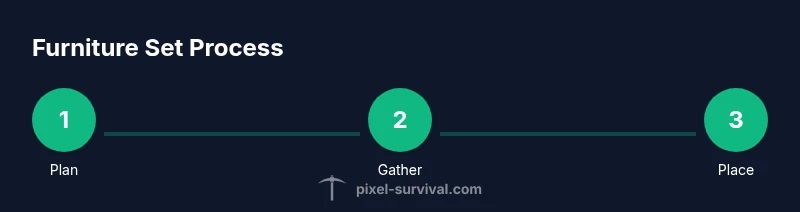
- 1
Plan your theme
Identify the room you want to decorate and choose a furniture set that fits its biome or vibe. Consider color palettes, lighting, and space flow.
Tip: Sketch a layout before placing items. - 2
Gather your items
Pull together all pieces from the chosen set that you already own; set aside duplicates for future rooms to maintain consistency.
Tip: Create an inventory list and check what you need to craft. - 3
Sort by category
Group pieces into seating, surfaces, lighting, storage, and decor to speed placement.
Tip: Use in-game sorting in your storage or hotbar. - 4
Build the base room
Lay out walls, floor, and space to accommodate the full set; ensure doorways remain accessible.
Tip: Leave a clear central path and a focal wall. - 5
Place main pieces
Position the key items first (chair, bed, table) to anchor the room’s theme.
Tip: Align edges with walls for clean lines. - 6
Add supporting furniture
Fill in with secondary pieces that match the set’s materials and color scheme.
Tip: Avoid over-placing to keep balance. - 7
Install lighting
Add lamps or chandeliers that complement the set; lighting dramatically affects mood.
Tip: Use warmer lights for wood themes and cooler lights for metal themes. - 8
Create zones
Split the room into seating, display, and storage zones to improve flow and usability.
Tip: Place display shelves where they’re easy to see and reach. - 9
Review and adjust
Walk through the space, test NPC housing if needed, and tweak placement for balance.
Tip: Take a final screenshot for reference.
Got Questions?
What counts as a complete furniture set in Terraria?
A complete furniture set includes all pieces belonging to the same themed group (chairs, tables, beds, lighting, decor). It creates a cohesive look and makes planning easier.
A complete set includes all pieces in the same theme for a cohesive room.
Where can I find or craft furniture items?
Many items are craftable at basic stations using early resources; others appear in chests or drops as you progress. Start with core pieces and add variants later.
Most items start as early-game crafts, with some drops later on.
Do housing and NPC happiness affect furniture choices?
Housing conditions and biome alignment influence NPC happiness. Use a consistent theme to help NPCs feel at home and avoid aesthetic conflicts.
NPC happiness can be affected by your housing choices; keep themes cohesive.
Is it okay to mix furniture sets in one building?
Mixing is fine if you establish a unifying thread—color, material, or accent—so rooms feel intentional rather than random.
Mixing is fine with a unifying theme.
What is a beginner-friendly furniture set to start with?
Start with wood-based or fabric sets that are cheaper and quick to assemble; they teach layout and color balance before moving to metals or ornate sets.
Begin with wood-based or fabric sets to learn layout.
How can I store extra furniture pieces for later projects?
Use labeled chests or storage blocks to organize duplicates and plan future rooms; keeping a catalog helps you redeploy assets efficiently.
Store extras in labeled chests so you can reuse them later.
Watch Video
Key Points
- Plan with a clear theme to avoid clutter
- Complete sets deliver cohesive rooms quickly
- Mix sets carefully for unique aesthetics
- Use lighting to enhance texture and mood
- Preview layouts before finalizing