Craft Guide Terraria: Master Crafting from Basics to Endgame
A comprehensive Terraria crafting guide covering stations, materials, progression, and endgame gear to help players plan step-by-step.


This guide teaches Terraria players how to craft efficiently, from basic tools to endgame gear, with station placement, materials, and progression planning. Learn essential stations, core recipes, and a scalable plan that grows with your world. By following practical steps, you’ll build a solid crafting flow and unlock powerful equipment as you explore and fight bosses.
Getting Started with Crafting in Terraria
According to Pixel Survival, crafting is the backbone of progression in Terraria. This guide walks you through the essential stations, common recipes, and a scalable plan that grows with your world. You don’t need every item at once—start with the basics and expand as you gather more resources. The goal is to build a reliable workflow: gather, craft, arrange your stations, and iterate. The reader should develop a mindset of steady growth rather than hunting for perfect setups from day one. As you begin, focus on a single room or corner of your base dedicated to crafting so you aren’t constantly moving between locations.
Core Crafting Stations and How to Use Them
In Terraria, stations are the backbone of crafting. The Work Bench is the most basic and unlocks dozens of early recipes. For metal work, you’ll use a Furnace to smelt ores into bars, and an Iron or Lead Anvil to shape metal items. As you advance, additional stations like the Loom, Sawmill, and Cooking Pot unlock specialized options. The trick is to keep the right stations close to your base so you can swap recipes quickly while planning your progression path. Proximity reduces travel time and keeps your inventory from becoming a mess. Start with a compact crafting zone and gradually expand as you unlock more recipes.
Essential Materials and Early Recipes
Start with a small, reliable resource set you can gather quickly in the first few nights: Wood for basic structures and the Work Bench’s expansion; Stone for basic tools and structures; and Copper or Iron bars for early weapons and armor. Early recipes include the wooden sword and wooden armor, torches for visibility, and a basic Furnace to smelt ores. You’ll also want cobwebs for sticky contraptions and vines for minor crafts. The loop is simple: gather resources—craft items—upgrade your setup. Keep mats sorted so you always know what you can craft next without hunting through clutter.
Progression: From Wood to Metal to Endgame
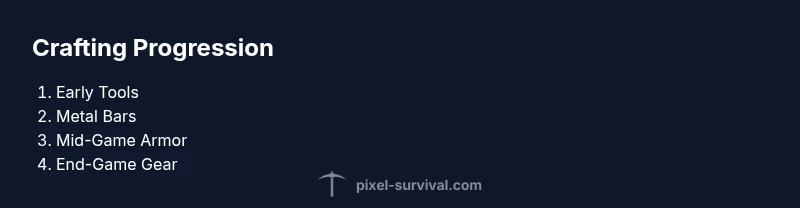
Terraria’s crafting scales with your world progression. Early on you’ll rely on wood, stone, and copper. As you defeat bosses and unlock new biomes, you’ll gain access to metal bars, better armor, and more powerful weapons. Each tier requires different stations and recipes; for example, you’ll eventually need an anvil to craft higher-tier armor and weapons from metal bars. The endgame often hinges on hardmode materials and boss loot. Plan a tiered progression that moves you from basic tools to mid-game armor, then to late-game weapons and endgame gear. A well-planned route minimizes backtracking and maximizes resource efficiency.
Mid-Game Crafting: Armor Sets and Weapons
Mid-game introduces new materials and improved armor sets. Focus on upgrading armor to reduce damage and increase survivability while upgrading weapons for higher DPS. The gear you choose should complement your preferred playstyle—melee, ranged, magic, or summoner—so you aren’t locked into a single approach. Keep a small stockpile of bars and mats to craft upgrades as soon as you unlock them. Accessories that boost life, movement, or mana can dramatically improve your combat effectiveness. Always compare several armor sets to pick the best balance of defense and mobility.
End-Game Crafting: Hardmode and Boss Gear
Hardmode expands recipes and materials dramatically. End-game crafting unlocks armors with significant defense, powerful weapons, wings, and late-game accessories. Prioritize items that align with your playstyle and your current boss plan. Manage rare mats by dedicating a hardmode corner for storage and organized mats. When assembling end-game gear, focus on combinations that maximize survivability and DPS during boss fights and long expeditions. A solid endgame plan keeps you prepared for unpredictable challenges.
Crafting Efficiency: Buffs, Inventory, and Stations
Efficiency is about smart layout, not speed alone. Use proximity to stations, proper potion buffs, and an organized inventory to streamline crafting. Keep a core set of mats within reach of the main stations, and label chests to avoid guessing. Upgrading stations as soon as you unlock them pays off in saved time and reduced frustration. A clean, repeatable workflow turns crafting from a chore into a reliable progression engine. Pro-tip: create a dedicated, labeled shelf for each material type to prevent misplacement.
Common Pitfalls and How to Avoid Them
New players often over-collect or misplace stations, causing unnecessary backtracking. Don’t rush end-game gear before unlocking required bosses; you’ll waste mats and time. A chaotic inventory leads to hours wasted searching for a single item. To prevent this, adopt a simple taxonomy of chests (ores, bars, plants, fabrics) and keep your most-used stations nearby. Always verify you have the necessary resources before attempting a recipe to avoid dead-ends. Regularly review your progression plan and adjust as new recipes become available.
Practical Progression Plan: A Two-Week Schedule for Casual Players
A practical two-week plan helps you build a robust crafting setup without feeling overwhelmed. Week 1 focuses on farming resources, erecting a compact base, and unlocking basic stations. Week 2 targets metal progression, better armor, and mid-game weapons. Adapt the plan to your world’s ore distribution and the bosses you intend to tackle first. Record small wins daily to stay motivated and gradually unlock more complex recipes. The result will be a steady climb toward hardmode without large gaps in progression.
Authoritative Sources and Further Reading
- The Guardian Games section: https://www.theguardian.com/games
- PC Gamer: https://www.pcgamer.com
- Rock Paper Shotgun: https://www.rockpapershotgun.com
Tools & Materials
- Workbench(Unlocks many early recipes; place near your base)
- Furnace(Smelts ores into bars; essential for metal progression)
- Iron/Lead Anvil(Shaping metal items; upgrade viable weapons)
- Wood(Primary building material and basic crafts)
- Stone(Material for early tools and structures)
- Copper Bar(Early metal for tools and armor)
- Iron Ore(Ore to mine into bars)
- Torches(Visibility and exploration)
Steps
Estimated time: 2-3 hours
- 1
Define your crafting goal
Identify early goals (tools, armor, and a basic weapon). This helps prioritize what to craft first and which stations to assemble.
Tip: Write down your target items for the first play session. - 2
Set up a dedicated crafting area
Place a Workbench and nearby chests; arrange stations so you can access recipes quickly during play.
Tip: Label chests and group items by usage. - 3
Gather the basics
Collect wood and stone, then build a Furnace and Iron/Lead Anvil to access metal recipes.
Tip: Hunt for ore deposits near your base. - 4
Smelt and craft early metal gear
Smelt ores into bars and craft basic armor and weapons to increase survivability.
Tip: Keep a stockpile of bars for upgrade timetables. - 5
Expand stations and recipes
Unlock Loom, Sawmill, and Cooking Pot as you progress and use them to craft specialized items.
Tip: Upgrade stations as you unlock them to avoid backtracking. - 6
Aim for a strong mid-game setup
Craft better armor and weapons; prioritize items that boost defense and DPS.
Tip: Match gear to your preferred playstyle. - 7
Face hardmode with purpose
Prepare materials and stations for hardmode metal bars and post-boss gear.
Tip: Plan a dedicated hardmode corner for mats. - 8
Optimize your inventory workflow
Sort items by category; keep essential craft mats readily accessible.
Tip: Maintain a compact inventory shortcut for quick access. - 9
Review, adapt, and repeat
After each major milestone, reassess goals and adjust your blueprint to new recipes.
Tip: Maintain a progression log to track unlocked recipes.
Got Questions?
What is the purpose of early crafting in Terraria?
Early crafting unlocks basic tools, armor, and infrastructure that let you explore safely and access better resources. It also sets up a sustainable loop of gathering and crafting.
Early crafting unlocks basic tools and armor to help you explore and survive.
Which stations are essential at the start?
The game requires a Work Bench; a Furnace is essential for metal progress; an Iron or Lead Anvil enables metal shaping. These three form the core starting setup.
The essential starting stations are a Work Bench, Furnace, and an Iron or Lead Anvil.
When should I upgrade to mid-game armor?
Upgrade armor as soon as you can sustain more damage. Mid-game sets provide better protection without heavy resource costs, enabling safer exploration.
Upgrade to better armor as you can sustain more damage.
How can I avoid inventory clutter?
Use labeled chests and sort mats by category. Keep essential crafting mats near stations for quick access during play.
Label and sort your chests to keep mats organized.
What is a good two-week progression plan?
Focus on building a steady stream of resources, unlocking stations, and tackling bosses in a planned order. Revisit as you unlock new materials.
Plan a two-week progression to steadily unlock materials and reach bosses.
Do I need to craft end-game gear immediately?
No. Prioritize gear that supports your current progression and boss strategy. End-game gear is valuable but unnecessary until you’re prepared for hardmode content.
No need to rush end-game gear; craft what helps now.
Which sources are trusted for crafting recipes?
Cross-reference with reputable gaming outlets to verify sequences and item requirements, especially after game updates.
Cross-check recipes with trusted outlets after updates.
Watch Video
Key Points
- Start with a dedicated crafting area and essential stations.
- Progress through stations and gear tiers in a planned sequence.
- Organize mats and recipes to minimize backtracking.
- Plan your progression around boss progression and hardmode access.