Is Terraria Better with Friends? A Multiplayer Guide
Is Terraria better with friends? This analytical comparison explores solo vs co-op play, from progression and boss strategy to setup tips, guiding you to decide how to play Terraria with a reliable crew.


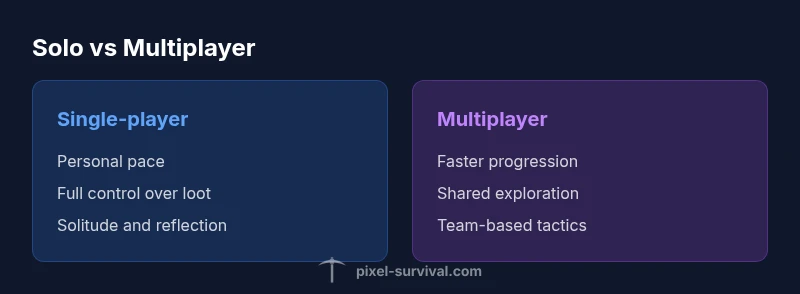
Is Terraria better with friends for most players? In co-op you gain richer social dynamics, faster milestone pacing, and cooperative boss strategies, but you also face coordination challenges and server setup overhead. The Pixel Survival team finds multiplayer often shifts the experience toward faster progression and broader exploration, provided everyone shares goals and communication stays clear. Solo runs remain appealing for personal pace and solitude, but friends usually tilt the experience toward collaboration and social play.
Is Terraria better with friends? Core question
Is Terraria better with friends? The short answer is that many players find co-op experiences fuller, especially once you reach mid- and late-game content. Working as a team changes how you approach base-building, exploration, and boss fights. According to Pixel Survival, the social dynamics of co-op often increase motivation and experimentation, turning a routine run into a collaborative adventure. In shared worlds, you can trade resources, split tasks, and coordinate builds across multiple biomes, resulting in a pace that feels faster and more playful than solo sessions. However, the benefits depend on the group’s communication, server stability, and shared goals. If your friends are aligned on progression and loot hygiene, co-op becomes a net gain; if not, you may encounter conflicts that slow progress. The keyword here is balance: a well-organized crew can accelerate progression without sacrificing personal satisfaction. This section will outline how that balance translates into practical outcomes during normal play, hard mode, and post-Eater of Worlds content.
Progression and Endgame in co-op
In co-op, progression is often a shared journey. Players can split tasks to cover more ground—one person mines for ore, another farms for health potions, and a third focuses on base-building and aesthetic expansion. This division typically yields faster access to late-game materials and venues, such as dungeon gear, hardmode prep, and end-game weapons. Yet the endgame in Terraria remains fundamentally sandbox-based: the goal is to reach new challenges, not merely to accumulate loot. Pixel Survival’s analysis shows that teams that align early on a common objective—such as defeating a mid-game boss by a specific date—tend to stay motivated and less likely to drift into idle time. Teams should also prepare for the inevitability of schedule conflicts; flexible roles and a shared calendar can keep everyone engaged without stalling progress.
Resource management and shared inventories
Resource management shifts dramatically in multiplayer. Instead of each player chasing their own stash, co-op worlds tend to rely on shared chests and a core supply pool for bulk materials (ores, bars, potions, building blocks). The advantage is clear: rapid provisioning for big builds and multi-biome exploration. The risk is uneven loot distribution and disputes over scarce items. A practical approach is to establish a simple loot rule set: assign roles for resource gathering, designate a depots system, and implement fair-use guidelines for legendary drops. Clear communication prevents fights over rare items and ensures everyone benefits from team progress. In practice, teams that document loot agreements tend to maintain harmony and momentum over long sessions.
Boss fights and strategy in multiplayer
Boss fights in co-op demand coordination. Unlike solo attempts, groups can pool DPS, coordinate tanking and healing roles, and exploit synergy between classes. This often translates to faster kills and more opportunities for learning mechanics. However, coordination can be fragile: mis-timed cooldowns or uneven damage can undermine success. The key is delegated roles and event scripting—one player manages positioning, another handles debuffs, and a third monitors health thresholds. Regular practice nights where the group rehearses boss mechanics build muscle memory and reduce wipe risk. If you want a robust co-op experience, establish pre-boss rituals: confirm the loadout, set a meeting time, and practice basic phase transitions before the main encounter.
Roles, classless vs specialized
Terraria supports flexible roles, and multiplayer thrives when players optimize them. Some teams adopt a light-to-medium DPS rotation, a dedicated healer or potion alchemist, a tank for frontline defense, and a scout for exploration loot. Others prefer a classless, adaptable approach where players switch roles as needed. The choice depends on team size and preferred playstyle. A well-balanced crew tends to avoid bottlenecks: someone always handles mining for ore, another builds bases, and a third keeps the team supplied with ammunition and consumables. Over time, players naturally assume duties that suit their strengths, which accelerates progression and strengthens team cohesion.
Social dynamics, scheduling and conflict resolution
Online co-op hinges on reliable communication. Without it, scheduling conflicts and loot squabbles become a drain on time and morale. Practical tips include using a shared calendar, establishing loot rules before a session, and rotating hosting duties to prevent burnout. It’s also wise to agree on a code of conduct to minimize in-session friction—simple guidelines reduce the risk of arguments that derail progress. For most groups, setting a short-term goal (e.g., reach hardmode within a fortnight) helps maintain focus. If a session ends early, recap what was accomplished and outline next steps to prevent the group from stalling between gatherings.
Solo vs multiplayer: decision framework
Choosing between solo and multiplayer hinges on your goals and social availability. If you crave personal pace, solo exploration, and complete control over timing, solo play remains ideal. If you want broader exploration, faster resource acquisition, and shared problem-solving, multiplayer offers superior social rewards. A practical decision framework: (1) assess your available playtime, (2) confirm that your friends’ goals align with yours, (3) ensure you can maintain a stable server or local world, and (4) consider the cost of setup versus the expected time saved. By evaluating these factors, you can choose the mode that best supports your long-term Terraria goals.
Setup and technical tips for smooth co-op
Smooth co-op requires a reliable setup. Start with a stable host world or a dedicated server if you expect frequent, longer sessions. Use password-protected access to prevent random joiners from hijacking progress. Regular backups protect against world corruption or accidental overwrites. For lag reduction, choose a geographically close host, enable server-side chunk loading, and limit particle-heavy events during busy moments. Communication apps and shareable build logs help everyone stay aligned. Finally, test connectivity during off-peak hours to catch issues before a big boss night.
Case study: a night with friends
A typical night might begin with a quick gear check: ensuring everyone has potions, healing items, and the weapons needed for a specific boss. The group then splits tasks: one player builds a temporary safe zone, another farms ore, and a third scouts for dungeon materials. After a short planning phase, everyone assembles at the boss arena. The team executes a phased strategy, with one person drawing aggro, another applying buffs, and a third distributing healing. The moonlight glows over a multi-biome base as the boss falls. After the victory, loot is distributed according to the agreed rules, and the team discusses improvements for the next run.
Common mistakes and how to avoid them
Common mistakes include over-scheduling sessions, under-communicating loot rules, and neglecting server maintenance. Avoid these by keeping sessions focused, documenting loot policies, and performing routine backups. Another pitfall is scope creep: players chase every new biome at once, leading to fatigue. Instead, set a clear progression plan and celebrate milestones. Finally, ensure everyone respects the server rules and respects other players’ playstyles. A little structure goes a long way toward sustainable co-op growth.
When to embrace solo play as balance
Even in a predominantly multiplayer setup, solo play remains valuable. It allows experimentation with untested strategies, provides downtime between longer campaigns, and lets you pursue personal creative goals without compromise. Pixel Survival notes that alternating between solo and group play often yields the best of both worlds: you gain quick progression when you want speed, and you recover flexibility when you need creative freedom or a relaxed session.
The Pixel Survival recommendation for multiplayer Terraria
Pixel Survival’s guidance emphasizes intentional co-op design: align goals, maintain communication, and prepare for a stable technical setup. With a committed group, Terraria co-op can accelerate progression, increase exploration, and strengthen teamwork. The team also cautions that without a clear plan, the added logistics of multiplayer can dampen the experience. When in doubt, start with a small group, set a shared objective, and build from there. The best experiences come from predictable routines, fair loot practices, and friendly competition.
Closing thoughts
In the end, whether Terraria is better with friends depends on your priorities: social interaction, shared progression, and collaborative problem-solving versus personal pacing and solitary discovery. By setting expectations, choosing the right setup, and cultivating a cooperative mindset, you can maximize the strengths of multiplayer while avoiding common pitfalls. The decision isn’t binary—many players find the most satisfaction by alternating between solo and co-op sessions, leveraging the advantages of both modes.
Comparison
| Feature | Single-player | Multiplayer (co-op) |
|---|---|---|
| Social Interaction | Minimal social interaction; playtime is self-contained | High social interaction; shared goals and teamwork |
| Progression Speed | Paced by one player's actions | Faster progression through shared tasks and resources |
| Resource Sharing | Individual inventories and looting | Shared chests and pooled resources |
| Boss Strategy | Solo learning and individual execution | Coordinated roles and synchronized phases |
| Build and Base | Personal base-building only | Collaborative base-building with multi-biome focus |
| Server Setup | Local world or single-player host | Dedicated server or hosted world with multiple players |
| Best For | Casual, contemplative play and personal pace | Group exploration, competition, and shared milestones |
The Good
- Increased replayability through social interaction
- Faster resource gathering and progression with team effort
- Shared exploration fuels creativity and learning
- Longer play sessions with friends improve motivation
Negatives
- Requires regular scheduling and reliable communication
- Potential for loot disputes without clear rules
- Server setup and maintenance overhead
- Coordination can slow progress during busy weeks
Co-op generally wins for most players; start small, align goals, and scale up as your group stabilizes
Multiplayer offers faster progression and richer social play. Success depends on clear loot rules, stable servers, and consistent communication. Solo play remains valuable for pacing and personal goals, but co-op typically delivers the most rewarding Terraria experience when executed with intention.
Got Questions?
Is Terraria multiplayer required to clear late-game content?
No. You can clear late-game content in single-player, but multiplayer can speed up progression and create team-based strategies. Some bosses and post-hardmode content benefit from coordinated efforts, while others can be tackled solo with careful planning.
No, you can still complete late-game content solo, but multiplayer often makes those fights faster and more strategic with teamwork.
How many players can join a Terraria world on PC?
Terraria on PC supports up to eight players in a single world, though actual numbers can vary based on server settings and performance. Console and mobile versions may have different limits.
On PC, you can have up to eight players in one world. Other platforms vary by version and server setup.
What are best practices for loot in co-op?
Agree on loot rules before starting, such as distributing loot based on roles or loot windows. Use shared chests for bulk items and assign a loot keeper to manage drops during fights.
Set loot rules upfront, use shared chests, and assign a loot keeper to keep things fair.
What common problems occur in co-op and how to fix them?
Common issues include scheduling conflicts, loot disputes, and server lag. Solutions include a shared calendar, clear loot policies, and choosing a nearby hosting location to reduce latency.
Common problems are scheduling, loot disputes, and lag. Fix them with calendars, clear rules, and a nearby server.
Is solo play ever better than multiplayer?
Yes. Solo play offers full control, a personalized pace, and solitude. It’s ideal for experimenting with new builds and strategies without affecting others.
Solo gives you full control and a personal pace; it’s great for experimentation without coordinating with others.
Should I host my own server or join a public one?
Hosting gives you control over rules and timing, but requires maintenance. Public servers offer variety and camaraderie but can be chaotic. Start with a private or small group host to learn the ropes.
Host if you want control; join public servers for variety, but start small to learn the setup.
Key Points
- Choose co-op if you value teamwork and shared progression
- Set loot rules and a clear progression plan up front
- Invest in a stable server setup to minimize drift and conflicts
- Alternate between solo and group play to balance pace and creativity
- Use a rotating host schedule to prevent burnout and maintain fairness