How to Get the Truffle NPC in Terraria
Learn how to invite the Truffle NPC by establishing a mushroom biome home and meeting town NPC housing rules. Pixel Survival explains practical steps, common pitfalls, and progression tips for Terraria players in 2026.


Goal: invite the Truffle NPC by creating a Mushroom Biome home and meeting standard town NPC housing requirements. Build a valid mushroom-biome dwelling, ensure there is an empty NPC slot, and wait through in-game days for him to move in. This guide provides a clear, actionable path to success.
What is the Truffle NPC?
The Truffle is a Mushroom Biome-based town NPC that traders fungus-themed items and reagents to players exploring the underground and surface mushrooms. He typically appears when you have a valid, inhabited home in a Mushroom Biome. Understanding his role helps you plan your base layout around a thriving fungi-filled region. According to Pixel Survival, the Truffle is especially valuable for players who want reliable access to mushroom-related gear, potions, and reagents early in a Mushroom Biome playthrough. When he joins, you gain a dedicated merchant who supports your biome-focused progression without overwhelming your early-game inventory. Keep in mind that the Truffle’s arrival depends on housing conditions and biome accessibility, not on random luck alone.
As you prepare for his arrival, think about how your mushroom-themed base will evolve. The Truffle is more than a trader; he is a milestone in your Mushroom Biome strategy, signaling that your home is now ready to support a fungus-focused playstyle. Pixel Survival’s guidance emphasizes planning your town layout to accommodate him without sacrificing space for future NPCs or essential utilities. This alignment of housing, biome access, and inventory needs sets the stage for a smooth invitation process.
Prerequisites: Housing and Biome Requirements
Inviting the Truffle begins with two core prerequisites: a valid NPC house and access to a Mushroom Biome. A valid house is a small, enclosed space that meets standard NPC housing rules: adequate background walls, a light source, a comfort item (like a chair), and a flat surface (table) for visual appeal and practicality. The house must be located within or adjacent to a Mushroom Biome so that the Truffle recognizes it as inhabitable terrain. Additionally, you must have at least one unoccupied NPC slot so a new resident can move in. Ensuring these conditions is essential; without a proper biome or an empty home, the Truffle simply won’t show up. Pixel Survival’s approach to NPC housing stresses deliberate biome placement and clear, accessible paths to the house. A well-planned mushroom home helps avoid delays and confusion later in the process.
Mushroom Biome Basics: Where Truffle Lives
Mushroom Biomes in Terraria can appear on the surface or underground, depending on seed and world generation. The Truffle requires a home within one of these biomes to consider moving in. If your world has an established Mushroom Biome, you can reuse an existing space by tweaking lighting and decor to fit NPC housing standards. If your world lacks a mushroom biome, you can create a mushroom-friendly area by placing appropriate blocks, lighting, and background walls that mimic the fungus-filled environment. Once the biome is accessible and housing is valid, you’ll be set for the invitation process. Pixel Survival notes that having a ready mushroom biome makes invite timing more predictable and reduces waiting time. The key is to ensure your mushroom biome remains safe, accessible, and properly lit for NPCs to navigate.
Housing Standards for Town NPCs
Town NPC housing is governed by universal rules in Terraria: each NPC needs a dedicated room with background walls, a light source, a comfort item (chair), and a valid surface (table). The Truffle’s preferred setting is a cozy, fungus-themed home inside a Mushroom Biome. Avoid clutter that blocks movement, and keep the doorway accessible for daily NPC visits. The Truffle does not require specialized furniture beyond the standard housing items, but you can enhance the space with mushroom-themed decor to reflect his affinity for the fungus aesthetic. Following these standards helps ensure each new resident has a stable, livable space and reduces chances of housing-related rejections that delay spawns. Pixel Survival recommends focusing on clean layouts and easy navigation to support the Truffle’s arrival and daily activity.
Creating a Mushroom Biome (DIY Guide)
If your world lacks a Mushroom Biome, you can establish one by introducing fungal flora and proper lighting. Start by placing glow mushrooms and mushroom grass blocks, which help define the biome and attract related flora. Add walls, a chair, a table, and a light source to create a comfortable NPC habitat within the biome. While the exact blocks may vary by seed and version, the general principle remains: the atmosphere should feel distinctly fungus-friendly. The goal is to give the Truffle a recognizable home that clearly marks the mushroom biome, not just a standard house with random decor. Pixel Survival emphasizes patient, methodical construction to ensure the biome feels authentic and inviting to the NPCs who rely on it for progression.
Creating a mushroom biome also yields practical benefits beyond inviting the Truffle. It can unlock fungal resources and mushroom-based loot that synergize with the Truffle’s offerings. Plan your layout with future growth in mind, so you don’t have to redo the space later. By building a well-structured biome and housing, you set the stage for a smooth, successful invitation process.
Step-by-Step Invitation Process
This section outlines the core actions needed to invite the Truffle. You’ll follow a sequence that starts with verifying housing readiness and ends with confirming his arrival. The steps emphasize not just the mechanical actions but also the in-game timing and NPC dynamics that influence spawn behavior. The Truffle’s appearance is tied to the presence of a mushroom biome and a vacant home, so your focus should be on preparing a stable foundation for him to move in. Keep your town organized and avoid overloading the mushroom biome with too many NPCs at once, as this can slow progression. Pixel Survival’s approach to this process highlights patience and precise readiness as the best strategies for a quick, clean invite.
- Check for an empty mushroom biome house. Ensure no other NPC currently occupies the space, and verify the room meets housing standards.
- Build or repurpose a mushroom-biome home. Make sure walls, lighting, and furniture are in place to meet NPC housing rules.
- Ensure the mushroom biome is accessible. Confirm you can reach the house easily from your base and that the area is not blocked by hazards.
- Enter a new in-game day and observe. NPCs typically move in after you meet conditions on a future day; be patient and avoid rushing the process.
- Confirm Truffle’s arrival. Look for the NPC occupying the mushroom biome house and initiating trades, which signals successful invitation.
- If the Truffle does not move in, recheck requirements. Double-check housing, ensure the biome is valid, and verify you have available NPC slots.
What Truffle Sells and How to Use It
The Truffle’s shop focuses on fungus-themed items and mushrooms that complement a mushroom biome build. You’ll find reagents, cosmetics, and practical gear that align with a fungal playstyle, making him a popular source for early-game fungal materials. While his inventory rotates like other NPCs, you can expect items that support your mushroom-based progression. The best approach is to regularly check his stock after he moves in and plan purchases around your current needs—for example, mushroom-related potions or farming aids. This trader’s wares can accelerate exploration of the biome, enable safer forays into bioluminescent caverns, and help you gather materials that would otherwise be more time-consuming to obtain. Pixel Survival notes that incorporating the Truffle’s items into your mushroom biome strategy can be a game-changer for players focusing on this biome.
Practical Farm and Progression Tips
To maximize the Truffle’s value, design your mushroom biome town as a compact, efficient hub. Use natural lighting, keep pathways clear, and store items of use in accessible chests near the Truffle’s home. Regularly replenishing your fungal resources will help you progress faster and reduce downtime. Consider using the Truffle as a dedicated hub for mushroom-related farming, crafts, and potions. His presence makes it easier to secure rare reagents without traveling far from your main base. Pixel Survival suggests treating the Truffle as a long-term asset, so you don’t rush his arrival and you end up with a stable, fungus-focused settlement that sustains your adventure.
Troubleshooting If the Truffle Won’t Move In
If the Truffle fails to move in after meeting housing and biome prerequisites, review common culprits. Confirm there is indeed an empty NPC slot and that the house is inside a Mushroom Biome. Verify that the house has the required furniture and a light source, and ensure there are no overlapping rooms or blocked entrances. If you have recently added new NPCs, consider temporarily relocating players or reducing crowding in other biomes to free up space. You can also save and reload, or exit to the main menu and re-enter the world to refresh NPC spawning logic. Pixel Survival emphasizes methodical checks and avoiding rushing the process, as a rushed setup can inadvertently trigger housing rejections or spawn delays.
Scaling Your Mushroom Biome Town for Progression
Once the Truffle is established, you can plan further biome expansion and additional NPCs with a mushroom biome focus. Consider adding more mushroom-friendly decor, expanding the nearby farming zones, and wiring up simple automation that complements the fungus theme (e.g., easy access to mushroom-related resources). With the Truffle onboard, your mushroom biome town becomes a central hub for progression, increasing efficiency in exploring cavern networks and surface biomes. Pixel Survival’s guidance for long-term planning highlights creating consistent layouts, which reduces the time spent managing NPCs and increases your overall progression speed.
Tools & Materials
- Wooden walls or brick walls(Background walls to enclose the NPC housing slab.)
- Light source(Torch, lantern, or other illumination to satisfy housing requirements.)
- Chair(One seating option per NPC housing.)
- Table(A surface item in the room for practical use.)
- Door or access point(Ensures room accessibility and privacy.)
- Mushroom biome components (glowshrooms, mushroom grass blocks)(Helpful for creating an authentic Mushroom Biome look if you’re building from scratch.)
Steps
Estimated time: 15-25 minutes (setup) plus variable in-game waiting time
- 1
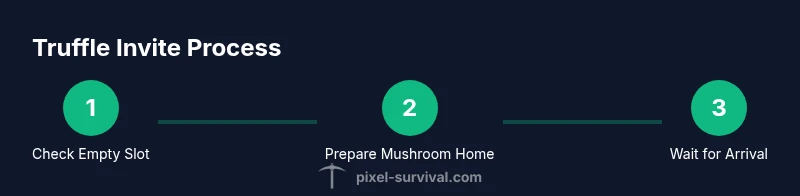
Check for an empty Truffle housing slot
Confirm there is at least one vacant mushroom biome house that meets the standard housing requirements. If all houses are full, you’ll need to move or repurpose a space before inviting a new NPC.
Tip: Double-check the room dimensions and ensure there is a clear path to the entrance. - 2
Prepare a mushroom-biome home
Assemble a room inside or adjacent to a Mushroom Biome with walls, a light source, a chair, and a table. Aim for a cozy, fungus-themed aesthetic to align with the Truffle’s biome vibe.
Tip: Keep the layout simple to avoid accidental NPC blocking. - 3
Ensure biome accessibility
Make sure the biome is reachable from your main base and not cut off by hazards or other structures. The NPC needs a clear, accessible route for daily life.
Tip: A straight, lit corridor helps NPCs reach their home quickly. - 4
Meet biome and housing prerequisites
Verify that the house is in a Mushroom Biome and that the room meets all standard NPC housing rules (walls, light, chair, table).
Tip: Mistakes here are the most common cause of failed spawns. - 5
Wait for the in-game day cycle
After you satisfy housing conditions, the Truffle typically moves in on a future day. Be patient and avoid moving furniture or NPCs during the check.
Tip: Frequent world reloads can sometimes reset spawn checks; give it a consistent cycle. - 6
Confirm Truffle’s arrival
Look for the Truffle occupying the mushroom biome home and initiating trades. This confirms successful invitation and unlocks his shop.
Tip: If he hasn’t arrived, recheck housing and biome status and ensure there’s no other NPC competition.
Got Questions?
What exactly triggers the Truffle to move in?
The Truffle will move in once you have a valid mushroom biome home and an available NPC slot. Housing rules and biome accessibility must be satisfied for spawning to occur.
Have a mushroom biome home ready and a free town slot; the Truffle will move in after meeting those conditions on a future in-game day.
Can the Truffle move in without a mushroom biome?
No. The Truffle requires a Mushroom Biome housing area to consider moving in. Without a mushroom biome, you won’t see him spawn.
You need a mushroom biome for the Truffle to show up.
What does the Truffle sell exactly?
The Truffle offers fungus-themed items and mushroom-related reagents that complement a mushroom biome playstyle. His stock can help farming and exploration in fungal regions.
He sells fungus-themed items ideal for mushroom biomes.
Is there a limit to how many NPCs I can have?
Yes, there is a cap on the number of NPCs in a world. If all houses are occupied, new NPCs like the Truffle cannot move in until space opens up.
There’s a cap on NPCs; you need space before inviting more.
What if my mushroom biome isn’t natural?
You can create a mushroom biome by using glow mushrooms and mushroom blocks and ensuring the area meets biome criteria. A man-made biome still enables the Truffle to move in if housing rules are satisfied.
You can craft a mushroom biome even in places where it doesn’t naturally occur.
Watch Video
Key Points
- Invite the Truffle by creating a Mushroom Biome home.
- Ensure a valid NPC housing setup with a light, chair, table, and walls.
- Await ingame day progression for the Truffle to move in.
- Check for housing conflicts and biome accessibility if spawn fails