Terraria Fishing Without Bait: A Practical Guide
Discover whether you can fish without bait in Terraria, what counts as bait, and how to optimize your fishing—complete, step-by-step guidance for players.


In Terraria, you generally cannot fish without bait. To fish, you need a fishing pole and a bait item in your inventory; without bait, the fishing mechanic won't initiate. You can still optimize fishing by using better rods, water sources, weather, and biome-specific spots to increase your catch rate. This quick answer sets the stage for a deeper dive into bait strategies, alternatives, and optimizations today.
Common fishing mechanics in Terraria
Terraria's fishing system hinges on three core components: a fishing rod, a bait item, and a valid body of water. The rod determines how far you can cast and how quickly a bite can register, while bait is the primary attractant responsible for triggering bites. Water quality and location influence which species you can pull from the pool, and different biomes grant access to different fish, crates, and junk. Alongside these elements, time and weather subtly tilt odds: day versus night and rain versus clear skies can shift the likelihood of rare catches. For progression-minded players, fishing is more than a simple pastime—it unlocks quest fish, crates, and valuable items that speed up early game milestones. The best approach is to scout water sources with ample space for your line and a floating bobber to register bites reliably. Favor calm, open water and avoid hazards like lava or aggressive mobs that can interrupt your cast. A measured strategy saves time and prevents wasted casts while you work toward coveted catches.
Is bait required? The official stance
In standard vanilla Terraria, bait is effectively a prerequisite for fishing. The game uses bait as the primary attractant that triggers bites; without any bait in your inventory, attempts to fish simply fail to register a bite. Bait items include worms, grubs, and other small critters that you can collect or purchase from NPCs. You can carry multiple bait types and switch them to influence catch tables and the chance of obtaining crates or specific fish. Some players speculate about no-bait tricks, but the official stance remains clear: bait is essential for initiating bites. If you run out, you cannot fish until you acquire more bait. Early on, you might rely on surface critters to replenish your stock, but upgrade your rod and plan your water visits to maintain steady progress. Remember, your rod’s strength matters, but it won’t negate the need for bait.
How to fish efficiently with bait
Maximizing your fishing efficiency starts with smart preparation and location choice. Pick a water source that’s at least two tiles wide to avoid frequent anchor hits and ensure a stable bite rhythm. Use a rod that matches your goals—basic rods are fine for early game, but higher-tier rods increase bite speed and range, improving overall odds. Carry a reliable stack of bait and learn which bait types boost the chances for different fish, crates, or junk items. Weather and time of day influence the variety and abundance of catches, so consider fishing during favorable conditions. Keep an eye on your inventory to manage space; releasing junk early can help you keep premium catches. Finally, practice your timing when casting and reeling; a smooth rhythm leads to more successful catches and less downtime between bites.
Bait alternatives and crafting
In Terraria, ‘bait’ is the standard lure used to attract fish, but you can optimize your approach without relying on rare bait types by focusing on two core levers: better rods and smarter water choices. Upgrade your fishing pole to improve bite timing and distance, which indirectly boosts your catch rate even when you’re working with a modest bait stock. Experiment with different water bodies—oceans, rivers, and lakes each host distinct fish pools, with crates becoming more accessible in certain locations. Some players keep a small pool of high-yield bait for extended sessions, while others routinely switch water sources as a timed progression tactic. If you’re short on bait, leverage crates and quest fish to maximize value, and use potions that raise fishing power when available. Remember, bait is valuable, but understanding fishing power, biome differences, and water depth can close the gap when supplies are limited.
Environments and biomes that affect fishing
Biomes play a crucial role in what you catch. Ocean water grants access to the widest variety of fish and crates, while Jungle and Desert waters offer different pools and opportunities. Nighttime can shift the lineup toward rarer catches in some biomes, whereas daylight may favor conventional fish. Weather conditions, such as rain, can nudge fishing power upward, while an unfavorable biome will diminish your results. If you’re aiming for a specific target—like a quest fish or a rare crate—plan your sessions around the biome that hosts that item. Remember to bring the appropriate bait and a rod suited to the environment; this coordination makes a meaningful difference in long sessions.
Common mistakes and how to avoid them
New players often forget crucial basics: they bring a rod but run out of bait, they fish in water too small for reliable bites, or they cast from a position with line obstructions. Another frequent error is ignoring the effects of time and weather, which can skew results. To avoid these pitfalls, scout larger water bodies, keep a ready stock of bait, and consider time/weather cycles when planning sessions. Upgrade your rod when you can, as higher-tier equipment increases bite rate and reach. Finally, don’t neglect inventory management—releasing junk ensures you can preserve space for valuable catches and crates.
Practical scenarios: step-by-step setups
Scenario A: Early game, two-tile-wide river
- Prepare: Basic rod, worms as bait, a small chest with basic junk, and a clean inventory. Cast into the center of the river to maximize your bite zone. Wait for a bite indicator, then reel in at the first sign of movement. If nothing bites after several casts, swap bait types or move to a larger water body.
- Outcome: You’ll typically grab basic fish and perhaps your first crate when conditions align. Pro tip: save time by keeping your line in mid-water, not near shore, to avoid interference. Scenario B: Ocean crate farming during rain
- Prepare: Better rod, a substantial bait stack, and a preference for the ocean biome. Casting in open water during rain increases crate spawn odds. Reel in carefully when the bite indicator appears. Collect crates and fish to expand your early-game inventory.
Practical scenarios: step-by-step setups (continued)
Scenario C: Biome-focused progression in the late game
- Prepare: High-tier rod, a diverse bait stash, and a plan to visit multiple biomes per session. Alternate water bodies to diversify catches, focusing on rare items and quest fish. Use fishing potions or buffs if available to raise success rates. Reel, stock, and repeat in short, efficient cycles. Pro tip: map out your route before you begin to minimize downtime and maximize catches.
Troubleshooting and advanced tricks
If you’re having trouble, verify you’ve loaded a valid water source and that your inventory includes a bait item. Check your rod’s range and ensure you’re not casting into hazardous lava or enemies that can interrupt your line.Advanced tip: combine better rods with longer, clearer casting spots and use crates to boost overall value. If you encounter a dry spell, switch to a different biome or time and return later when conditions improve. Keep a journal of what you catch by location and bait type to refine your future trips.
Tools & Materials
- Fishing Pole (any tier)(Basic rod is enough to start; higher-tier improves catch rate and range.)
- Bait items (worms, grubs, etc.)(Carry a stack for extended sessions; variety can affect catch types.)
- Water source suitable for fishing(Find a calm water body at least two tiles wide.)
- Inventory space(Optional but helpful for sorting caught items and junk.)
Steps
Estimated time: 20-40 minutes
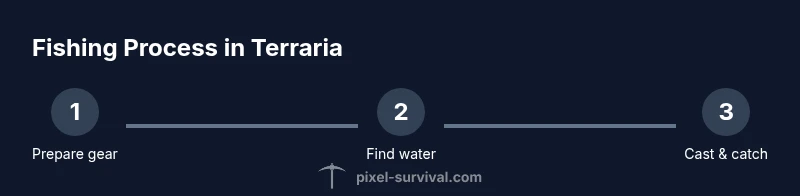
- 1
Gather gear and select a spot
Collect your fishing pole and a reliable bait stock. Scout a water body at least two tiles wide with minimal hazards. This ensures a stable bite rhythm and reduces wasted casts.
Tip: Choose a flat, open section away from enemies for safer casting. - 2
Upgrade your rod when possible
If you have access to a higher-tier rod, equip it before you fish. Better rods extend your casting reach and increase bite frequency, improving overall efficiency.
Tip: Even modest upgrades can significantly cut down fishing time. - 3
Stock bait and prepare hotbar
Place a stack of bait in your quick-access bar so you can swap types as needed. Having multiple bait options lets you tailor for different catches or crates.
Tip: Keep at least two bait types handy to adapt to what the water yields. - 4
Cast into open water
Aim for the center of the water body and click to cast. Ensure the bobber has room to register a bite without hitting the shore or obstacles.
Tip: Cast slightly away from the edge to encourage deeper bites. - 5
Watch for a bite and reel in
When the float bobs or sinks, press and hold to reel smoothly. Quick timing increases your chance of a clean catch and reduces line tangles.
Tip: Don’t overreact—steady reeling often yields better results. - 6
Switch bait or water if needed
If nothing bites after several attempts, swap to a different bait type or move to a new water biome. Changing conditions can unlock different catches.
Tip: Keep notes on what works where for faster future trips. - 7
Assess catch and inventory
Sort through your harvest. Release junk and store valuable fish, crates, and quest items in chests to maintain space.
Tip: Organize inventory at the end of each session to streamline next run. - 8
Plan the next session
Review what you caught, identify gaps in your set, and plan to target specific biomes or crates next time. Efficient planning reduces downtime between trips.
Tip: Rotate biomes to diversify your loot and unlock more progression paths.
Got Questions?
Can you fish without bait in vanilla Terraria?
In vanilla Terraria, you generally need bait to fish; attempting to fish without bait yields no bites. The guide explains why bait matters and how to proceed when short on supplies.
Normally you need bait to fish in Terraria.
Are there any circumstances where bait isn’t needed?
There are no reliable baitless fishing methods in standard gameplay. Some mods or custom rules can alter this, but in the base game, bait is required for bites.
In the base game, bait is required for bites.
What items count as bait?
Bait items include worms and other small creatures captured or bought from NPCs. Stock a few types to adapt to different water bodies and catches.
Worms and other small critters count as bait.
How can I maximize fishing without buying bait?
While you still need bait, you can maximize success by upgrading rods, fishing during favorable biomes or weather, and targeting crates and quest fish for better loot.
Upgrade your gear and fish in favorable conditions to optimize results.
Do fishing poles affect bait requirements?
All fishing poles require bait for bites; poles mainly affect range and bite timing, not the need for bait.
Poles improve range and timing, but bait remains necessary.
Watch Video
Key Points
- Bait significantly influences fishing success in vanilla Terraria.
- Upgrade your rod to improve bite rate and range.
- Choose water bodies and biomes strategically to unlock desired catches.
- Keep bait stocked and manage inventory to minimize downtime.
- Plan sessions by biome and time for efficient progression.