How to Use Bait in Terraria: A Practical Guide
Learn how to use bait in Terraria to maximize fishing yields. This step-by-step guide covers bait types, biome considerations, weather effects, and practical setups. Includes tips, a cheat sheet, and external references for deeper understanding.


By the end of this guide you’ll master how to use bait in Terraria to maximize fishing yields. You’ll learn which bait to use in different biomes, how weather and time affect catches, and how to pair bait with the right fishing rod and fishing location. You'll need a fishing rod, suitable bait, and access to a viable water source. According to Pixel Survival, strategic bait choices unlock steady upgrades in your catch rate.
What bait does in Terraria
Bait is the primary driver of fishing efficiency in Terraria. The right bait changes the odds of a bite, the speed at which you reel in, and the variety of fish you can attract. From a practical standpoint, bait acts as the fuel that keeps your fishing sessions productive, especially when you’re targeting specific fish or rare drops. As Pixel Survival Analysis notes, the relationship between bait and catch rate is the most impactful lever you have early in the game, often more influential than incremental rod upgrades. This section explores why bait matters, how it interacts with your rod and water source, and how to plan sessions that maximize returns. Remember: bait is consumed when you fish, and certain baits excel in particular biomes or times of day.
Bait categories
Bait generally falls into two broad categories: natural live bait and crafted or specialty bait. Natural bait, such as worms or other grubs found around the world, is typically easy to acquire and versatile for common bodies of water. Specialty baits are crafted from various critters or harvested from events and biomes, and they tend to offer higher bite rates or unique fish. In practice, you’ll start with basic bait to build your collection, then expand to higher-quality items as you explore new biomes. The key is to keep a balanced assortment so you’re never caught without something that fits the current fishing spot. A well-curated bag of bait dramatically increases daytime and nighttime catches alike, particularly when you’re working toward rare drops or progression milestones.
Basic bait vs. rare bait: practical consequences
Beginner players often ask how much better superior bait is. The truthful answer is: it depends on where you fish and what you aim to catch. Basic bait allows you to reliably pull common fish in early biomes and simpler lakes. Rare or crafted bait, while harder to obtain, boosts bite rate and expands the pool of eligible catches, including more valuable varieties as you reach late-game biomes. Treat bait like a tuning dial: in some spots, basic bait is plenty; in others, you’ll want stronger options to unlock desired loot. Pixel Survival’s guidance emphasizes building your bait collection in parallel with your exploration so you don’t stall on progression.
Biome-specific bait guidance
Different biomes favor different bait types due to fish availability and water conditions. For example, freshwater lakes near towns often respond well to general bait, while saltwater bays may require more specialized bait to trigger rarer catches. In cavern or underground rivers, you might encounter different species entirely, so stocking a broader bait mix is smart. The plan is simple: map nearby water bodies, note which fish you’re after, and match your bait to the likely catches. Keep in mind that some baits are more or less effective at certain times of day or under certain weather conditions, so flexible planning is key.
How to acquire bait efficiently
Acquiring bait is a mix of exploration, farming, and smart resource management. Start with easy-to-find worms or basic live bait from grasslands and shallow waters. As you expand your world, hunt for critters that yield higher-quality bait, or refine your fishing spots to improve your yield with the bait you already have. Establish a routine: patrol known fishing hotspots, collect ambient bait, and rotate your inventory to prevent running out mid-session. Pixel Survival notes that a methodical approach to gathering bait aligns with long-term progression and reduces downtime between fishing trips.
Matching bait with fishing rods and location
Your rod quality matters, but bait often has a larger impact on catch rate than incremental rod upgrades early on. Use higher-quality bait with better fishing spots or stronger rods to capitalize on raised bite chances. For beginner areas, a basic rod with common bait is fine; for late-game biomes, equip higher-tier bait and leverage biome-specific water bodies to maximize your haul. The overall strategy is to pair the right bait with the optimal water body and a suitable rod so you don’t waste casts or bait resources.
Fishing spots and water access
Finding a reliable water source is half the battle. Look for still or gently moving bodies of water with ample space to cast, and avoid crowded or crowded surface areas where fish spawn less readily. If you’re in an enclosed space, consider building a small, safe pool to control your fishing environment. A calm, well-lit area reduces stress on your character and ensures steady, uninterrupted fishing sessions. If you’re playing multiplayer, coordinate with others to secure shared water sources and reduce competition for good spots.
Weather, time, and events
Weather and time of day influence which fish are active and how often you’ll be bitten. Dawn and dusk often yield stronger bites for many common fish, while rain can alter water conditions and bring new catches. In some biomes, night-time fishing requires different bait to access nocturnal species. Plan sessions around these cycles to maximize your success. If you’re aiming for rare drops or event-tied fish, monitor in-game calendars and plan your fishing days to coincide with those opportunities.
A sample progression plan using bait
Begin with a basic rod and common bait to establish a baseline. Move to more advanced bait as you unlock new biomes and environmental changes. Create a small, dedicated fishing area with a water source and a simple storage setup for bait and catches. Track which bait yields the best results for each biome, and rotate based on the target fish you want. Over time, your collection of bait will enlarge, your supply lines will stabilize, and your overall fishing efficiency will improve noticeably. The aim is steady optimization rather than quick, one-off gains.
Tools & Materials
- fishing rod(Any basic rod works; upgrade later for better control)
- bait (various types)(Include common worms and advanced bait when possible)
- water source(A calm pool, lake, or river is ideal)
- storage container or backpack(Carry spare bait and equipment for longer sessions)
Steps
Estimated time: 60-90 minutes
- 1
Gather essential gear
Collect a functional fishing rod, a reasonable assortment of bait, and identify nearby water sources. Ensure you have extra bait stashed for longer sessions. Having a simple map or memory of good spots helps minimize travel time between casts.
Tip: Verify your inventory before leaving base to avoid mid-session shortages. - 2
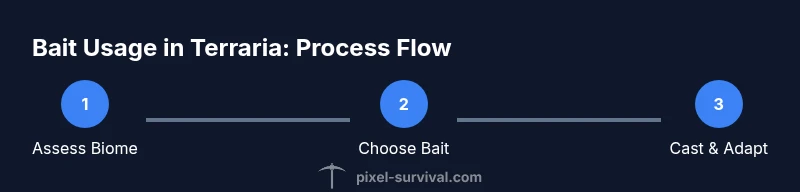
Choose bait based on biome
Assess the biome you’ll fish in and select bait that best matches the target fish. In general, start with common bait in familiar waters and reserve rare bait for when you’re near new biomes or chasing specific drops.
Tip: Carry at least one fallback bait so you’re not stranded if your primary choice runs dry. - 3
Find a suitable water source
Identify a calm, adequate-sized body of water with clear surroundings. A safe, spacious pool reduces the risk of interruptions from enemies and gives you room to maneuver during casts.
Tip: If no natural pool exists, build a small controlled fishing pond with walls for safety. - 4
Cast with proper technique
Aim for open water within your casting range and watch for bite indicators. Reel in smoothly, maintaining steady tension to prevent line breaks or missed bites.
Tip: Keep your eye on the water surface; faster reels can help with quick catches in busy spots. - 5
Switch bait strategically
If you’re not seeing bites, swap to a different bait type suited to the current water and target fish. Don’t overcommit to one bait if a nearby spot consistently underperforms.
Tip: Rotate bait every 3-5 casts to explore multiple options efficiently. - 6
Upgrade your setup
Progress to higher-tier bait and rods as you unlock new biomes. Better gear amplifies your overall bite rate and expands the range of fish you can attract.
Tip: Pair upgraded bait with better rods to maximize results during late-game progression. - 7
Track progress and adjust
Maintain a simple log of which bait works best where and when. Use this data to refine your strategy over time, focusing on the most productive combinations.
Tip: Set a weekly goal for new fish or rare drops to stay motivated.
Got Questions?
What is the best bait for beginners?
For beginners, start with basic worms as they are easy to obtain and adapt to common waters. As you explore new biomes, gradually add better bait to increase your odds of catching more valuable fish.
Beginners should start with worms and add better bait as they explore new biomes.
Does weather really affect fishing?
Yes. Weather and time influence which fish are active and how often you’re bitten. Plan sessions around dawn, dusk, and weather patterns to maximize your catches.
Weather and time matter: fish more during dawn or dusk and in favorable weather.
Can I fish anywhere there is water?
You need an accessible water source to fish. Some areas are blocked by terrain; if you lack water, create a small, safe pool to enable fishing.
You need water to fish; if none nearby, make a small pool.
How do I get better bait?
Continue exploring biomes to unlock new critters and crafting options. Build up a diverse bait inventory by collecting from multiple environments.
Explore more biomes to unlock better bait options.
Is there a limit to bait types I can carry?
Inventory limits apply like any item; prioritize the most useful bait in your current biome and keep a small reserve of backups.
Your backpack has limited space—carry the most useful bait for your spots.
Does journey mode or multiplayer change bait behavior?
Bait behavior is generally consistent, but in multiplayer you share water sources and spots, so coordinate to avoid crowding and maximize each session’s bounty.
Bait works similarly, but coordinate with others in multiplayer for better spots.
Watch Video
Key Points
- Match bait to biome for best yields
- Carry multiple bait types for flexibility
- Pair bait with the right rod and location
- Weather and time influence catches