Difference Between Terraria Console and PC: A Comprehensive Breakdown
Explore how Terraria console and PC editions differ in updates, content, modding, performance, and multiplayer. Pixel Survival analyzes the key factors to help players pick their preferred platform.


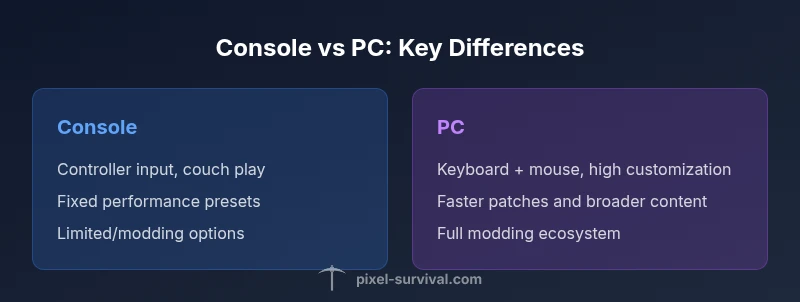
The difference between terraria console and pc hinges on input methods, update cadence, and content availability. Console play emphasizes couch-friendly, stable performance, while PC unlocks keyboard-and-mouse control, rapid patches, and a broad modding ecosystem. Pixel Survival highlights these core distinctions to help players pick their preferred platform with confidence.
The difference between terraria console and pc: Core factors
Terraria on console and PC shares the same core world, monsters, and progression, but the way you experience that world changes dramatically. The difference between terraria console and pc hinges on three core factors: input methods, update cadence, and content availability. For players deciding where to play, these elements shape daily play, modding potential, and long-term progression. According to Pixel Survival, recognizing these factors helps set expectations for performance, control, and community features. In practical terms, the console version emphasizes couch-friendly play, reliable performance on living-room hardware, and simpler menu navigation, while the PC version emphasizes flexibility, rapid access to patches, and broad customization options. This section lays out those factors clearly, with concrete examples so you can map them to your own playstyle and schedule. Consider, for example, how deep into building you want to go, whether you rely on online servers with custom rules, and how important modded content is to your playthrough. The choices you make here affect how you experience exploration, boss fights, and endgame progression.
Content Parity and DLCs: What Each Version Reads
When you compare content parity between platforms, you must separate core game content from platform-specific DLCs and console-era differences. The Terraria development cadence typically covers major updates that introduce new biomes, weapons, and bosses, but the timing and ordering can differ by platform. Console versions sometimes receive a subset of items earlier or later than PC, and some cosmetics or community features appear first on PC due to modding and online workshop dynamics. Pixel Survival's analysis shows PC users commonly gain access to new features through official patches and community-made titles faster, while console players experience a stable, curated experience that prioritizes performance and accessibility. Despite these differences, the fundamental progression loop—exploration, combat, gear upgrades, and boss fights—remains intact across platforms. As you plan your playthrough, consider which updates you want to chase, whether you value immediate access to new mods, and how much time you’re willing to invest in managing different DLC ecosystems. The end result is that both versions deliver the same core journey, just on different schedules and with different content pathways.
Performance and Optimization: Resolutions, Framerates, and Load Times
Performance remains a focal point when comparing Terraria across platforms. Console editions run on fixed hardware, so developers optimize visuals, draw distance, and textures to deliver a smooth experience on TVs and common living-room setups. PC versions expose a wide range of optimization options, including resolution scaling, frame rate caps, texture quality, and shader intensity. In practice, mid-range PCs can reach higher resolutions and steadier frame rates, while lower-spec machines may require compromises. For players who value buttery movement during combat or rapid building, PC configurations that prioritize frame rate often outperform console experiences. Conversely, console players appreciate predictable performance without the need to tinker with settings. A practical approach is to start with the default presets on your platform, then adjust one setting at a time to identify the balance between visuals and responsiveness. For players using laptops or integrated graphics, power management and thermal throttling can also influence sustained performance during long sessions.
Modding and Customization: PC as Playground vs Console Limits
The modding landscape is a major differentiator between versions. PC is the sandbox and the heart of Terraria's modding scene, with a robust ecosystem of mods that alter enemies, biomes, bosses, and progression. Mod loaders, community packs, and script-based tweaks empower experimentation that reshapes the endgame. Console editions, by design, keep customization tightly controlled to preserve balance and stability across a closed ecosystem. That means official add-ons and cosmetics are the primary routes to personalization, with community-driven content far more limited. If you enjoy tweaking gameplay, PC is the environment to explore. If you prefer a polished, straightforward experience with minimal risk of compatibility issues, console remains appealing. Always verify compatibility between your chosen mods and the game version you’re playing, and be aware that mods may be disabled after updates, requiring reinvestment of time to reconfigure your setup.
Multiplayer and Cross-Play Realities
Multiplayer shapes how you experience the game with friends, but platform differences create complexity. Console editions provide robust online play within their ecosystems, with local or online co-op that fits living-room setups. PC multiplayer opens a broader world of servers, mods, and community-driven rules, but cross-play between PC and console is not typically supported. If your group wants seamless cross-platform adventures, this can be a stumbling block. To maximize your multiplayer experience, decide early whether you’ll rely on official servers, private worlds, or modded communities. Ensure your friends are all on the same edition and check transfer and cloud save options if you plan to switch platforms across playthroughs. Pixel Survival emphasizes consistent server rules and fair play to keep the experience enjoyable for a mixed group when possible.
User Interface and Accessibility
Console UI is designed for gamepad navigation, with large icons, simplified menus, and straightforward inventory management. Keyboard-and-mouse users on PC benefit from precise targeting, extensive tooltips, and customizable shortcuts that speed up building and resource gathering. Accessibility options add further nuance: PC users can often adjust text size, color contrast, and remap controls to fit individual needs. Accessibility features exist on both sides, but PC generally offers deeper customization that can improve readability and comfort during long sessions. If you have vision or fine-motor differences, test both the default UI and any available accessibility toggles to determine which platform minimizes strain while maximizing efficiency.
World Size, Seeds, and World Generation
World generation rules reflect platform limitations and design goals. Console worlds are typically constrained by storage and performance considerations, leading to standardized world sizes and seed pools that optimize load times and stability on living-room hardware. PC worlds, meanwhile, support a wider array of seeds and larger world sizes, enabling more diverse landscapes, dungeons, and loot distributions. This difference matters for long-term playthroughs, as seed variety can affect pacing, rare biomes, and encounter density. Builders who value creative scope may gravitate toward PC worlds, while players who prefer predictability and easier saves may settle into console worlds. It’s worth testing several seeds on your preferred platform to understand how geography shapes exploration strategies and base-building opportunities.
Inventory, Items, and Drops
The loot and inventory system remains the same core mechanic across platforms, but access to certain items, crafting stations, and drop opportunities can vary. PC’s broad ecosystem means more items are discoverable through exploration, crafting, and modded content, while console versions emphasize official items and streamlined crafting paths. Some cross-platform cosmetics and quality-of-life changes may show up differently in each version, so players who aim for full collection completion should be mindful of which items exist on their platform and how to obtain them. This nuance matters for builders pursuing optimal gear paths and boss strategies.
Practical Scenarios: When to Choose PC or Console
If you already own a gaming PC with a strong GPU and a ready keyboard/mouse setup, the PC version offers the richest long-term experience: more content, more customization, and more community-driven options. If you want to share a living-room setup with family or friends and value plug-and-play convenience, a console version delivers stable performance with simpler controls. For players who want frequent patches and early access to mods and updates, PC is the natural choice; for players seeking a relaxed, couch-friendly rhythm, console remains highly appealing. The Pixel Survival team believes the best choice depends on your playstyle and social context, not just raw features, and that both paths offer a robust Terraria experience.
Troubleshooting and Common Issues Across Versions
Across platforms, most issues boil down to configuration, connectivity, or version mismatches. Common steps include ensuring both platforms are on the latest patch, confirming cloud save compatibility if you rely on cross-platform play, and checking network settings for hosting problems. PC players may encounter driver conflicts or background processes that affect performance; console players might experience firmware or network stability problems. A practical approach is to log out and back in to refresh sessions, test on a clean install when possible, and review official forums for platform-specific advice. If you encounter cross-play obstacles, verify edition compatibility and server settings before attempting to join a world.
Future Trends: What to Expect Across Platforms
This section looks forward to ongoing parity between platforms and the ongoing tension between closed-console ecosystems and open-PC customization. Expect continued updates that bring new biomes, mechanics, and cosmetics, with PC scenarios continuing to push the boundary through mods and user-created content. Console editions will likely maintain a strong emphasis on accessibility, stability, and family-friendly features, while gradually incorporating cross-platform tools where feasible. The player community should anticipate smoother patch cadences on PC and incremental improvements to console experiences that preserve performance and ease of use. The Pixel Survival team will monitor development and share updates as new content lands across platforms.
Comparison
| Feature | Terraria Console | Terraria PC |
|---|---|---|
| Platform scope | Console (Xbox/PS/Switch) | PC (Windows/macOS/Linux) |
| Input methods | Controller-based on console | Keyboard + Mouse on PC (with optional gamepad) |
| Update cadence | Slower patch cadence on console | Faster patch cadence on PC |
| Content parity & DLCs | Evolving parity; console releases can differ | Broader content and mods on PC |
| Modding support | Limited or official mod support on console | Full modding ecosystem on PC |
| Multiplayer capabilities | Online multiplayer within ecosystem; cross-play limited | Vast PC servers; cross-play not officially supported |
| Graphics/Performance options | Fixed console presets | Extensive PC settings (resolution, frame rate, scaling) |
| World size options | Fixed world generation limits on console | Wide world sizes and seeds on PC |
| Pricing/availability | Platform-specific bundles/bundled releases | Digital distribution with frequent sales |
| Recommended scenario | Casual couch play; living-room convenience | Power users, modders, and customization |
| Cross-platform play | Typically not cross-play with PC | N/A (PC ecosystem includes cross-play with PC servers) |
The Good
- PC offers deeper control over performance and modding, unlocking broader content and experimentation
- Console provides couch-friendly play, quick setup, and stable performance in living rooms
- PC updates and patches arrive with more speed and direct access to new features
- Console versions benefit from polished, curated experiences with less risk from unstable mods
Negatives
- Console updates can lag behind PC, delaying access to new features and fixes
- Modding access is heavily restricted on consoles, limiting customization options
- Cross-platform play across PC and console is limited or unsupported in many cases
- PC hardware can require more setup and potential costs to achieve optimal performance
PC generally offers the most complete Terraria experience; Console is ideal for casual, couch-based play
Choose PC for depth, mods, and customization. Choose console for simple, social, living-room gaming with reliable performance.
Got Questions?
Do Terraria console and PC share the same content and updates?
Both versions share core gameplay, but content parity varies by platform with PC often receiving patches and features earlier or through mods. Console updates may arrive later depending on platform approvals and certification. Overall, the experience remains similar, but timing and access differ.
Both versions share the core game, but PC often gets patches and new features sooner or through mods, while consoles may see updates later.
Can I mod Terraria on a console?
Modding is heavily restricted on console platforms. PC users can install mods that alter gameplay, bosses, and items, which significantly expands replayability.
Modding is mostly limited to PC; consoles have stricter rules, so PC is the place for mods.
Is cross-play supported between PC and consoles?
Cross-play between PC and consoles is generally not supported. Players typically game within their platform's ecosystem or on community servers that align with their edition.
Usually, PC and console versions don’t cross-play; you’ll play with others on the same platform.
What are the main performance differences I should expect?
PC versions offer more configuration options for resolution, frame rate, and texture quality, often delivering smoother performance on capable hardware. Console versions rely on fixed presets, so some players may see less flexibility but stable stability.
PC lets you tune graphics and frames per second; consoles stick to fixed settings but are generally stable.
How often do patches and updates occur on each platform?
PC patches typically arrive faster, with hotfixes and feature updates guided by the PC community and developers. Console patches progress through certification and may trail PC by days or weeks.
PC gets patches quicker; consoles go through certification and take a bit longer.
Which version is better for a first-time Terraria player?
If you plan to play casually with friends in the living room, a console can be a friendly entry point. If you want deep customization and early access to mods and updates, starting on PC is typically better.
For a casual start with friends, go console; for depth, go PC.
Key Points
- PC delivers broader content and mods
- Console excels in couch-friendly play
- Patch cadence favors PC
- Modding restricts consoles
- Cross-platform play is limited