How to Test DPS in Terraria: A Practical Guide
Learn how to accurately test DPS in Terraria with step-by-step methods, buffs, data collection, and real-world examples. Pixel Survival explains proven approaches for reliable weapon comparisons.


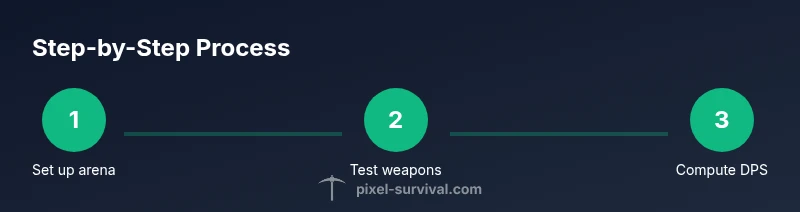
In this guide you will learn how to test DPS in Terraria by measuring total damage over a fixed time with a controlled arena, identical buffs, and repeatable steps. You’ll test multiple weapons, record clear data, and compute DPS using a simple formula so you can compare gear and builds reliably.
What DPS means in Terraria
DPS, or damage per second, is a useful metric for comparing weapons and builds in Terraria. It combines base damage, attack speed, and the frequency of critical hits to estimate how much damage you deal on average each second. In practice, DPS testing helps you decide between melee, ranged, magic, and summon weapons, especially when buffs, debuffs, and status effects create dynamic changes. According to Pixel Survival, DPS testing should be approached with a focus on repeatability and clean data, so comparisons stay fair as you experiment with gear. The Pixel Survival team found that isolating variables—using a fixed arena, the same target, and identical buffs—greatly reduces noise in measurements. The resulting DPS value can be used to rank weapons within the same category (e.g., melee, ranged) and to guide loadout decisions for specific playstyles. In most scenarios, you’ll measure DPS in a short, controlled window such as 5-10 seconds, then average across multiple runs to account for random variation. When planning tests, keep in mind how factors like debuffs, potion effects, and enemy type can shift DPS, so you can design tests that reflect your intended endgame setup.
Establishing your testing goals
Before you start collecting data, define clear testing goals. Decide which weapon types you want to compare (melee vs. ranged vs. magic), whether you’ll test in standard or hard mode, and which buffs you’ll enable. Document your baseline assumptions: the version of Terraria you’re using, the damage values you expect from each weapon, and the buff durations you’ll apply. A well-defined plan helps you avoid scope creep and ensures your results are reproducible for future experiments. Pixel Survival emphasizes setting goals that align with your in-game objectives—whether you’re optimizing for speedruns, boss prep, or casual play. Create a checklist for each testing session and stick to it, so you can compare results across several days or patches with confidence. Finally, consider creating a shared template (spreadsheet or notebook) to capture weapon, buffs, window length, total damage, and calculated DPS in one place.
Set up a controlled testing environment
A controlled environment minimizes external factors that could skew DPS results. Choose a flat testing arena with ample space and no hazards that could interrupt your timing. Place a non-moving target such as a training dummy or a stationary enemy and ensure it cannot be damaged by ambient effects. Use the same seed world or a fresh test world to avoid environmental differences, and turn off random world events if possible during the test window. Establish a fixed time window for all trials (for example, 10 seconds) and begin each run from a baseline pose with the weapon equipped, buffs applied, and no movement. If you’re testing ranged weapons, account for projectile travel time in your timing window. Consistency is the cornerstone of reliable DPS data, so replicate the setup exactly for every weapon you test.
Weapon selection and buff scenarios
Select a representative set of weapons to compare across weapon classes (melee, ranged, magic, and summon). For each weapon, document base damage, attack speed, and any unique scaling or debuffs that affect DPS. Plan buff scenarios that are relevant to your endgame goals, such as damage-boosting potions or temporary bonuses from armor sets, and note the exact buffs used during each test. Keep the buff duration consistent across runs, and avoid stacking buffs beyond what you’ll actually use in real play. If you use multiple buff types, test them in isolation first, then in combination to understand additive or synergistic effects. This disciplined approach helps you build a clear hierarchy of DPS across weapons under similar conditions. Pixel Survival’s method emphasizes repeatable buff timing and identical gear across trials to minimize noise.
Data collection protocol and measurement window
Define how you will collect data: choose a fixed timer window (e.g., 10 seconds) and count the damage dealt to the target within that period. Record the total damage, the number of hits, and any critical hits that occurred. Use a stopwatch or in-game timer to ensure the window remains consistent across runs. Repeat each weapon test multiple times (at least 3-5 trials) to account for random variation in crits and hit timing, then average the results. If you observe outliers due to latency or animation cancelation glitches, retest those runs to confirm accuracy. Keep a consistent frame rate environment if possible, or note FPS variations that could influence attack speed. The data you collect will form the basis for your DPS calculations and cross-weapon comparisons.
Computing DPS and interpreting results
With totalDamage and duration in hand, compute DPS as DPS = totalDamage / duration. If you perform multiple trials per weapon, average the DPS across runs to obtain a stable figure. Interpret results with caution: a higher DPS value suggests greater output under the tested conditions, but real-world performance can vary with movement, enemy type, and boss mechanics. Compare weapons within the same class first, then across classes only if you’ve matched variables like buffs and environment. Consider creating a simple chart that lists each weapon, its DPS, the buffs applied, and the test window to visualize which loadouts excel in specific scenarios. Pixel Survival’s experience shows that visualizing data helps players make faster, better-informed decisions when optimizing their Terraria progression.
Common pitfalls and how to avoid them
Avoid common DPS testing mistakes by keeping tests consistent. Do not mix buffs or multiple weapon types in a single run; this confuses DPS attribution. Don’t rely on a single trial—statistical noise from crits or delays can mislead results. Ensure your target is stationary and that terrain or particle effects do not interfere with hit registration. Be wary of latency affecting hit timing in online play; if you test online, perform additional runs in a controlled offline environment when possible. Document every variable: weapon, buffs, duration, target type, and any environmental factors. Finally, don’t extrapolate DPS beyond the tested window or assume results transfer directly to boss fights without additional checks. These precautions help you build trustable, repeatable DPS data.
Practical testing scenarios and examples
Imagine you want to compare a fast-hitting melee sword with a slower, high-damage greatsword. Test both under identical buffs, on the same dummy, for a fixed duration. Record total damage for each run and compute DPS. If the melee weapon delivers more total damage per second in the testing window, it’s your go-to for fast encounters; if the greatsword shows higher DPS, you may prefer it for boss fights where sustained damage matters. Extend this approach to ranged and magic builds by selecting projectile weapons with clear hit counts and consistent projectile speeds. As you gather data across multiple weapons and scenarios, you’ll build a data-driven map of which weapons shine in which contexts, enabling smarter decisions about gear, accessories, and loadouts.
Documentation and reproducibility
Create a single, shareable data sheet that records weapon, buffs, duration, target type, and calculated DPS for every test. Include screenshots or notes about arena setup and buff timing to ensure others can reproduce your results. Store your data in a consistent format, with clearly labeled columns and units for damage and time. Track version numbers of Terraria and any mods used, as they can influence DPS values. Finally, publish a short narrative alongside the data describing your methodology and any deviations from the standard procedure. Reproducibility means other players can validate your conclusions or build on your testing to refine weapon rankings further.
Tools & Materials
- In-game Target Dummy(Place on a flat surface; ensure it cannot be destroyed during testing.)
- Weapon to test(Choose at least one weapon per class (melee, ranged, magic, summon) for comparisons.)
- Stopwatch or timer(Use a precise timer to measure the test window.)
- Notebook or spreadsheet(Record total damage, hits, crits, buffs, and duration.)
- Buff potions or temporary buffs(Keep durations consistent and document every buff used.)
- Test arena with flat terrain(Eliminate movement artifacts and environmental hazards.)
- Terraria version/mode information(Note game version (e.g., 1.4.x) and mode (pre-hardmode, hardmode) for context.)
Steps
Estimated time: 45-60 minutes
- 1
Set up testing arena
Choose a flat area, place a Target Dummy, and ensure it cannot move or be affected by environment. This creates a stable test bed where weapon hits are easy to count and timing is consistent.
Tip: Double-check that the dummy is invulnerable to prevent accidental destruction during testing. - 2
Select weapons for baseline tests
Pick representative weapons from melee, ranged, magic, and summon categories. Document each weapon’s base damage and known attack speed so you can compare apples-to-apples later.
Tip: Aim for at least one weapon per class to cover typical playstyles. - 3
Prepare buffs and timing
Apply a fixed set of buffs for all trials and note their durations. Start all tests with buffs active to minimize data variance.
Tip: Use the same buff combinations across all weapon tests. - 4
Calibrate the timer
Open your timer and align it with the first hit on the dummy. Ensure the window ends exactly when you stop counting to maintain consistency.
Tip: Use a visible cue (sound or animation) to mark the window end. - 5
Run test windows for each weapon
With the weapon equipped and buffs active, hit the dummy for a predefined duration (e.g., 10 seconds). Record total damage, number of hits, and any crits.
Tip: Trigger the window with the weapon’s attack cycle to minimize slowdowns. - 6
Repeat trials
Conduct 3-5 trials per weapon under identical conditions to average out random variation in crits and timing.
Tip: Discard outliers if the window wasn’t consistent or if latency affected timing. - 7
Compute DPS per run
For each trial, compute DPS as totalDamage divided by duration. Then average the DPS across all trials for that weapon.
Tip: Keep workbooks organized with clear labels for weapon, buffs, and duration. - 8
Compare results
Create a simple comparison chart listing DPS per weapon by class. Analyze which weapons excel in your target scenarios.
Tip: Visuals help you quickly identify best-in-class options. - 9
Document methodology
Record your full testing methodology, including arena setup, buffs, durations, and any anomalies. This enables others to reproduce your results.
Tip: Share your data sheet with the community for validation. - 10
Apply findings to builds
Use the DPS rankings to guide gear choices, loadouts, and buff timing for your Terraria progression.
Tip: Remember DPS is context-dependent; adjust tests for boss fights and movement.
Got Questions?
What is DPS in Terraria and why should I test it?
DPS stands for damage per second and represents average damage output over time. Testing DPS helps you compare weapons and loadouts under controlled conditions to choose the best option for your goals.
DPS is the average damage per second. Testing it lets you compare weapons fairly under the same conditions.
How long should testing windows be for DPS comparisons?
Use a fixed duration that suits the weapon’s attack cadence, such as 10 seconds, and keep it identical across all weapons tested.
Use a fixed window like ten seconds for all tests to stay consistent.
Do buffs affect DPS measurements?
Yes. Buffs can dramatically change DPS, so apply the same buffs during every test and note their durations to maintain comparability.
Buffs can change DPS a lot, so keep them the same for every test.
Can I test both melee and ranged weapons using the same setup?
Yes, but you must keep the arena conditions and testing window consistent and account for projectile travel time when testing ranged weapons.
You can test both, just keep conditions identical and note projectile travel time.
How do I average DPS across multiple trials?
Compute DPS for each trial and then take the arithmetic mean to obtain a stable, representative value for that weapon.
Average the DPS across trials to get a reliable value.
Watch Video
Key Points
- Define DPS as totalDamage over duration
- Use consistent buffs and arena setup
- Measure with fixed windows and multiple trials
- Compare like-for-like weapon classes first
- Document methodology for reproducibility