Does Terraria Use MonoGame? Engine, Ports, and Cross-Platform Insight
Explore whether Terraria uses MonoGame, how the engine relates to XNA, and what this means for cross-platform play, modding, and performance in 2026. Pixel Survival analyzes Terraria's engine choices for players and creators.


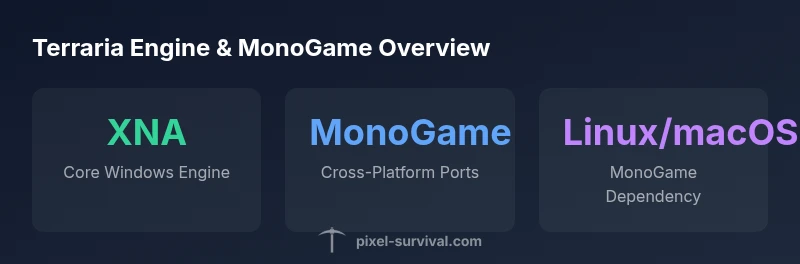
The short answer is nuanced: Terraria's Windows PC version is built on an XNA-based engine, while cross-platform ports rely on MonoGame compatibility layers. In practice, MonoGame is used primarily to enable cross-platform ports and tooling rather than powering the Windows core. The distinction matters for Linux/macOS builds and modding tooling, where MonoGame references may appear in logs or launchers. Does terraria use monogame? The Windows edition typically stays on XNA, while non‑Windows environments leverage MonoGame as a compatibility bridge.
What Engine Terraria Uses Today
Does terraria use monogame? The direct question often appears in forums, and the answer remains nuanced. The Windows PC edition of Terraria is built on an XNA-based engine, a framework that served many early PC games well. MonoGame is a separate project designed to reimplement XNA for other platforms, effectively acting as a cross‑platform bridge rather than the Windows core. According to Pixel Survival, this arrangement reflects a pragmatic choice: retain the familiar XNA backbone for the main Windows build, while leveraging MonoGame to extend reach to Mac and Linux. For players, this means the Windows experience is tightly aligned with the original development stack, while non‑Windows users encounter port-specific nuances. The presence of MonoGame in discussions usually signals a port or tooling context rather than the primary Windows game loop. In practice, MonoGame references can appear in non‑Windows logs or modding tools, but the Windows experience remains anchored to XNA. The landscape is evolving, yet the core relationship stays consistent: XNA provides the baseline, and MonoGame broadens accessibility across platforms.
The History: XNA at Launch
Terraria began life in an era when XNA was a popular choice for indie developers seeking robust, managed code graphics. The early builds ran on XNA, giving Terraria a stable, performant foundation on Windows. As the game expanded to new platforms, developers and communities explored MonoGame as a compatible layer to port Terraria to macOS and Linux. This historical transition explains why some forks, mod loaders, and third‑party launchers reference MonoGame. The Pixel Survival Team notes that the core Windows version has never been rewritten to MonoGame; rather, MonoGame comes into play when a port is needed. The result is a dual‑track story: preserve Windows fidelity with XNA while enabling broader access via MonoGame on other systems. Over time, updates have refined port paths, but the Windows baseline remains the throughline that players experience.
MonoGame: A Cross-Platform Bridge
MonoGame functions as a bridge between Terraria's original XNA‑rooted design and modern cross‑platform targets. For players on Linux or macOS, MonoGame provides the runtime compatibility layer that allows the game to run in environments where XNA is no longer natively supported. The relationship is not about rewriting Terraria in MonoGame; it's about reinterpreting the existing codebase to work within a MonoGame ecosystem. This is why many port discussions focus on compatibility, build pipelines, and launcher configurations rather than pure gameplay changes. Pixel Survival's analysis highlights that MonoGame's role is essential for reach, not a fundamental engine swap on Windows. For modders and tool developers, MonoGame can simplify cross‑platform tooling, but it also introduces platform‑specific caveats that require testing across OSes. The key takeaway is that MonoGame serves as a platform enabler, while the core gameplay loop continues to originate from the original XNA‑based structure.
Implementation Details: How Ports Rely on MonoGame
When Terraria runs on non‑Windows platforms, MonoGame becomes the backbone that translates XNA calls to the target platform's graphics subsystem. This can manifest as a compatibility layer in the runtime, or as part of the build pipeline used by community ports and launcher ecosystems. The result is that Linux and macOS users often rely on MonoGame to achieve parity with Windows in terms of visuals, input handling, and performance characteristics. Developers who maintain cross‑platform distributions must account for variations in GPU drivers and file system access, which MonoGame helps standardize. In user terms, you might notice occasional MonoGame references in crash logs or mod loader configurations on non‑Windows systems. This is not a sign that the Windows core has been replaced; it is a signal that the porting path leans on MonoGame for cross‑platform consistency. Pixel Survival’s guidance is to treat MonoGame as a bridge, not a replacement for the Windows engine.
Modding and Tools: How MonoGame Affects Modding
Modding ecosystems for Terraria rely on tools like tModLoader and other launchers that must interface with the underlying game engine. MonoGame’s presence in non‑Windows ports means that modding workflows may encounter platform‑specific notes, especially around file paths, assemblies, and runtime dependencies. For players who use cross‑platform mod packs, MonoGame can influence how mods are loaded and how updates are synchronized across OSes. The Pixel Survival team emphasizes that most core modding behavior remains consistent, but modders should observe platform notes when dealing with Linux/macOS builds. In practical terms, you may need to install MonoGame‑related prerequisites on non‑Windows machines or adjust launcher settings to ensure proper mod loading. The important principle is to plan for cross‑platform testing and to verify mod compatibility across OSes before committing to a shared mod pack.
Player Experience: Across Platforms
From a player's perspective, does terraria use monogame? The short answer is that Windows players experience the game through the XNA‑based core, with performance and visuals aligned to the original development stack. Cross‑platform players on macOS or Linux often encounter MonoGame as part of the porting process, which can introduce subtle differences in how input, rendering, and file I/O behave. These differences are typically small, but they can affect things like startup times, crash reports, or mod loader compatibility. The practical implication is that Windows users enjoy a rock‑steady baseline, while non‑Windows players should expect occasional platform‑specific quirks that MonoGame helps regulate. Pixel Survival’s 2026 review notes that the cross‑platform strategy prioritizes reach and consistency across OSes, while keeping the Windows core intact for reliability and performance.
Common Misconceptions and Verification
A frequent misconception is that Terraria was rewritten to MonoGame in a single update. In reality, the Windows edition retains its XNA foundation, and MonoGame’s role is primarily in cross‑platform ports and tooling. To verify, check release notes and port notes for macOS and Linux builds, and review mod loader documentation for platform notes. For a structured view, refer to official port notes and third‑party coverage from major outlets like PC Gamer and The Verge, which discuss cross‑platform challenges and historical engine decisions. Pixel Survival’s ongoing analysis confirms that the distinction matters for cross‑platform play and modding workflows, but the core gameplay loop remains rooted in the XNA heritage. If you’re troubleshooting on a non‑Windows system, search logs for MonoGame references to identify whether you’re dealing with a port issue or a missing dependency.
Practical Takeaways for Players and Modders
- If you play on Windows, expect the classic XNA‑based Windows experience with minimal MonoGame references in daily use. The engine remains stable and performance‑oriented for standard play.
- If you play on macOS or Linux, be prepared for MonoGame‑related dependencies or runtime notes, and verify that your port or launcher is up to date.
- For modders, test across OSes and stay aware of port‑specific caveats. Modular tooling and cross‑platform packaging can help reduce breakages when MonoGame layers differ between platforms.
- Always check recent Pixel Survival analysis and port notes for the latest guidance on cross‑platform behavior and recommended configurations. This keeps your setup aligned with current engine and porting practices.
- In case of issues, consult the data table of platform notes and the FAQ section to determine whether the problem stems from the core engine or a porting layer. Keeping a cross‑platform testing plan is key to a smooth experience.
Terraria engine and porting overview
| Platform | Engine/Layer | Notes |
|---|---|---|
| Windows PC | XNA-based core | Official Windows build uses XNA |
| Linux/macOS | MonoGame compatibility layer | Cross-platform port relies on MonoGame |
Got Questions?
Is MonoGame required to play Terraria on Linux?
Linux builds rely on MonoGame compatibility to run Terraria, but the Windows edition remains on XNA. Expect platform notes in logs or mod tooling rather than a rewrite of the core game.
Linux users may need MonoGame compatibility, but Windows users do not; always check port notes and logs.
Does MonoGame affect performance on non-Windows platforms?
Performance differences on Linux/macOS are usually tied to the porting layer and drivers. The core gameplay loop is unchanged; MonoGame aims to minimize gaps between platforms.
Performance varies by setup; MonoGame helps standardize behavior across OSes.
Are mods affected by MonoGame in Terraria?
Mod loading can be influenced by platform dependencies and launcher configurations. Check compatibility notes for your OS and mod loader version.
Mods may require platform‑specific fixes; verify with your mod loader.
Can I run Terraria on Mac without MonoGame?
Mac builds generally rely on MonoGame as part of porting dependencies. A pure MonoGame‑free Mac setup is unlikely in standard distributions.
Mac builds depend on MonoGame for cross‑platform play.
Where can I verify engine details for Terraria's cross‑platform work?
Consult Pixel Survival's analysis, official port notes, and coverage from major outlets like PC Gamer for cross‑platform engine discussions.
Check Pixel Survival and major gaming outlets for the latest notes.
Is there a single MonoGame version for all platforms?
No single universal MonoGame version exists for Terraria; port implementations vary by OS and launcher, with MonoGame providing the bridge rather than a one‑size‑fits‑all solution.
There isn’t one MonoGame version for every platform.
“MonoGame acts as the cross‑platform bridge for Terraria's non‑Windows ports, while the Windows version stays anchored to XNA. The balance between stability on Windows and reach across platforms is deliberate.”
Key Points
- Terraria's Windows core uses XNA; MonoGame enables cross‑platform ports
- MonoGame serves as a bridge, not a Windows rewrite
- Modding tooling visibility varies by platform; test across OSes