How to Know if a House is Suitable in Terraria
Learn how to evaluate Terraria houses for NPC housing, safety, accessibility, and progression readiness with a step-by-step, practical method.


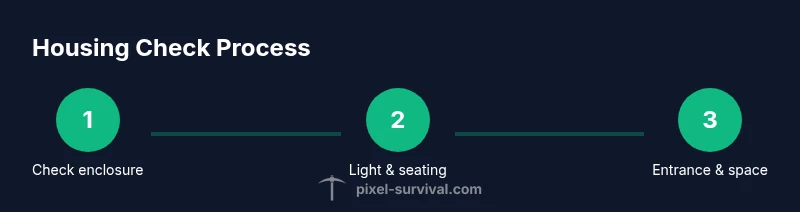
A house in Terraria is suitable when it is fully enclosed by background walls, contains a light source and a seating item, has an accessible entrance, and can shelter NPCs who meet your progression and biome needs. Review candidate rooms against NPC housing rules, ensure space for furniture, and test that NPCs will move in without obstruction. Use a simple in-game checklist for consistency.
Understanding Housing Suitability in Terraria
In Terraria, a house isn’t merely a decorative room; it is a functional space that NPCs can call home. A room that meets the game’s housing criteria becomes eligible for NPCs to move in, unlocking new content and progression opportunities. The Pixel Survival team emphasizes that a well-planned house improves gameplay efficiency and NPC management. When evaluating a potential house, begin with the fundamentals: enclosure, basic furnishings, and access. A suitable housing unit should feel safe, accessible, and clean by in-game standards. You should assess not only size and layout but also how it integrates with nearby towns, biomes, and the player’s progression. By following a consistent checklist, you can quickly determine whether a room will attract the NPCs you need at each stage of the game. According to Pixel Survival, clarity in criteria helps players avoid wasted builds and confusing layouts, especially when pacing through progression milestones. Treat each housing evaluation as a small design challenge that pays off with smoother NPC flow and steadier progression.
Key Criteria for a Suitable House
Modern Torreents of Terraria housing revolve around several core criteria that together form a comfortable and functional home for NPCs. At a minimum, a room must be clearly enclosed by background walls and contain a light source and a seating option. The space should have a reachable entrance, and there must be room for a basic furniture setup (a table and a chair or equivalent comfort item). The layout should feel safe from wandering enemies and organized so NPCs can navigate in and out without getting stuck. Beyond these basics, consider accessibility: is the room easy to reach from your main base? Does it avoid traps or hazards? Biome and progression context matter as well—some NPCs show up only after certain events or in specific biomes. Pixel Survival’s guidance emphasizes using a concise, repeatable checklist to compare candidate rooms and to scale housing alongside your world’s growth. A disciplined approach minimizes guesswork and keeps housing aligned with your goals and the game’s pacing.
NPC Housing Rules and Progression
NPC housing in Terraria is as much about timing as it is about space. Each NPC requires a dedicated housing unit that meets the game’s rules, and NPCs will only move in if their criteria relative to biome, game progression, and current events are satisfied. A well-planned town grows organically as you meet the conditions for new residents; this creates a natural progression loop where housing supports NPC availability and quest-like unlocks. The “populace” dynamic means you should monitor the balance of rooms versus NPCs and ensure housing doesn’t become cluttered or unusable. Pixel Survival’s research highlights the value of staging housing upgrades to mirror your progression, ensuring each new NPC has a ready home that suits their needs and your strategic aims. When planning, group houses by district or biome to simplify navigation and maximize NPC utility across the map.
Practical In-Game Checks and Fixes
To verify housing suitability in-game, start by surveying each potential room for the required elements: enclosed walls, a light source, a seating item, a door or open entry, and a flat surface for furniture. Test how NPCs react by temporarily placing a few common NPCs’ needs and waiting for housing validation. If a room misses any criterion, fix it immediately: erect background walls where missing, reposition a chair and table to ensure visibility, or add a light source with non-harsh lighting to prevent enemy spawns. Avoid overcrowding three in a single room; if you anticipate multiple NPCs, duplicate the housing pattern with staggered layouts to keep routes clear and rooms accessible. Pixel Survival emphasizes an iterative approach: tweak, observe NPC movement, and adjust until each house meets the standard. Remember that some NPCs respond to biome or event context, so you may need to adapt housing as your world evolves.
Examples: Good vs Bad Housing Scenarios
Good housing features a clearly defined room with all required elements (background walls, light, seating, table, door, and adequate space). It is accessible from pathways, has clean lines, and avoids enemy spawn points within the room’s vicinity. Bad housing often lacks a proper background wall, has insufficient lighting, omits a seating surface, or traps NPCs outside due to blocked entrances. Another common pitfall is placing houses in cramped or awkward areas where NPCs cannot navigate easily or where biome-specific conditions aren’t met. Pixel Survival’s case studies show that toggling a room’s layout to improve flow—such as widening corridors, relocating furniture to create a clear center path, and brightening the room—dramatically increases NPC acceptance. When in doubt, test the room with a few mock NPC appearances and observe pathing and entry behavior to confirm suitability.
Building a Consistent Housing Strategy
A robust housing strategy blends clarity with scalability. Start by creating one reliable template that satisfies the base housing rules and remains adaptable as you unlock more NPCs and biomes. Use this template to duplicate rooms across your town, adjusting only minor details to reflect biome differences or progression milestones. Maintain a single source of truth: a simple checklist or spreadsheet where you log which NPCs live in which houses and what changes were made. Pixel Survival advocates documenting lessons learned after each update or seed, so you can replicate success across worlds. Finally, schedule regular reviews of your town’s housing stock—when you add a new NPC, pause to ensure all existing rooms still comply and offer fair access. Consistency here reduces the cognitive load during play and reinforces a sense of purposeful design.
Quick In-Game Checklist You Can Use
- Enclosure: all walls present on the room’s perimeter
- Light: a functioning light source that’s not easily extinguished
- Seating: a chair or equivalent furniture on a flat surface
- Accessibility: clear entrance and unobstructed path to main areas
- Space: room is adequately sized for furniture and NPC movement
- Biome/Progression: meets the NPC’s biome and progression requirements
- Verification: test by waiting for NPCs to move in and confirming occupancy
Tools & Materials
- Notebook or note-taking app(Use to track room criteria, NPCs, and fixes)
- Pen or stylus(For quick sketches and checklists)
- In-game housing checklist(Pixel Survival guide reference to ensure consistency)
- Map or map screen(Helpful for planning town layout and biomes)
Steps
Estimated time: 30-45 minutes
- 1
Define your housing criteria
Record the core housing rules you’ll apply for every candidate room: enclosure, light, seating, surface, entrance, and space. This creates a repeatable standard you can apply quickly across worlds and biomes.
Tip: Write the criteria on a single page and tick off each item as you verify it in-game. - 2
Identify a candidate location
Find a room or space that seems promising, ideally near your main base and away from danger zones. Take note of its dimensions and access points to plan adjustments before building.
Tip: Prefer rooms that are easy to reach from your primary routes to NPCs’ destinations. - 3
Confirm background walls
Ensure every side of the room is enclosed by background walls. If there are gaps, add walls or relocate items to create a sealed space.
Tip: Background walls determine housing validity; gaps invalidate the room even if other criteria are met. - 4
Place light and furniture
Install a stable light source and a seating item on a flat surface like a table or workbench. Position furniture to allow NPCs to interact with both the light and the seating area.
Tip: Avoid placing lights too close to doors or heavily trafficked paths to prevent hostile spawns from cluttering the room. - 5
Ensure a proper entrance
Verify that NPCs can access the space via a door or clear entry path. Blocked doors or forced detours break the housing eligibility.
Tip: If doors complicate movement, consider alternative entrances that maintain safe access. - 6
Check space and flow
Assess whether there’s enough room for additional furniture and for NPCs to move around. A cramped space often fails housing checks.
Tip: Aim for a comfortable center area with easy routes to the entrance and furniture. - 7
Run an occupancy test
Wait for NPCs to consider the room and watch for acceptance or rejection signals. If a room is rejected, re-check each criterion and adjust accordingly.
Tip: Small tweaks, like relocating a chair or adding a second light, can make a difference. - 8
Document and replicate
Record what worked and replicate the setup for other houses. A consistent approach saves time and reduces errors when expanding your town.
Tip: Create a template you can duplicate with minor biome or progression tweaks.
Got Questions?
How many NPCs can live in a single house?
In Terraria, typically one NPC occupies one house. If you want multiple NPCs, you need separate, valid houses for each. Ensure each room meets the housing criteria and has its own light source, seating, and entrance.
Most NPCs live in their own house; you’ll need a separate valid house for each NPC you want to reside in your town.
What basic items must a house contain?
A valid house should include background walls, a light source, a seating item, a surface (table or equivalent), and an accessible entrance. The room should be roomy enough for NPC movement and not blocked by obstacles.
A house needs walls, light, seating, a surface, and an entrance. It should be roomy enough for NPCs to move comfortably.
Do biomes affect housing eligibility?
Yes. Some NPCs have biome preferences or progression conditions tied to the world state. Plan houses in a way that aligns with the biomes you’ve unlocked and the NPCs you aim to attract.
Biomes can influence which NPCs will move in, so plan accordingly.
Can a room be a valid house while inside a dungeon or under a trap?
Housing must be accessible and safe; rooms inside the dungeon or near traps generally fail housing checks due to environment hazards and access issues.
Dungeons and trap areas usually aren’t suitable for housing because of safety and accessibility concerns.
What if NPCs won’t move in after setup?
Review each housing criterion, test with a short wait period, and verify unlock conditions (progression, events, biome). Small layout tweaks or lighting changes often resolve acceptance issues.
If NPCs won’t move in, double-check the criteria and adjust layout or lighting as needed.
Is it okay to reuse furniture across houses?
Yes. Reusing furniture can keep your town cohesive and efficient, as long as each house meets the minimum requirements and remains accessible.
You can reuse furniture across houses as long as each one is valid and accessible.
Watch Video
Key Points
- Check enclosure and walls in every candidate room
- Verify light, seating, and an entrance are present
- Test NPC occupancy and adjust layouts as needed
- Use a repeatable housing template for consistency
- Plan town design around progression and biomes