Terraria Japanese House: A Step-by-Step Guide
Learn how to craft a Japanese-inspired house in Terraria with Pixel Survival's practical, step-by-step guide. From layout to lighting, this educational build tutorial covers materials, NPC housing, and authentic touches for a serene, functional home.


The goal is to create a compact, Japanese-inspired house in Terraria that blends clean lines, gentle lighting, and a calm color palette. You’ll focus on a small footprint, natural materials, and thoughtful placement of doors, windows, and lanterns to evoke a serene, minimalist aesthetic while ensuring compliant NPC housing.
Understanding the Japanese-inspired aesthetic in Terraria
The Japanese-inspired house in Terraria emphasizes clean lines, minimalism, and soothing lighting. Start by selecting a compact footprint and a calm color palette that relies on natural materials and simple silhouettes. According to Pixel Survival, these design cues help players craft homes that feel cozy and purposeful while meeting NPC housing rules. When planning, consider balance, symmetry, and how light flows through each room. A Japanese-style home in Terraria isn’t just about looks; it’s about functional space that invites NPCs and players to move through it with ease. Aim for modest proportions, low ceilings, and uncluttered surfaces to create a serene atmosphere with a welcoming front entrance and an open interior that breathes.
Core design principles for a Japanese house in Terraria
Japanese design in Terraria centers on restraint and clarity. Favor minimal decoration, mirrored layouts for balance, and a restrained color palette featuring warm wood tones, pale walls, and soft accents. Lighting should be gentle, with lamps placed to diffuse light evenly across rooms. Textures should vary subtly so surfaces feel tactile without visual noise. A small veranda or garden connection can enhance the aesthetic, while straight, unobtrusive pathways improve navigation. Above all, keep interiors uncluttered to preserve calm and focus, so every object earns its place and NPCs can move freely.
Layout planning and space efficiency
Effective layouts in Terraria Japanese house builds prioritize flow and function over maximal square footage. Start with a central corridor or hall that guides players toward living, sleeping, and crafting zones. Place windows for daylight without sacrificing privacy, and position doors to minimize wasted space while maintaining easy NPC access. Vertical space can be used for shelves or elevated platforms to separate zones without crowding the floor. Remember: symmetry and clean sightlines make a small home feel larger and more intentional. Map out furniture placements on graph paper or in a simple in-game sketch to ensure everything fits before placing blocks.
Materials and textures that fit the theme
To evoke a Japanese vibe in Terraria, choose materials and textures that feel natural and restrained. Favor warm wood tones for walls and floors, light stone accents for foundations, and soft, matte finishes to avoid glare. Decorative elements should hint at traditional aesthetics—think simple screens, low-profile furniture, and minimal ornamentation—without overwhelming the space. Use varied textures to add depth: a smooth wall against a grainy panel or a glass pane to catch ambient light. The goal is to balance materials so the overall look remains cohesive, cozy, and easy to navigate for NPCs.
Lighting, color palettes, and atmosphere
Lighting is the heart of the Japanese look in Terraria. Soft, amber-toned light creates a calm mood, reduces harsh shadows, and highlights architectural details. Keep color palettes muted: creams, light browns, sandy beiges, and gentle whites work well with accent colors in natural hues. Place lanterns or other warm light sources at key junctions to guide movement and emphasize clean lines. Avoid neon or highly saturated colors, which break the minimalist feeling. A well-lit entry, a tranquil living area, and a subtly illuminated sleeping nook will make the space feel intentional and welcoming.
NPC housing and safety considerations
NPC housing in Terraria requires appropriate space, lighting, and a safe interior that NPCs can access easily. Ensure each unit has a clear entrance, a solid wall enclosure, a defined floor, and a light source. Keep pathways unobstructed and avoid clutter that could block movement or NPC spawns. While designing, test each room by temporarily placing an NPC to verify housing criteria are met. A well-planned Japanese-style home should feel secure and comfortable for NPCs while remaining aesthetically cohesive.
Pixel Survival Research: Design preferences
Pixel Survival’s research emphasizes cohesive aesthetics and thoughtful lighting as keys to satisfying players and NPCs. Designs that balance clean lines with ambient, even illumination tend to feel more intentional and livable. The Pixel Survival Team notes that compact, well-organized layouts outperform oversized, crowded spaces in terms of NPC satisfaction and player immersion. Use these takeaways to guide your Japanese house decisions, selecting elements that reinforce serenity, balance, and practical function.
Case study: Compact Japanese house layout
Consider a compact one-story, 7x9 footprint with a simple, symmetrical plan. A central living area leads to a sleeping nook and a small work corner, with a veranda-style extension for exterior ambiance. Windows are placed to maximize daylight during the day, while lanterns softly illuminate corners at night. Minimal furniture echoes tatami-inspired simplicity without hampering NPC housing. This case study demonstrates how to translate traditional cues into Terraria’s block-based world while keeping the build practical and NPC-friendly.
Tools & Materials
- Wood blocks(foundation and walls; keeps the look warm and traditional)
- Stone blocks(foundation accents or low plinths for stability)
- Glass panes(for windows and diffuse daylight)
- Wooden doors(entry points that match the aesthetic)
- Lanterns(soft ambient lighting throughout the space)
- Decor items (paper screens, mats, simple vases)(evoke tatami-like ambience without clutter)
- Furnace and Workbench(crafting prerequisites; not essential for housing)
- NPC housing items(ensure each unit meets housing criteria)
Steps
Estimated time: 2-4 hours
- 1
Define footprint and flow
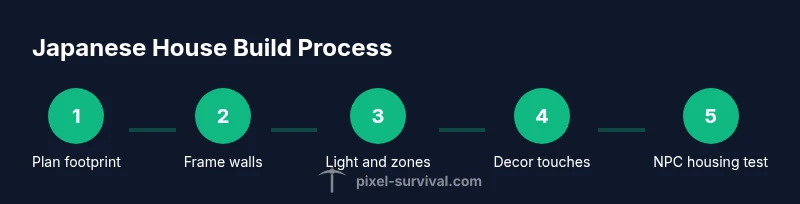
Choose a compact footprint and map a simple entrance flow that directs players toward living, sleeping, and crafting zones. Sketch the layout before placing blocks to avoid backtracking. This upfront planning saves space and reinforces the minimalist aesthetic.
Tip: Start with a small 7x7 or 9x9 base to keep the design tight. - 2
Lay foundation and frame
Place a sturdy base with a clear boundary that hints at a traditional plinth. Build a simple frame using wood blocks, focusing on even lines and proportional spacing. A strong frame keeps the rest of the design coherent.
Tip: Keep corners aligned and avoid uneven walls that disrupt symmetry. - 3
Add walls and entry points
Erect walls with clean, straight lines. Position doors to create an intuitive entry flow and ensure NPCs can access the space without obstacle. Use glass panes for all exterior-facing windows to maximize light.
Tip: Place doors on opposite ends of a tiny corridor to reinforce balance. - 4
Install lighting and zones
Distribute lanterns to cast even, soft light across the main living area and sleeping nook. Create distinct zones using furniture placement rather than walls to preserve openness. Lighting should guide movement without creating harsh shadows.
Tip: Avoid placing a light directly in front of a doorway to prevent glare. - 5
Texture and interior details
Introduce subtle texture by combining smooth walls with small decorative panels. Add a low-profile perimeter shelf and a simple floor mat to evoke a tatami-inspired feel without clutter. Keep surfaces clean and purposeful.
Tip: Reserve wall space for vertical storage to maintain a calm ceiling line. - 6
Decorate with restraint
Select a handful of carefully chosen decor items that reinforce the theme—paper screens, vases, and unobtrusive low furniture. Refrain from over-decorating; a few well-placed pieces have greater impact.
Tip: Use symmetry: pair items on opposite sides of the room for balance. - 7
Ensure NPC housing compliance
Check that each housing unit has a light source, a defined interior area, and accessible space for NPCs to move. Avoid blocking pathways with furniture and confirm each unit meets in-game housing rules.
Tip: Test housing with an NPC to verify they count as valid homes. - 8
Refine and test
Walk through the house to test movement, lighting, and NPC access. Make minor tweaks to door placement or furniture if needed. A few adjustments can dramatically improve flow and aesthetics.
Tip: Save frequently during refinements to compare different arrangements quickly. - 9
Document and share
Photograph or sketch the final layout to help others replicate the design. Note the key decisions—footprint, lighting, and decor choices—for future builds.
Tip: Consider adding a one-page schematic to explain the design logic.
Got Questions?
What defines a Japanese house in Terraria?
A Japanese-inspired Terraria house emphasizes minimalism, balanced layout, soft lighting, and natural textures. It combines traditional design cues with practical NPC housing to create a serene, functional home.
A Japanese house in Terraria focuses on simple lines, calm light, and balanced space while meeting NPC housing needs.
What materials work best for this style?
Use warm wood tones for walls and floors, light neutral walls, glass for daylight, and subtle decorative panels to evoke a serene aesthetic without clutter.
Warm wood tones, light walls, and simple decorative panels create a calm Japanese look.
How do I ensure NPC housing is satisfied?
Make sure each housing unit has a light source, a defined interior space, and clear access paths. Test with an NPC to confirm the space counts as housing.
Check lighting and space, then test with an NPC to confirm housing status.
Can this house be multi-story?
Yes. A compact, layered design with minimal stairs can preserve the aesthetic while adding vertical interest, as long as each level remains accessible and well lit.
You can add a second level if you keep paths clear and lighting gentle.
What are common mistakes to avoid?
Over-decorating, poor light distribution, and inaccessible NPC areas break the Japanese look and housing rules. Keep lines clean and ensure easy movement.
Avoid clutter, keep lighting balanced, and ensure NPCs can move freely.
How long does a build like this take?
It varies with world size and features, but a clean, compact Japanese house typically takes a few hours of focused building and testing.
A few hours, depending on planning and testing.
Where should lighting be placed for ambience?
Place lights to evenly illuminate rooms while avoiding glare at entrances. Aim for a warm, diffuse glow that highlights architectural lines.
Aim for even, warm lighting that enhances the space without harsh spots.
Watch Video
Key Points
- Plan a compact footprint before building
- Aim for balanced lighting and calm colors
- Meet NPC housing requirements with proper space
- Use minimal decor to preserve serenity