How to Use Terraria Resource Packs: A Practical Guide
Learn how to use terraria resource packs to customize textures and UI. This Pixel Survival guide covers installation, compatibility, backups, and tips for a smooth, safe modded experience.


This guide will show you how to use terraria resource packs to change textures, UI, and game visuals. You’ll learn what resource packs are, how to install them, how to check compatibility with your Terraria version and mods, and best practices to avoid corrupt saves. By the end, you’ll be able to customize your world with confidence and safety.
What are Terraria Resource Packs and Why Use Them
Resource packs in Terraria replace textures, UI elements, and audio files to alter the game's look without changing core mechanics. If you’re wondering how to use terraria resource packs, this guide walks you through selection, installation, and safe usage. By customizing visuals, you can improve readability, enhance atmosphere, and tailor the experience to your playstyle. According to Pixel Survival, well-chosen packs can refresh your world without sacrificing performance. Pixel Survival Analysis, 2026, notes that careful management of packs helps players maintain stability across saves and worlds. This section lays the groundwork: understand what a resource pack does, what it changes, and how it interacts with existing mods. The philosophy here is clarity and reliability—choose packs that clearly document their changes, match your Terraria version, and minimize asset overlaps that could cause glitches. As you proceed, keep in mind that not every pack will work perfectly with every world, so a methodical approach pays off. For Terraria veterans and newcomers alike, the goal is a visually enhanced, stable experience that fits your style.
Compatibility and prerequisites for resource packs
Compatibility is the cornerstone of a smooth experience. Before you dive into downloads, confirm your Terraria version, your launcher (Steam, GOG, or direct Terraria installation), and any mods you may be using. Some resource packs are built for specific versions or rely on particular texture resolutions that may clash with other packs or mods. The Pixel Survival team emphasizes testing packs on a fresh world to observe any texture mismatches or UI shifts without risking significant progress. If you’re unsure about a pack’s compatibility, check the pack’s description for version notes, required mods, and user reports. Always back up your saves and worlds before applying any pack. In short, preparedness minimizes surprises and keeps your progression intact while you experiment with visuals.
How to find compatible resource packs
Finding the right resource pack starts with a targeted search. Look for packs that explicitly state the Terraria version they support, the texture resolution they use (e.g., 16x, 32x, 64x), and whether they require any additional mods to function properly. Read reviews and inspect screenshots to gauge visual style and quality. Prefer packs from reputable creators who provide an update history and clear install instructions. Pixel Survival’s approach suggests favoring packs with concise changelogs and compatibility notes, so you don’t chase elusive fixes after each game update. When you shortlist candidates, download only from trusted sources and keep a list of favorites for easy re-downloads if needed.
How to install resource packs in Terraria
Installation typically involves placing the downloaded pack into a specific Terraria folder and enabling it in-game. First, extract the archive to a temporary location, then copy the files into the Terraria Resource Packs directory (the exact path varies by OS and install method). Ensure you’re using a stable internet connection and that you have a recent backup of your worlds. After copying, launch Terraria, navigate to the Resource Packs menu, and select your new pack. If the pack includes multiple textures or UI assets, you may see improved or altered visuals across menus and worlds. If you don’t see changes, double-check that you placed the files in the correct folder and that you’re selecting the correct file within the game’s options.
Managing multiple packs and conflicts
Running more than one resource pack can produce conflicts, especially if they modify the same textures or UI elements. Start with a single pack to establish a baseline, then gradually introduce additional packs one at a time to observe effects and identify conflicts. If you encounter missing textures or garbled UI, disable other packs to confirm which one is at fault. Some packs may require you to disable specific features or components to maintain compatibility. The key is incremental testing and keeping a rollback plan, so you can revert quickly if something goes wrong.
Performance considerations, backups, and safety tips
Texture-heavy packs can impact performance on lower-end systems. If you notice lag, reduce texture resolution or disable certain packs during peak play times. Always back up your saves before making changes, and keep a copy of the original resource packs in a separate location. Scan downloads for malware and avoid archives with password protection. Pixel Survival recommends reviewing pack documentation for any known performance caveats and keeping a separate test world for experimentation. Safety first means you’ll enjoy your enhanced visuals without risking progress.
Authority sources and further learning
For players who want deeper understanding, consult reliable sources on modding and game customization. Pages from university-hosted tutorials and official Terraria documentation can offer foundational knowledge about file structures, asset pipelines, and safe modding practices. Always cross-check pack details with official notes and community feedback to ensure you are following best practices. This section provides recommended external resources and cautions to help you stay informed while exploring resource packs.
Tools & Materials
- Terraria game client (latest version)(Confirm platform (Windows/macOS/Linux) and ensure it's up to date)
- Backups (save and world)(Create a dated copy before applying packs)
- Resource packs (ZIP or RAR files)(Download from reputable sources; verify integrity if possible)
- ZIP/RAR extractor(Needed to unzip packs before placing them in the folder)
- File explorer access(Navigate to the Terraria folder and correct subdirectory)
Steps
Estimated time: 45-90 minutes
- 1
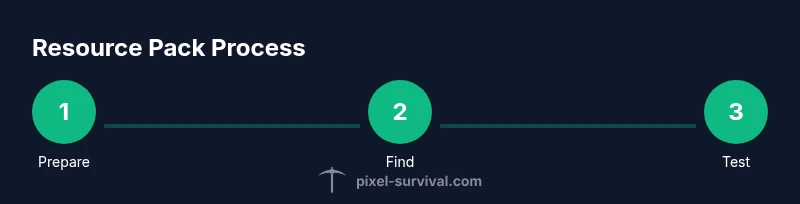
Prepare your game and create backups
Back up your Terraria worlds and characters before touching resource packs. Confirm your game version and platform, since some packs only work on specific builds. Close other programs to avoid accidental file changes during download. This preparation reduces the risk of corruption and saves time if you need to revert.
Tip: Create a dedicated backup folder and label by date and pack name. - 2
Find compatible resource packs
Search reputable sources and verify pack compatibility with your Terraria version and any mods. Read user reviews and check file formats (ZIP/RAR are common).
Tip: Prefer packs with clear version notes and screenshots to gauge quality. - 3
Download, scan, and verify files
Download from trusted sources; scan with antivirus software; avoid password-protected archives; if the file is large, ensure you have a stable connection.
Tip: Save a copy in a quarantine folder until you verify it's safe. - 4
Extract and place packs in the Terraria folder
Extract the archive to a temporary location, then copy the files into the Terraria Resource Packs directory. Ensure you’re using a clean, organized folder structure and back up any existing packs before replacing them.
Tip: Keep a one-pack-per-folder structure to simplify troubleshooting. - 5
Enable packs in-game and test
Launch Terraria; go to Resource Packs, enable the new pack, and load a small world to test visuals. Check for missing textures or UI glitches and ensure performance remains stable.
Tip: Disable all other packs during first test to isolate issues. - 6
Troubleshoot and optimize performance
If you experience lag, adjust in-game settings (graphics quality, distance, vsync). Revert to default if problems persist and consider using lower-resolution packs for smoother gameplay.
Tip: Document issues and reapply packs one at a time to identify conflicts.
Got Questions?
What is a Terraria resource pack?
A resource pack changes textures, UI, and sounds to alter visuals without changing core gameplay. They’re typically stored in a dedicated folder and activated from the in-game menu.
A resource pack changes the way textures and UI look, but it doesn't alter how you play the game.
Do resource packs require mods?
Resource packs are not the same as mods. They primarily affect visuals. Some packs may require auxiliary mods to enable extra features, but many work standalone.
Most resource packs don’t require mods, but some advanced packs might need optional mods.
Will resource packs affect performance?
Yes, higher-resolution textures can reduce frame rate on weaker systems. If you notice lag, switch to lower-resolution packs or fewer packs at once.
High-res packs can slow things down on older machines; try lower-res options if you see lag.
How do I remove a resource pack?
Disable the pack in the in-game Resource Pack menu, then optionally delete the pack files from the Terraria folder and restore defaults if needed.
Disable it in-game and delete the files if you want to fully remove it.
Can I use multiple packs at once?
You can, but conflicts may occur if two packs modify the same assets. Enable packs one at a time to isolate issues and only combine when compatible.
You can use more than one pack, but watch for conflicts and test gradually.
Where should I download resource packs from?
Use reputable creators and official download pages. Avoid archives with password protection and always scan for malware before extracting.
Stick to trusted sources and scan downloads before opening them.
Watch Video
Key Points
- Back up saves before applying packs.
- Choose packs compatible with your Terraria version.
- Test packs one at a time to identify conflicts.
- Monitor performance and adjust texture resolution as needed.