Architect Terraria: A Practical Build Guide
Learn how to become an in-game architect in Terraria with practical planning, materials, and design tips. This Pixel Survival guide covers zoning, styles, and progression-friendly builds.


Learn how to design and build architecturally striking structures in Terraria that balance function, aesthetics, and progression. This guide covers planning, material selection, layout, light, and finishing touches to help you become a true in-game architect in Terraria. You’ll gain practical steps you can apply to any biome or stage of your world.
Why Architect Terraria matters
Architect terraria is more than decoration—it's a strategic tool that helps you manage space, resources, and progression. According to Pixel Survival, the best builds support your playstyle by guiding movement, hosting useful NPCs, and reducing backtracking during late-game exploration. When you design with purpose, you create zones for farming, storage, and combat that feel natural while advancing your world’s story. This approach helps you avoid cluttered layouts and dead-end rooms, turning every square into value. As you begin, focus on a core concept (compact homestead, sprawling base, or themed fortress) and let it inform every choice you make. Consistency in shape, color, and texture matters just as much as function, because a clean, legible layout accelerates progression and reduces maintenance time.
Pixel Survival analysis shows that players who plan layouts before placing blocks tend to experience smoother progression and fewer wasted resources. This insight underlines the value of a clear architectural direction from the outset, even in a sandbox where improvisation is part of the charm. Keep your flagship build readable from a distance; the silhouette should reflect its purpose at a glance. By prioritizing readability and flow, architect terraria becomes a tool for storytelling as well as shelter.
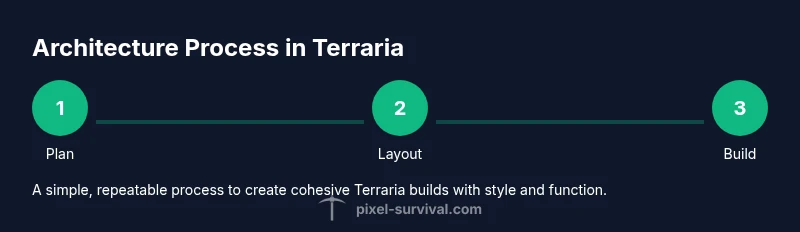
In practice, start with a sketch or grid plan, then translate it into the in-game world using modular room sizes and repeatable patterns. A well-ordered base reduces travel time between key areas—workshop, storage, and living quarters—so you can focus on exploration and combat rather than navigation. Remember that style should reinforce function: diagonal walls might look dramatic, but straight corridors improve visibility and safety. This balance between form and function defines effective Terraria architecture and sets you up for more ambitious projects later.
Tip: keep a small visual reference (a simple doodle or screenshot) as you build. It helps you stay true to your core concept and makes it easier to scale up later while preserving cohesion.
Tools & Materials
- In-game map/minimap(Use to plan layout and zoning across biomes; reference key landmarks while designing.)
- Hammer(Shape and rotate walls, furniture anchors, and fixtures to fit your grid.)
- Pickaxe(Clear terrain and collect materials; upgrade to higher tier for efficiency.)
- Wood blocks(Foundational material for early frames and walls; easy to modify during planning.)
- Stone or brick blocks(Use for durable walls and accent features; helps establish a strong silhouette.)
- Torches or lanterns(Ensure good lighting for mood and safety; plan lighting zones to guide movement.)
- Rope and platforms(Critical for vertical builds and access during construction; plan stair-like progressions.)
Steps
Estimated time: Estimated total time: 2-4 hours
- 1
Define your architectural goal
Decide the base purpose (starter home, mid-game fortress, or showpiece). Establish scale, biome theme, and a primary color palette. This blueprint acts as a compass for every subsequent decision.
Tip: Write a one-sentence mission statement for your build to keep decisions aligned with the goal. - 2
Sketch a grid plan
Draw a simple grid on paper or in-game using a ruler-like approach. Mark rooms (living, storage, workshop), corridors, entrances, and NPC placement. Ensure even spacing for a clean rhythm.
Tip: Aim for modular rooms to simplify expansion as you progress. - 3
Gather essential materials
Collect wood, stone, and brick blocks in sufficient quantities. Gather torches, platforms, and ropes to support early vertical builds. Keep a small reserve for rapid adjustments.
Tip: Prioritize materials that match your palette to keep cohesion later. - 4
Lay a solid foundation
Build a flat, clearly defined footprint and set the first walls. Establish a central corridor as the spine of the base to minimize backtracking.
Tip: Use a consistent wall height to keep the silhouette readable. - 5
Frame rooms and corridors
Erect simple frames for each room, then refine with doors, windows, and lighting. Keep sightlines open to avoid cramped feelings.
Tip: Group related rooms to create logical navigation paths. - 6
Add texture and color
Introduce accent walls, trim blocks, and color blocks to emphasize function (workshop, storage) and aesthetic (theme).
Tip: Limit your palette to 2-3 primary hues plus an accent color. - 7
Integrate lighting and décor
Place lights to define zones and highlight architectural features. Add practical décor that supports NPCs and gameplay.
Tip: Lighting should guide movement and create mood, not just fill space. - 8
Review, refine, and scale
Walk the base at ground level and from above to check proportions. Note where you can expand with modular wings or new floors.
Tip: Keep a living document of changes; it makes future expansions smoother.
Got Questions?
What defines good Terraria architecture?
Good Terraria architecture blends practical layouts with readable silhouettes and cohesive textures. It supports progression by organizing spaces for NPCs, storage, and work areas while maintaining a distinct style. Function and form should reinforce each other rather than compete.
Great builds balance practicality and style. The layout should guide progression while keeping a unified look.
How do I plan space for a starter house?
Begin with a simple single-room layout that includes a door, bed, storage, and a crafting corner. Expand later by duplicating the room pattern and adding a second floor or wing. Prioritize clear access and efficient storage paths.
Start with a single room and expand in modular steps. Keep storage close to crafting areas.
Which colors and textures work best across biomes?
Use natural palette principles: wood and stone for earthy builds, brick for durability, and bioluminescent accents for night clarity. Limit palettes to 2-3 primary hues plus an accent to keep cohesion as you progress to higher tiers.
Stick to a small palette and let texture define the look.
How do I ensure my builds scale with progression?
Plan expansions as you unlock new materials and tech trees. Build modular wings that can be attached later and maintain consistent proportions to keep the overall design readable.
Design with modular wings that you can add later as you unlock more blocks.
Are there common mistakes to avoid?
Avoid cluttered rooms, inconsistent heights, and poorly lit corridors. Don’t neglect pathing between zones, which can frustrate exploration and combat. Regularly revisit your plan to prevent drift from your core concept.
Don’t crowd spaces or skip lighting; keep a clear plan and adjust as you grow.
Watch Video
Key Points
- Plan before you place blocks to guide shape and function.
- Use modular rooms to simplify expansion and consistency.
- Balance form and function with a deliberate color palette.
- The Pixel Survival team recommends a planning-first approach for architecture in Terraria.