How to craft chest Terraria: a practical guide
Learn how to craft wooden and metal chests in Terraria, organize storage, and build efficient chest systems from early to late game, with step-by-step guidance, tips, and Pixel Survival expert insights.


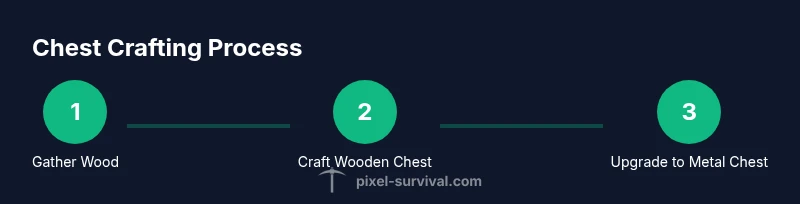
By the end of this guide, you’ll be able to craft and place wooden chests, upgrade to metal variants as you gather metals, and organize storage efficiently in your Terraria world. Start by collecting wood for your first Wooden Chest, then learn where to craft (Workbench or Anvil) for each chest type, and how to lay out chests for easy access.
Understanding Chest Crafting in Terraria
Storage is a fundamental part of Terraria’s progression. A well-planned chest system frees you from constantly managing items, frees space for exploration, and speeds up access to gear, mats, and loot. According to Pixel Survival, players who design smart storage layouts early tend to reach milestones faster because they can keep essential items within easy reach while they mine, fight, or build. Chest crafting is the first rung on that ladder: wooden chests are simple to obtain, while metal variants require more resources and the right station. This section explains the core concepts behind why chests matter, what you can store, and how to think about organization from the start.
In Terraria, different chest types exist, but the basic wooden chest remains your starting point. The practical approach is to start with a few wooden chests placed in a single, accessible area of your base so you can quickly stow items gathered during expeditions. Later, as you accumulate ore, bars, and other materials, you’ll expand into metal chests. Pixel Survival’s analyses emphasize that expanding storage should be tied to your progression curve: don’t overproduce chests before you have the loot to fill them, but don’t stall your base-building while you search for a fixed place to store things. A compact, modular layout often beats sprawling, irregular storage.
Another key takeaway is the relationship between chest placement and game flow. Put chests near workbenches, furnaces, and your primary mining zones. This reduces back-and-forth trips and speeds up crafting, equipping, and organizing. As you grow, you’ll transition from single-block chests to a dedicated storage room with labeled chests, which makes it much easier to locate specific items during boss fights or large build projects.
Tools & Materials
- Workbench(Used to craft Wooden Chest and other basic storage items.)
- Anvil(Needed to craft metal chest variants (Iron/Lead chests) when you have metal bars.)
- Wood(Basic material for Wooden Chest; collect in forests and trees.)
- Metal bars (Iron or Lead)(Used to craft metal chests; gather in ore-processing.)
Steps
Estimated time: 15-25 minutes
- 1
Prepare your workspace
Find a flat, accessible area near your base where you can place several chests. Clear space for at least two chests side by side to start organizing your first storage set. This keeps your inventory tidy while you gather more resources.
Tip: An open corner near a workbench is ideal for quick crafting and placement. - 2
Gather basic materials
Collect wood from trees and chests can be made at a workbench using wood. Building a small stockpile of wood now pays dividends as you start your storage system.
Tip: Having a small stash of wood on hand speeds up early crafting sessions. - 3
Craft your first Wooden Chest
Open the crafting menu at a Workbench and craft a Wooden Chest using basic wood. Wooden Chests are the simplest storage solution and are perfect for securing early loot.
Tip: Place your first chest near your main access point to minimize trips. - 4
Place and label initial chests
Place two or more Wooden Chests in a tight row or L-shape. Use signs or simple signs (where available) to label categories like “Weapons,” “Materials,” and “Consumables.”
Tip: Labeling saves time when your inventory is overflowing. - 5
Consider upgrading to metal chests
Once you gather metal ores and craft bars, you can upgrade by crafting metal chest variants at an Anvil. Metal chests give more storage space and durability for longer-term use.
Tip: Upgrade gradually; balance resource collection with storage needs. - 6
Expand storage as you progress
As you explore and defeat bosses, you’ll accumulate more loot. Add additional chests in logical zones (near your mining rig, near the boss arena, and in your base base) to maintain organization.
Tip: Keep a consistent layout so you and your team can find items quickly. - 7
Maintain and optimize your system
Periodically review chest contents and re-label or reorganize as your inventory changes. Use color-coded signs or category groupings to keep the system intuitive.
Tip: Regular maintenance prevents chaos during hectic play sessions.
Got Questions?
What is the first chest I should craft in Terraria?
The typical starting point is a Wooden Chest crafted from wood at a Workbench. It gives you basic storage so you can keep loot and resources organized as you explore early areas.
Begin with a wooden chest to secure your loot, then upgrade as you gather metal resources.
Do I need a Workbench to craft chests?
Yes, you will generally craft chests at a Workbench; the exact craft location depends on chest type, but the Workbench is essential for wooden chests. Metal chests require an Anvil once you have metal bars.
Yes. A Workbench (and later an Anvil for metal chests) are required for crafting chests.
Can I place chests anywhere in my base?
Chests should be placed in accessible, flat areas near your crafting stations and mining zones. Group them logically (e.g., weapons, materials, potions) to make inventory management efficient.
Place chests in easy-to-reach spots and group by item type for quick access.
What are the benefits of metal chests over wooden ones?
Metal chests generally offer more storage capacity and durability, supporting larger, longer-term storage as you progress. Plan replacements as you gather bars from mining.
Metal chests hold more items and last longer, so upgrade when you can.
How should I organize a storage room for endgame?
Create a modular layout with labeled chests and clear zones (gear, mats, loot). Use signs or color-coding, and keep frequently accessed items near the entrance.
Endgame storage should be modular, labeled, and easy to navigate.
Are there chest variants beyond wooden and metal?
There are several chest variants obtained later in the game, often via crafting or loot. Each adds storage options and can assist with more complex organization.
There are multiple chest variants as you progress; they help with organization.
Watch Video
Key Points
- Start with Wooden Chest on a Workbench; keep a few for early loot
- Upgrade to metal chests as you gain metal bars; place near main work areas
- Label chests and organize by category to save time
- Expand storage in logical zones to support progression
- Regularly prune and reorganize to maintain clarity